What Inspired Me

unknown music lover from Japan. This blog wrote in both Japanese and English.

概要: 繰り返しは、なぜ人の意識を変容させるのか。スティーヴ・ライヒがフェイジング技法で発見した「ループのわずかなずれが生み出すトランス状態」と、ベルリン・テクノがクラブフロアで実践してきた神経学的な操作は、本質的に同じ原理を共有している。この記事では、反復と単調さが「退屈」ではなく「脳のハック」として機能するメカニズムを、二つの音楽運動の交点から読み解く。

部屋でじっと座って聴いていると、それはときに「やや単調」に聴こえる。メロディやドラマチックなサビを徹底的に拒絶した、ストイックなまでの反復。しかし、この退屈の一歩手前にある響きこそが、人間が300年以上かけて積み上げてきたヨーロッパの古いオーケストラ伝統をひっくり返し、聴き手の脳の認知システムを直接ハッキングするための恐るべき装置であるとしたらどうだろうか。

現代音楽の最高峰であるスティーヴ・ライヒと、ベルリンのアンダーグラウンドを震撼させ続けるエレン・エイリアン(Ellen Allien)。住む世界も時代も全く異なる二人が、それぞれのやり方で到達した「知覚の流れの変容とトランスの構造」を紐解く。そしてその先に、両者が一本の見えない糸で結ばれていることが浮かび上がってくる。

1. 2台のテープレコーダーから始まった革命:スティーヴ・ライヒの背景と経歴

1936年ニューヨーク生まれ。スティーヴ・ライヒは、戦後の現代音楽が「難解で緻密な数式のような前衛音楽(無調音楽やセリエリズム)」へ向かう中、それとは全く別のベクトルへ舵を切ったミニマリズムの先駆者のひとりだ。同時期にはラ・モンテ・ヤング、テリー・ライリー、フィリップ・グラスらがいたが、ライヒはその中でも際立って「身体的なパルス」への執着を持った作曲家だった。

コーネル大学で哲学を修め、ジュリアード音楽院やミルズ・カレッジで作曲を学んだライヒのバックグラウンドは、学術的なエリートのそれでありながら、常に「身体的なパルス」と結びついていた。14歳のとき、初めてケニー・クラークの演奏を聴いて打楽器に目覚め、地元の名ドラマーであるローランド・コールホフ(のちにニューヨーク・フィルのティンパニ奏者)に師事した。その後アフリカ(ガーナ)の打楽器やバリ島のガムランといった民俗音楽の儀式的なループ構造を現地でフィールドワークしながら研究したことが、彼の音楽の血肉となっている。

テープの位相(ズレ)から『18人の音楽家のための音楽』へ

電子楽器やシンセサイザーがまだ普及していなかった1960年代半ば、ライヒは偶然の機材のエラーから、自身の音楽の生涯の核となる「フェージング(位相のズレ)」を発見する。

初期の実験作『It's Gonna Rain』(1965)や『Come Out』(1966)において、彼は同じ音声(声の断片)を録音した2台のオープンリール・テープレコーダーを同時に再生した。マシンの個体差によってミリ秒単位で速度が狂い、2つのループの位相が徐々にズレていく。

YouTube video

【ライヒのテープ・ハック】
ループA: [■■■■■■■■]
ループB: [ ■■■■■■■■]  ※わずかに速度が遅れ、ズレていく

ここでライヒは、脳がバグるような怪奇現象を目撃する。同じ音がズレて重なり合った結果、音と音の隙間(デッドスペース)が噛み合い、元々のテープには録音されていなかったはずの「幻のメロディや、存在しない新しいリズム」が勝手に脳の中で鳴り始めるのだ。人間の脳は、予測できないパターンのズレに直面したとき、それを補完しようとして勝手に新しい音を自給自足し始めてしまう。

これは単なる「錯聴」ではない。一定の反復刺激にさらされ続けた脳が、その流れのパターンを先読みしようとして過剰適応を起こす——そこに「ズレ」という予期しない変化が差し込まれると、知覚の流れそのものが書き換えられ、現実とは異なる音の風景が立ち現れる。この「知覚の流れの変容」こそが、ライヒの音楽がトランス状態へと人を誘う根本的なメカニズムだ。

この、テープというテクノロジーで見つけた「位相のズレによる知覚の変容」を、人間の肉体(アコースティック楽器)を使って極限までスケールアップさせた結実が、彼の最高傑作『18人の音楽家のための音楽(Music for 18 Musicians)』(1976)である。

ちなみに、もしこのパルスによる脳のハックを今から体験するなら、コリン・カリー・グループ(Colin Currie Group)による録音を強く薦めたい。かつてライヒ自身が、彼らの演奏を「自分たちが演奏したもの(オリジナル)よりも完璧で、ダイナミックだ」と絶賛したほどの名盤であり、寸分の狂いもないストイックな精度と、脳を覚醒させる響きの美しさがここには極限まで宿っている。 YouTube video

約1時間、18人の演奏家がひたすらマリンバやピアノ、弦楽器で細かく刻む「パルス(脈動)」の上で、人力でフェージングを起こしていく。知性が大仰なメロディに感動する余地を奪い、一定のパルスを聴き続けさせることで、脳をトランス状態(催眠状態)へとハメていく。ライヒは「同じものをズラす」ことで、音の隙間から新しい生命を発生させるハッキングを見出したのである。

この作品はのちに、Orbital、Aphex Twin、The Orbといったアーティストたちが切り開いたアンビエント・トランス音楽の源流と評されることになる。ライヒの発見した「反復による知覚の変容」という回路が、テクノへと流れ込む伏線はすでにここに埋め込まれていた。

Orbitalのライブ YouTube video

2. 廃墟のインダストリアル:壁崩壊後のベルリンという「停滞」のゆりかご

このライヒが現代音楽のホールで鳴らした「トランスの遺伝子」は、1990年代、大西洋を渡った先の奇妙な街の地下深くで、全く異なる形で爆発することになる。それがベルリン・テクノの誕生だ。

音楽カルチャーは、経済的に豊かで満ち足りている時よりも、社会がガタガタに停滞し、未来への閉塞感が漂っている時にこそ、人々の鬱屈したエネルギーを燃料にして花開く。70年代末のイギリスの工場地帯の絶望からパンク・ロックやジョイ・ディヴィジョンが生まれたように、90年代のベルリンにも、固有の「停滞期の空気感」が充満していた。

1989年11月、ベルリンの壁が崩壊した。東西の統一は一見華やかなハッピーエンドに見えるが、当時のリアルな経済は大混乱し、大停滞していた。東側の国営企業は次々と倒産して失業者が溢れ、街のインフラや産業はストップ。未来がどちらに転がるか分からない不安がストリートを覆っていた。

しかし、この産業が機能停止した大停滞が、音楽にとっては「奇跡の空白地帯(デッドスペース)」を作り出した。

旧東ベルリン側には、持ち主のわからない広大な廃墟、地下金庫、放棄された発電所といった、コンクリートと鉄のガラン堂が大量に放置されていた。産業が停滞し、土地の価値が暴落したことで、当時のベルリンは家賃が異常に安く(あるいは不法占拠でき)、若者たちには「有り余る時間」があった。

ヨーロッパの古いオーケストラ伝統(楽譜や和声の奴隷になること)を嫌い、あくせく働くシステムから脱落したアナーキーな若者たちがその廃墟に集まり、安価なリズムマシンのスイッチを入れた。仕事もない、お金もない、けれど夜になれば冷たいコンクリートの中で、地を這うようなストイックな電子の4つ打ちキックを浴びて朝まで踊り明かす。あの冷酷でタフなインダストリアル・テクノの重低音は、社会の停滞という暗闇を突破するために必要な、剥き出しの「肉体的な祈り」として発展していった。

そしてここで重要なのは、彼らが(おそらく無意識に)ライヒと同じ原理に辿り着いていたことだ。ひたすら続く4つ打ちのパルスは、聴き手の脳をある種の「予測モード」に固定する。その固定された流れの中に微細な変化が差し込まれた瞬間、知覚の流れが揺らぎ、トランスへの扉が開く——ライヒがテープのズレで実験室的に発見したことを、ベルリンのフロアは肉体を使って再発明していたのだ。

そのベルリン・テクノが生んだ最大の祝祭が、ラブパレードだ。DJ・プロデューサーのマティアス・レーニ(通称Dr. Motte)が1989年7月に創始したこのイベントは、最初はたった150人がベルリンの街頭に繰り出した、平和と国際的な相互理解を音楽で訴えるための政治的デモとして始まった。それが90年代を通じて爆発的に拡大し、1999年にはベルリンの街路を120〜150万人のレイバーが埋め尽くす、世界最大規模のダンスミュージック・イベントへと成長した。ドラムマシンの4つ打ちが巨大なスピーカーから叩きつけられる中、無数の人々がブランデンブルク門から戦勝記念塔へと続く大通りを踊り歩く光景は、テクノが単なるクラブカルチャーを超えた「集団的なトランスの儀式」であることを、世界に向けて可視化した出来事だった。Dr. Motteは商業化の波に抗い続け、2006年にイベントの商標が売却されると自ら距離を置いた。その精神は現在、「Rave the Planet」という後継イベントに引き継がれている。

YouTube video

3. エレン・エイリアンのニューアルバムに見る「異物のハッキング」

この壁崩壊前後の「本物の混沌と自由」をDJブースから生き抜いてきたベルリンの女王が、エレン・エイリアンである。西ベルリンで育ち、壁崩壊直後の1992年にはTresor、E-Werkのレジデントとなった彼女は、勃興するシーンのただ中にいた。

ブロンドの端正なルックスを裏切るような、男勝りの強烈で凶悪なインダストリアル・ビートを響かせる彼女の音楽的アプローチは、2026年のニューアルバム『New Life』においても、驚くほどライヒと地続きの「知覚の変容」を敢行している。ミニマル・テクノ、ダークウェーブ、ヒプノティック・ユーフォリアを織り交ぜたこの作品は、コミュニティ形成と集団的行動というテーマを、まさに「反復による知覚の変容」を武器にして語りかけてくる。

エレンの試みにおいて注目すべきは、洗練されたシンセパッドのうねるような動きだけでなく、「ストイックな反復リズムの中に、異質なサンプリング素材を投げ込む」という手法だ。

【テクノのサンプリング・ハック】
固定されたリズム:  [🥁──🥁──🥁──🥁] (4つ打ちの硬い骨組み)
異物の投げ込み:   [   🎙️   ✨   💥   ]  ※サンプリング素材が衝突する

ライヒが「同じものをズラす」ことで知覚の流れを書き換えたのに対し、エレンをはじめとするベルリン・テクノのアプローチは、逆のベクトルから同じ地点を目指す。

彼女は、冷徹で絶対にブレない強烈なリズムのループを、あえて完璧に固定して鳴らし続ける。聴き手の脳がその冷酷なまでの反復に完全に適応し、日常の境界線が溶けてトランス状態に入ったその瞬間、そこに「掠れたコード音」や「ノイズの断片」「変調された人の声」といったサンプリング素材をぽんと投げ込むのだ。

すると、土台にあるキックの硬いリフレインそのものは1ミリも変化していないはずなのに、投げ込まれたサンプリングの残響と衝突した瞬間、ベースラインやリズムの形そのものが全く違う形に変形して聴こえる。これは聴覚的な錯覚ではなく、脳が反復の流れに過剰適応した結果として起きる「知覚の流れの変容」だ。固定された骨組みに異物をぶつけることで、知覚を再書き換えし、より深いトランス状態へと引き込む——テクノ独自のハッキング手法がここにある。

ライヒがテープのズレで「流れを乱すことによる変容」を発見し、エレンがサンプリングの衝突で「流れへの適応を利用した変容」を武器にする。手法は鏡像のように反転しているが、脳の知覚の流れを一度崩してトランスへ導くという目的地は、完全に一致している。

エレン・エイリアンのニューアルバムはApple Musicで一部が先行リリースとして聴ける。ここでは代わりに彼女のDJライブ風景を載せた。 YouTube video

結び:円環を閉じるミニマリズム

座って聴くには「単調すぎる」という最初の違和感は、彼らの仕掛けた罠に嵌った証拠にすぎない。分かりやすいサビをあえて削ぎ落とす(引き算する)からこそ、人間はパルスの隙間に起きるほんの微細な変化に対して異常に敏感になる。脳が反復に慣れ、知覚の流れがある一点に収束したとき——そのわずかな「ズレ」や「異物」が、その流れを書き換えてトランスの扉を開ける。

ライヒがオープンリールを回して見つけた脳の知覚変容の回路は、ベルリンの停滞した廃墟で電子マシンの4つ打ちへと宿り、エレン・エイリアンのサンプリングの衝突によって、現代のフロアで牙を剥き続けている。形を変えて引き継がれるこの「ミニマリズムの快楽」は、今夜もどこかの暗闇で、誰かの脳汁をじわじわと誘い出している。

Description: I used to treat ambient music as furniture—something to fade into the background while I worked. Three artists dismantled that assumption completely. Helios, a Berklee-trained percussionist, showed that drums could act as a cinematic anchor rather than a disruption to the drift. Alva Noto and Ryuichi Sakamoto proved that the silence between notes could become a third instrument, where digital glitch catches a decaying piano chord and turns a mistake into a melody. And Fennesz demonstrated that noise guitar, processed through layers of digital fracture, could produce something closer to an impressionist painting than a sound recording.

For a long time, my relationship with ambient music was simple: it was a utilitarian backdrop. It was something to soothe the mind, a gentle tapestry of static drones designed to fade into the wallpaper of daily life. It was music to ignore.

Then, I encountered three specific musical forces.

They didn't just challenge my perception of the genre; they completely shattered it. They proved that ambient music isn't merely passive space—it can be a landscape of fierce precision, microscopic tension, and overwhelming, visual beauty. Here are the three artists who changed everything.

1. Helios: The Masterclass of Subversive Rhythm

Convention dictating ambient music usually demands the erasure of time. Percussion is often the first thing to be discarded to achieve that weightless drift. But Keith Kenniff, working under the moniker Helios, turned that rule on its head through his ingenious, sophisticated use of drums.

This is no accident. Kenniff graduated with honors from the Berklee College of Music in 2006, majoring in percussion and composition—making him a formally trained musician who understands rhythm at a structural, academic level. That training is audible in every Helios record. But the remarkable thing about Kenniff is that his musical identity doesn't stop there. Under the alias Goldmund, the same artist produces an entirely different body of work: sparse, deeply beautiful solo piano pieces that sit at the intersection of ambient and post-classical music. Intriguingly, the piano side of his craft was largely self-taught—developed quietly in the practice rooms of Berklee during ear training sessions—which gives his Goldmund work a distinctly personal, exploratory quality that no conservatory curriculum could manufacture.

Helios doesn't use rhythm to build dance tracks; he uses percussion as a cinematic anchor. His drums are remarkably clever—often crisp, organic, and closely miked, carrying a soft, tactile crunch that feels entirely human.

Instead of disrupting the ambient haze, the rhythm acts as a heartbeat. The drums slice through the lush, cinematic guitar and piano swells with absolute precision, creating a brilliant juxtaposition: while the melodic pads invite you to drift, the intricate percussion demands that you stay present. Helios taught me that ambient music could possess momentum, structure, and an underlying sense of emotional urgency.

YouTube video

2. Alva Noto + Ryuichi Sakamoto: The Sublime Fusion of Glitch and Grandeur

If Helios brought structure to the drift, the legendary collaborations between German electronic master Carsten Nicolai (Alva Noto) and the late, incomparable Ryuichi Sakamoto redefined the very fabric of sonic texture.

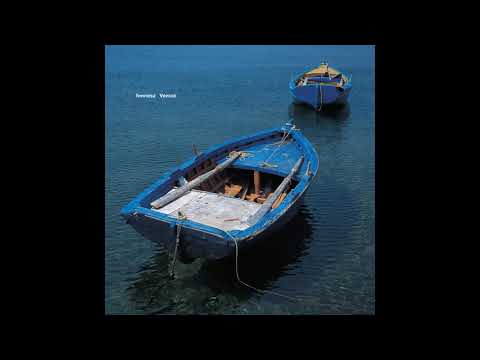
Their collaborative albums (such as Vrioon and Insen) are masterclasses in contrast, operating like a breathtaking dialogue between the clinical future and the human soul.

  • Alva Noto's Cold Precision: Digital glitches, microscopic laser clicks, and pristine sub-bass frequencies that trace the sharp, cold boundaries of a digital canvas.
  • Sakamoto's Warm Intimacy: Impeccable, spacious acoustic piano chords, rich with sustain, vulnerability, and resonance.

The Magic of the “In-Between”: The true genius of this pairing lies in how these two opposing worlds fuse. Sakamoto's piano notes don't just sit on top of the electronics; they are cradled by them. A warm, decaying piano chord is caught by a razor-sharp digital glitch, turning a mistake into a melody. The negative space—the silence between the notes—becomes a living, breathing third instrument. It is a stunning proof that pure data and pure emotion can melt into a singular, devastatingly beautiful language.

YouTube video

3. Fennesz: Painting Impressionist Landscapes with Noise Guitar

To many, “noise guitar” implies chaos, aggression, and friction. Christian Fennesz, however, uses a guitar and a laptop to achieve the exact opposite: he spins digital distortion into pure, sun-drenched euphoria.

Listening to a masterpiece like Endless Summer is less like listening to an audio track and more like watching an impressionist painting come to life.

Fennesz feeds acoustic and electric guitar strums into complex processing software, fracturing the chords into thousands of shimmering, white-hot shards of glitch and static. But out of that digital debris emerges an incredible warmth. The noise shifts, evolves, and undulates, creating a vivid sonic choreography. As you listen, the textures morph like light filtering through leaves or waves crashing in slow motion on a hazy afternoon. He transformed noise from a weapon of disruption into a tool of sublime, visual storytelling.

Most famous album of fenezz

YouTube video

Fennez’s latest album is more like ambient music.

YouTube video

Final Thoughts

Before discovering Helios, Alva Noto + Sakamoto, and Fennesz, I thought ambient music was a tool to help me escape reality. Now, I realize it is a lens to view reality more clearly.

Through clever rhythm, the marriage of glitch and piano, and the beauty of processed guitar noise, these artists proved that the space between sound and silence is infinitely vast—and endlessly fascinating.

ある日、BBC Radio 3の「Late Junction」から流れてきた音楽に、私は手を止めた。弦楽器とギターが踊るように絡み合う、聴いたことのない音楽だった。曲名とバンド名をメモして、アルバムを聴き始めた。そうして何枚か掘り進めていくうちに、ふいに気づいた瞬間があった。HPのCMで何年も耳にしていた、あの旋律が流れてきたのだ。

Penguin Cafe Orchestra。その名前を知るまで、私はすでに何年もその音楽とともに生きていた。

「知っているけれど、誰の音楽か知らない」。Penguin Cafe Orchestraとはそういう存在だ。

食中毒の夢から生まれた音楽

Penguin Cafe Orchestraを語るには、まず1972年の南フランスから始めなければならない。イギリス人ギタリストのSimon Jeffes(サイモン・ジェフス)は、そこで腐った魚を食べて体調を崩した。病床に就いたSimonは、高熱のなかで奇妙なビジョンを繰り返し見た。

そのビジョンをArthur Jeffes(Simonの息子)が後年こう語っている。「父は近未来の悪夢を見た。人々はコンクリートの巨大な建物に住み、画面を見つめて生きていた。部屋の隅には大きなカメラがあり、常に監視されていた。ある部屋では愛のないセックスをしているカップルがいて、別の部屋では膨大な機材に囲まれたミュージシャンがいた――しかしヘッドフォンをつけているので、部屋には実際には音楽が鳴っていなかった」

この非人間的な世界の対極にあるものとして、Simonは夢のなかで「ペンギンカフェ」を見た。薄暗い道を歩いていくと、光と騒音があふれ出る古びた建物がある。中に入ると長いテーブルがあり、見知らぬ人々が肩を並べて座っている。奥では楽団が演奏している——どこかで聴いたことがあるような、でも思い出せないような音楽を。

熱が下がったSimonは決意した。その夢の楽団が奏でる音楽を自分で書こう、と。そうして1972年に生まれたのがPenguin Cafe Orchestraである。

「オーケストラ」という名の室内楽

「Orchestra(オーケストラ)」という名称から、多くの人は大編成の管弦楽団を想像するだろう。だが実際のPenguin Cafe Orchestraは、その言葉のイメージとはかけ離れた、小さなアンサンブルだった。

ギター、チェロ、ヴァイオリン、ウクレレ、トロンボーン、打楽器。メンバーは曲によって流動的に変わり、ハーモニウム(足踏み式オルガン)やペニーホイッスル、さらにはゴムバンドや電話の発信音まで楽器として用いた。これはどう見ても室内楽——あるいはそれ以上に自由な、カテゴリーを拒む音楽だった。

「Orchestra」という名称はSimonのユーモアであり、音楽的なマニフェストでもあった。権威ある響きを持つ言葉を借用しながら、その概念を静かに解体する。大ホールを満たすような音楽ではなく、カフェの奥で演奏されるような、親密で体温のある音楽。それがSimonの目指したものだった。

YouTube video

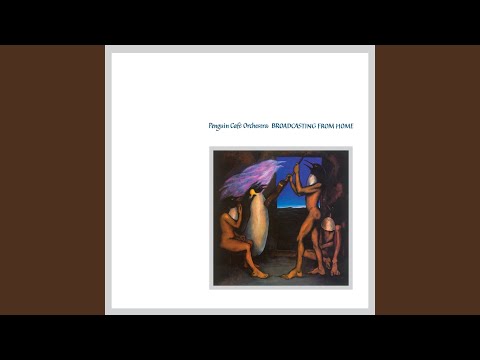
「Perpetuum Mobile」(1987年)。15/8拍子という変拍子で書かれたこの曲は、終わりそうで終わらない、永遠運動機械のような感覚を持つ。『The Handmaid's Tale/侍女の物語』のTVドラマや映画『Mary and Max』のテーマとしても知られる。

同時代の音楽と、イギリス的なもの

1976年にデビューアルバムをリリースしたPenguin Cafe Orchestraは、同時代のさまざまな音楽の流れの上に立っていた。

アメリカではSteve ReichやPhilip Glassがミニマル・ミュージックを展開していた時期だ。繰り返しのパターン、声部の積み重ね、静かな変容——PCOの音楽にもそれに似た構造がある。しかしミニマリズムの持つ抽象性や冷ややかさとは、PCOは明らかに一線を画している。

現代音楽としてのミニマル・ミュージックが知的な構造美や厳格さを追求するのに対し、PCOの音楽には底抜けの遊び心がある。ゴムバンドを楽器にしたり、電話の発信音をループさせたり、「Telephone and Rubber Band」という曲名そのままに笑いを音楽に持ち込む。変拍子も複雑な対位法も、PCOの手にかかれば難解さではなくユーモアになる。ミニマリズムの語法を借りながら、その緊張感をほぐしてしまう——そこにSimon Jeffesという人物の独自性があった。

その遊び心の源泉のひとつが、イギリスおよびアイルランドの伝統音楽(トラッド)にあると思う。トラッドには、リールやジグといった舞曲のために短いフレーズを繰り返す構造が古くから根付いている。踊り続けるための反復、少しずつ変化しながら循環するメロディ——それはミニマル・ミュージックが知的に追求したものと、形は違えど本質的に近い。PCOはその二つの反復を、学術的な文脈ではなく身体的な喜びとして音楽に持ち込んだ。

象徴的なのが「Music for a Found Harmonium」の誕生秘話だ。Simonが日本ツアー中に路上で偶然見つけた古びた足踏みオルガン。その不完全な楽器から生まれたシンプルなメロディは、あまりにも自然にアイルランドのリール(伝統舞曲)の文法に溶け込んでいたため、Patrick Street、De Dannan、Kevin Burke、Sharon Shannonといったトラッドの名手たちが「自分たちの音楽」として次々とカバーしていった。クラシックでも現代音楽でもなく、人々が踊り、笑い、騒いできた音楽の記憶——それがPCOのユーモアと遊び心を支えていた。

デビューアルバムはBrian Enoが主宰したObscure Recordsからリリースされた。Enoのアンビエント音楽は「聴かれることも、無視されることもできる」という静的な空間の提示だった。対してSimonのビジョンは、人々が集まるカフェという場所の熱量やノイズを内包するものだった。PCOの音楽がどこか人懐っこいのは、Enoの「無人」の気配に対して、常に体温のある他者を感じさせるからかもしれない。同じ頃、Kraftwerkはテクノという新しい音楽の言語を作り出していた。PCOはそれらの同時代的な問いを共有しながら、しかしより人間的な方向へ、より温かい場所へ向かった。

フォークの躍動感、ミニマリズムの構造、アンビエントの空気感、そして室内楽の親密さ。これらをイギリス的な叙情性でひとつに溶かしたもの——それがPenguin Cafe Orchestraの音楽だったと思う。Philip Glassの冷たさもなく、Enoの没個性もなく、Kraftwerkの機械性もなく、もっと人間的で、もっとほころびがあって、もっと笑いがある。

YouTube video

「Music for a Found Harmonium」(1984年)。路上で見つけた足踏みオルガンからインスピレーションを得た楽曲。アイルランドのトラッドミュージシャンたちにカバーされ、映画「Napoleon Dynamite」でも使用された。

成功と、忘却と、遍在

Penguin Cafe Orchestraは「無名」ではなかった。1987年のアルバム「Signs of Life」はイギリスのチャートにランクインし、世界中をツアーした。日本でも人気を博し、ロイヤル・バレエが彼らの楽曲をバレエ作品に採用した。The South Bank ShowやTerry Woganのテレビ番組にも出演した。

しかし私が生まれた年(1976年)にデビューアルバムがリリースされた彼らの音楽は、今となっては「古い」。ストリーミング時代のアルゴリズムは新譜を優先し、Simon Jeffesは1997年に脳腫瘍で48歳の若さで世を去った。新しい音楽が生まれることも、新しいツアーが行われることもなくなった。

それでも音楽は生き続けた。映画のスコアとして、テレビドラマのサウンドトラックとして、CMの背景音楽として。HPを筆頭に数多くの企業広告に使用され、『The Handmaid's Tale/侍女の物語』『Mary and Max』『Napoleon Dynamite』『Capitalism: A Love Story』——これほど多くの映像作品にPCOの音楽が使われてきた。

「知っているけれど、誰の音楽か知らない」現象は、つまりこういうことだ。音楽は知名度を失った後も、別の回路で人々の耳に届き続けた。名前だけが、時代の流れのなかに置き去りにされた。

息子が継いだもの

Simon Jeffesの死から10年後の2007年、元メンバーたちがロンドンのUnion Chapelで追悼コンサートを開いた。そのステージに、Simonの息子Arthur Jeffes(アーサー・ジェフス)がパーカッションとキーボードで参加した。3公演はすべて売り切れだった。

その反響に背を押されたArthurは、2009年に「Penguin Cafe」という新たなバンドを結成した。元PCOのメンバーは一人も含まれない、全く新しいアンサンブルで。

Arthurはケンブリッジ大学で考古学と人類学を学んだ知性の人であり、同時に実験音楽への情熱を持つ音楽家でもある。幼少期にピアノの鍵盤をハンマーで叩いたエピソードが伝わっているが、父Simonはそれを「実験精神の芽生え」と捉えたという。

Penguin Cafeとして5枚のアルバムをリリースし、そのすべてがErased Tapes——Nils FrahmやÓlafur Arnalds、Johann Johannssonを擁するポストクラシカルの名門レーベル——から出ている。この事実は、ArthurがただSimonの遺産を守るだけでなく、現代のポストクラシカルやネオクラシカルの文脈にPenguin Cafeの音楽を新たに位置づけていることを示している。

YouTube video

Penguin Cafeに息づく反復構造とユニークな遊び心のなかに父親の作り出した音楽の影響の大きさを見て取るのはたやすい

カフェの奥で、今も

最新アルバム「Rain Before Seven…」(2023年)は、Arthurが率いるPenguin Cafeの現時点での到達点だ。「Rain before seven, fine before eleven(七時前に雨が降れば、十一時には晴れる)」という古いイギリスの天気のことわざをタイトルに持つこのアルバムは、父の音楽の精神を引き継ぎながら、Arthurの独自の声でそれを語り直している。

ヴァイオリン、チェロ、コントラバス、打楽器にバラフォン、ウクレレ、メロディカ。Simonがゴムバンドや電話音を楽器にしたように、Arthurも「予想外の音」を室内楽の文脈に持ち込む。その姿勢は一貫して父の哲学に忠実だ——「面白い、少し変な発想を取り上げて、変なことをする。でも美しく、感情的にアクセスできる音楽として」。

夢のカフェは今も続いている。奥の楽団は演奏を続けている。そしてあなたはきっと、すでにその音楽を聴いている。ただ、その名前を知らなかっただけで。

To tourists, Japan looks like a flawless utopia. Trains run exactly on time, streets are spotless, and people are quiet, polite, and orderly. Foreign visitors marvel at this “beautiful harmony.”

But they rarely see the invisible mechanisms that produce this order. They don’t see the systemic violence of conformity that crushes anyone who doesn’t fit the mold.

As someone who grew up with neurodiversity (developmental differences) in this society, I know the true cost of Japan’s aesthetic perfection.

The Trauma of “Why Can’t You Just Be Normal?”

In Japan, the enforcement of order begins at birth. From early childhood, we are subjected to merciless manner education, often driven by intense maternal pressure to conform. My own childhood was a constant cycle of being severely disciplined by my mother and endlessly compared to others.

“Look at that child. Why can they do it, but you can’t?”

This single sentence is repeated in millions of Japanese homes. In a culture where “being different” is considered a defect, failing to read the room or sit still is treated as a moral failure. For a neurodivergent child, this constant comparison leaves your self-esteem completely shattered before you even become an adult. You learn to live in fear, constantly masking your true self just to survive.

The Workplace: A Matrix of Unwritten Rules

This hyper-strict upbringing seamlessly transitions into the adult workforce, where corporate rituals punish individuality.

Take “punctuality,” for example. Being on time doesn’t just mean showing up at the clock; arriving even one minute late is treated as a major character flaw and a breach of trust.

Then there is the infamous corporate ritual called Nemawashi (根回し) — the practice of laying informal groundwork before a meeting. In Japan, you cannot simply propose a brilliant new idea during a presentation. If you haven’t quietly spoken to every stakeholder beforehand to get their approval in private, your idea will be shot down. Innovation is secondary to maintaining the absolute hierarchy. You must never contradict your superiors.

Furthermore, you are expected to act in perfect synchronization with your colleagues at all times. If you don’t go out to lunch with the group, if you leave the office precisely when your shift ends while others are working overtime, or if you fail to decode the unspoken atmosphere, you are branded as KY (Kuuki ga Yomenai) — someone who “cannot read the air.” Once you get that label, your workplace relationships disintegrate, and you are quietly isolated.

The True Cost of Harmony

Japan is an incredibly difficult society to navigate if your brain is wired differently. The very things tourists love about Japan — the quiet trains, the uniform service, the predictable order — are sustained by the collective trauma of a population terrified of standing out.

Our society has mastered the art of hiding its casualties. Behind the beautiful, serene facade of Japanese order lies a grinding machine that demands total submission to the collective, leaving those who cannot conform to suffer in absolute silence.

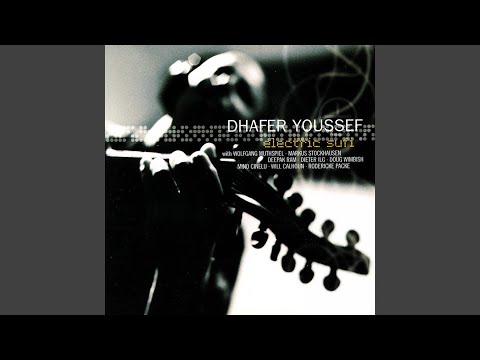
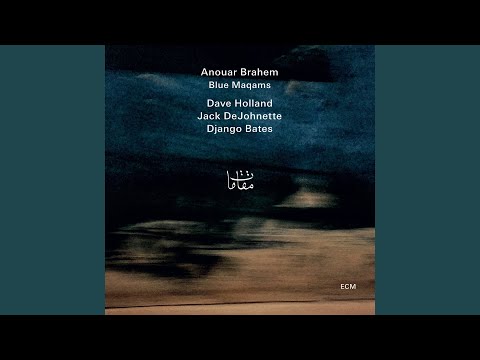
Description: There is a specific alchemy that happens when jazz's rhythmic openness meets the modal, microtonal traditions of the Islamic world—something more transformative than crossover. This piece moves through four albums: the near-miraculous ECM session where Zakir Hussain's tabla meets Jan Garbarek's saxophone; Dhafer Youssef's Electric Sufi, where Sufi vocal incantation collides with electric jazz grooves; Amir ElSaffar's Not Two, a 17-piece ensemble that runs Mesopotamian maqam through the density of Miles Davis's electric period; and Anouar Brahem's Blue Maqams, an album that proves the most profound jazz statement can be whispered in near-silence.

For decades, the boundaries of jazz have been wonderfully fluid. But there is a specific kind of alchemy that happens when the modal, microtonal, and spiritual traditions of the Islamic world collide with the rhythmic freedom of jazz. It's not just a superficial crossover; it's a profound dialogue that reshapes the horizon of modern music.

If you are looking to expand your sonic horizons, here are three incredible albums and artists that masterfully bridge the world of jazz with the profound textures of Islamic and Middle Eastern musical heritage.

1. The Overlooked ECM Masterpiece: Making Music – Zakir Hussain

(The Spiritual Sublimation of Disparate Worlds)

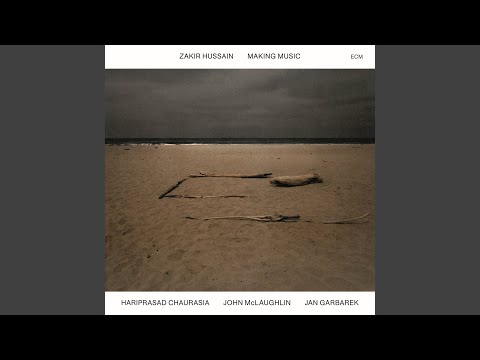
When people think of the legendary ECM Records, they often picture cool, spacious European jazz or Nordic minimalism. But tucked away in their vast catalog is a hidden gem that beautifully captures the intersection of Eastern spiritual heritage and contemporary improvisation: Zakir Hussain's Making Music (1987).

Hussain himself is Hindu, but the tabla he plays is an instrument deeply rooted in both Hindu and Islamic musical cultures across South Asia, from India to Pakistan. This paired drum—combining the higher-pitched dayan and the lower bayan—is indispensable to Hindu devotional music and Islamic Sufi music (qawwali) alike. That quality of the tabla as a cultural bridge between traditions resonates deeply with the spirit of this album.

The lineup he leads looks like an impossible experiment:

  • Zakir Hussain (Tabla)
  • Hariprasad Chaurasia (Bansuri/Flute)
  • John McLaughlin (Acoustic Guitar)
  • Jan Garbarek (Saxophone)

You might expect a chaotic clash of cultures, but what transpires is a miracle of active listening. Tracks like “Sabah” (Arabic for “morning”) evoke the serene, contemplative atmosphere of the dawn. The fiery precision of McLaughlin's guitar and Hussain's incredible tabla rhythms melt effortlessly into Garbarek's haunting sax tones and Chaurasia's breathy flute. It is an overlooked masterpiece where seemingly incompatible musical DNAs meet, strip away their boundaries, and elevate into pure, universal emotion.

YouTube video

2. The Mystic Oud Modernized: Electric Sufi – Dhafer Youssef

(Translating Sufi Spirituality into Contemporary Jazz)

The Oud is an ancient, fretless lute deeply rooted in Middle Eastern and Islamic classical traditions. In the hands of Tunisian master Dhafer Youssef, however, it becomes a vessel for fierce modern jazz exploration. His seminal album, *Electric Sufi* (2001), is a masterclass in this transformation.

Youssef doesn't just play the oud; he integrates its rich, resonant, and inherently spiritual Eastern textures into a vibrant, electric jazz landscape. Backed by cutting-edge electronic grooves and stellar jazz instrumentation, the album feels both ancient and futuristic.

Within this brilliant catalog, the track “La nuit sacrée” stands out as an absolute masterpiece. This particular piece features the brilliant Austrian trumpeter Markus Stockhausen. Here, yet again, disparate elements collide, sparking a beautiful musical alchemy that transcends genres. It is a sublime example of how two seemingly contrasting worlds can meet and create pure magic through their sonic chemistry.

The Secret Weapon: Beyond his virtuosic oud playing, Youssef possesses a breathtaking, soaring vocal range rooted in traditional Sufi vocal incantations. When his voice and Stockhausen's haunting trumpet pierce through the modern jazz rhythm section, it creates an otherworldly, hypnotic prayer that completely redefines what jazz fusion can be.

YouTube video

3. The Miles Davis Groove of the Orient: Not Two – Amir ElSaffar & Rivers of Sound

(Maqam Meets Big Band Heavy Grooves)

If you crave the dense, urgent, and utterly hypnotic groove of Miles Davis's electric era (think Bitches Brew or On the Corner), but want to hear it filtered through the mystical lens of Iraqi traditional music, look no further than Amir ElSaffar and Rivers of Sound's Not Two (2017).

ElSaffar, an Iraqi-American trumpeter and vocalist, has achieved something monumental here. He plays a custom-tuned trumpet that allows him to play the microtones (maqams) of traditional Arabic and Islamic music. In Not Two, he leads a massive 17-piece ensemble—Rivers of Sound—which blends Western jazz instruments (saxophones, trumpet, drums) with traditional Middle Eastern instruments like the oud, the buzuq, the santur (hammered dulcimer), and the darbuka.

The result? An absolute wall of sound driven by an overwhelming, complex groove. The polyrhythms shift and churn with the same gritty, unstoppable momentum of a Miles Davis avant-garde ensemble, yet the melodic DNA is purely Mesopotamian. It is dense, exhilarating, and completely transcendent.

YouTube video

4. The Ambient Chamber-Jazz of the Maghreb: Blue Maqams – Anouar Brahem

(The Subtle Alchemy of Active Listening and Functional Stillness)

To close out this journey, we must look at an album that redefines the relationship between jazz pacing and spiritual space. While the previous entries thrive on complex polyrhythms or soaring vocal peaks, Tunisian oud master Anouar Brahem's Blue Maqams (2017) operates in the realm of profound, deliberate restraint.

For this ECM release, Brahem assembled an absolute jazz royalty lineup:

  • Anouar Brahem (Oud)
  • Dave Holland (Double Bass)
  • Jack DeJohnette (Drums)
  • Django Bates (Piano)

On paper, seeing legends like Holland and DeJohnette might make you expect a driving, hard-swinging post-bop session. However, Blue Maqams strips away the typical urgency of modern jazz. If you are looking for an intense, physical jazz groove, you won't find it here. Instead, the rhythm section masterfully practices the art of “subtraction”—providing a minimalist, spacious heartbeat rather than a pushy momentum.

What makes this album an absolute masterpiece is its dual nature. On one hand, the delicate dialogues between Brahem's microtonal oud and Django Bates' luminous piano offer rich rewards for deep, focused listening. On the other hand, its pristine ECM acoustic resonance and steady, non-intrusive temper make it one of the finest ambient-like experiences in modern instrumental music.

It is an album that refuses to agitate the listener's mind. For those looking for an impeccable sonic backdrop to deep thinking, writing, or creation, Blue Maqams serves as a high-art sanctuary—proving that sometimes, the most profound spiritual statement in jazz is the one whispered in absolute serenity.

YouTube video

Final Thoughts

These four releases prove that jazz is a universal canvas, uniquely capable of absorbing and reflecting the profound spiritual depths of the Islamic musical world. Whether it's the delicate chamber-fusion of Making Music, the electro-mysticism of Electric Sufi, the roaring microtonal big-band grooves of Not Two, or the tranquil, ambient-like focus of Blue Maqams, these albums offer an unforgettable journey.

Description: Sting's 2006 Songs from the Labyrinth is easy to dismiss as a celebrity detour into classical territory. It is the opposite. Dowland was not a classical composer in any modern sense—he was a singer-songwriter whose melodies mapped the exact contour of a sigh, writing what Sting himself called “400-year-old pop songs.” This piece explores what made Dowland's music so enduringly strange: the pre-equal-temperament tuning that required lutenists to reposition gut-string frets by ear before every piece, the way his signature melancholy offered sanctuary rather than despair, and why stripping away operatic formality actually returned these songs to their original DNA.

If you are looking for the perfect acoustic soundtrack to soothe a tired mind or provide a calm, intimate backdrop for your workday, look no further than Sting's 2006 album, *Songs from the Labyrinth*. Released under the prestigious classical label Deutsche Grammophon, this project isn't a mere rock star pop-cover gimmick. It is a deeply respectful, profound deep-dive into the melancholic world of the Renaissance composer, John Dowland (1563–1626).

At first glance, a modern rock icon and a Renaissance lute composer might seem worlds apart. However, looking closer reveals why this hidden gem feels so incredibly natural—and why it beautifully captures the true, populist essence of early music.

The Uncanny Parallels: Sting and John Dowland

Sting's adaptation works so brilliantly because the two artists share a striking amount of common ground:

  • The Renaissance Singer-Songwriter: We often treat Dowland like a rigid “classical” composer, but in his day, he was the definitive singer-songwriter. He wrote catchy, deeply emotional melodies meant to be sung directly to an audience, mirroring exactly what Sting has done for decades in rock and jazz.
  • The Cult of Melancholy: In late Elizabethan England, there was a massive cultural trend celebrating intellectual “melancholy”—the art of leaning into beautiful sadness. Dowland was the absolute king of this vibe. Sting, with his signature smoky, gravelly voice, perfectly channels that exact raw, human weariness.
  • The Populist Impulse: Both artists share a deep instinct for writing melodies that connect directly with ordinary people—not the academy or the concert hall. Sting himself described Dowland's songs as “400-year-old pop songs,” a framing that captures exactly why this collaboration feels so natural.

The Timeless Genius of John Dowland: More Than Just Melancholy

To understand why this collaboration feels so poignant, one must understand the sheer brilliance of Dowland himself. In an era dominated by rigid sacred music, Dowland was a radical melodist. He possessed an almost supernatural gift for writing hooks—breathtakingly beautiful, cascading lines that capture the exact contour of a sigh.

While his motto was famously “Semper Dowland semper dolens” (Always Dowland, always mourning), his sadness was never oppressive. It was empathetic. Dowland's music didn't wallow; it offered a sanctuary. It was the Renaissance equivalent of a late-night ambient record—a gentle validation of human vulnerability that feels less like a performance and more like a shared confidence in the dark. That is why his melodies haven't aged a day in four centuries.

Before Equal Temperament: The Artisan's Tuning

To truly understand the haunting atmosphere of Dowland's music, we have to look at how sound was managed before the dawn of modern music theory.

Dowland lived in an era long before J.S. Bach and the standardization of Equal Temperament (the modern system where an octave is divided into 12 mathematically equal parts). Instead, the Renaissance relied on systems like Meantone Temperament, where certain chords sounded breathtakingly pure and perfectly resonant, while other keys were so severely out of tune they were completely unusable.

Because of this, tuning was entirely left to the discretion and craftsmanship of the individual lutenist.

Unlike a modern guitar with fixed metal frets, a Renaissance lute uses frets made of gut strings tied around the neck. Players literally had to slide these frets millimeter by millimeter by ear before every single piece. They adjusted the frets to match the specific key of the song, ensuring that the primary chords achieved a pure, beating-free resonance. Dowland and his contemporaries also used the natural tension of slightly “imperfect” intervals to create deliberate, bitter dissonances that beautifully mirrored human grief and emotional tension.

The Lute's Evolution: From Intimate Intonation to Solo Virtuosity

This artisan approach to tuning perfectly served how the instrument actually functioned in society, and how its purpose shifted over time.

The Original Form: The Art of Self-Accompaniment

In the 16th century, Dowland's massively successful songbooks were published with a brilliant layout design. A single page contained the main melody, the lute notation, and alternative vocal parts printed upside down and sideways around the edges. This allowed a single person to sit down and perform a “lute song” as a raw, acoustic, intimate solo act—or let a small group gather around a single table to harmonize.

The Shift to Solo Virtuosity

As these vocal songs became nationwide blockbusters, a shift occurred. Musicians and Dowland himself began thinking, “These melodies are incredible; let's arrange them so the lute can play all the vocal parts simultaneously without a singer.”

Over the decades, this transformed the lute into a highly complex, polyphonic solo instrument. By the time of the late Baroque era, it had evolved into a vehicle for mind-bending, purely instrumental solo virtuosity.

The Triumph of Sting's Approach

Because history eventually viewed the lute as a complex, classical solo instrument, modern listeners are used to hearing Dowland performed by operatic, pristine vocalists standing far away on a recital stage. By stripping away the operatic pretense and pairing a smoky, casual voice with the lute, Sting actually restored these songs to their original, authentic 400-year-old DNA.

The Master and the Apprentice

While Sting spent years practicing the grueling, highly specific technique required to play the lute's dense strings, he knew his limits. He wisely brought in Edin Karamazov, one of the world's premier master lutenists, to anchor the album's breathtaking instrumental framework.

Throughout the record, you hear Karamazov weaving a flawless tapestry of sound, while Sting steps in to sing with an approachable, conversational warmth—even joining in on secondary lute duets.

If you want an early music experience that skips the textbook lecture and goes straight for the emotional gut, put on Songs from the Labyrinth. It is the ultimate testament to the fact that beautiful, melancholic songwriting is entirely timeless.

Going Deeper: The World of Pure Solo Lute

If Sting's album serves as your gateway and you find yourself wanting to explore the pure, wordless magic of solo lute music, you must check out the early music specialists.

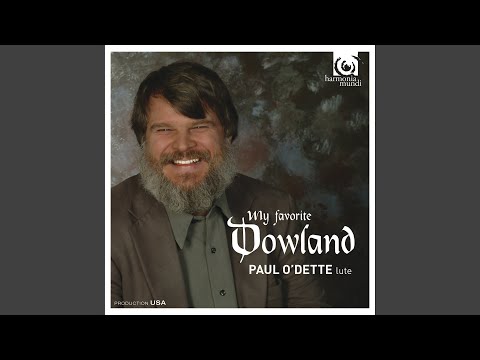
For the absolute definitive solo Dowland experience, Paul O'Dette's masterpiece album, My Favorite Dowland (Harmonia Mundi), is the ultimate gold standard. O'Dette is an absolute legend of historical performance practice who captures the breathing space, the tactile warmth of fingers on gut strings, and the profound emotional depth of Dowland's compositions. Without needing a single lyric, his fingers weave the pure, unadulterated essence of Elizabethan melancholy.

You can experience the exquisite textures and hushed beauty of his solo performances directly via the link below:

YouTube video

If you want an early music experience that skips the textbook lecture and goes straight for the emotional gut, put on Songs from the Labyrinth or dive into O'Dette's solo catalog. It is the ultimate testament to the fact that beautiful, melancholic songwriting is entirely timeless.

みなさんはスピーカーに何を使っていますか?私が愛用しているのは、Bang & OlufsenのBeosound A5です。

ただし、正直に言うと最初の印象は違った。箱から出して最初に鳴らしたとき、高音と低音が強調されたいわゆるドンシャリ型の音に聞こえ、このスピーカーの評判と自分の耳の感覚が一致しなかった。ところが数十時間ほど鳴らしていくうちに——いつからとは言えないが——低音域から高音域までのつながりが非常に滑らかになり、印象がガラリと変わった。これがエージング(慣らし運転)による変化なのか、耳が慣れたのかは断言できないが、いずれにせよ今の音には満足している。購入直後に判断を急がず、しばらく鳴らし続けることをすすめたい。

デンマークの老舗オーディオブランドBang & Olufsenが2023年にリリースしたポータブルスピーカー、Beosound A5。価格は25万円を超える。ポータブルスピーカーとしては異例の価格帯だが、このスピーカーには納得させるだけの理由がある。

Beosound A5

スペック

ドライバー5.25インチ ウーファー×1、2インチ フルレンジ×2、3/4インチ ツイーター×1
アンプクラスD 70W×4(合計280W)
周波数特性32Hz〜23,000Hz
接続Wi-Fi 6、Bluetooth 5.3、AirPlay 2、Chromecast built-in、Spotify Connect
バッテリー連続再生約12時間、充電約3時間
防水・防塵IP65
サイズ28.5×18.7×13cm
重量約3.7kg

音の話

32Hzから23,000Hzという広い周波数特性を、合計280Wのクラスアンプが駆動する。このサイズのポータブルスピーカーとしては破格のスペックで、低域の沈み込みから高域の繊細な表現まで、音域の全体を過不足なく鳴らす。

普段はポストクラシカルや環境音楽、アンビエントを中心に、ポストロック、アンビエントテクノ、現代ジャズまで幅広く聴いている。繊細な音楽ほどスピーカーの素直さが問われるが、Beosound A5は余計な色付けをせず、録音に込められたニュアンスをそのまま届けてくれる。ポストロックの轟音も、テクノの低域の圧も、ジャズのシンバルの倍音も、同じ一台で破綻なく鳴らせる。

全音域にわたってフラットに近い特性を持つため、楽器を弾くときのモニタースピーカーとしても十分に機能する。USB-C端子経由でPCに接続してオーディオ出力として使うことも可能で、ワイヤレス接続に縛られない柔軟な使い方ができる。

BluetoothとWi-Fi——接続方式で音質は大きく変わる

Beosound A5はBluetoothとWi-Fiの両方に対応しているが、接続方式によって音質に大きな差が生じる。

Bluetoothはそもそも帯域が非常に狭い。プロトコルのオーバーヘッドを差し引いた実効帯域は1Mbps以下で、CDクオリティ(16bit/44.1kHz)の非圧縮ストリームが必要とする1,411kbpsにすら届かない。そのためBluetoothで音声を送るには必ず非可逆圧縮が入る。iPhoneが対応するのはSBCと最大256kbpsのAACのみで、AndroidやソニーデバイスがサポートするLDAC(最大990kbps)やaptXには対応していない。つまりiPhoneからBluetoothで送った時点で、音源のクオリティに関わらずAAC 256kbps相当に劣化する。

一方Wi-Fi接続では帯域の制約がほぼなく、音声データをそのまま送ることができる。AirPlay 2は24bit/48kHzまでのロスレス伝送に対応しており、ALAC(Apple Lossless)のファイルを劣化なく届けられる。Chromecast built-inはさらに24bit/96kHzまで対応するが、iOSのApple Musicアプリには現時点でCastボタンがなく、AndroidかPCからでないと利用できない制約がある。

Wi-Fi接続とBluetooth接続の差は「好みの問題」ではなく、数字で裏付けられた音質の差だ。せっかくロスレス音源を持っているなら、Wi-Fi接続で聴くことを強くすすめる。

(ちなみにBluetoothスピーカーでaux接続があるものがお使いの方は、今すぐaux接続に切り替えることをお薦めする。コードが邪魔になっても、それだけBluetoothは音の面で劣る。)

セパレートスピーカーなしで部屋が鳴る理由

Beosound A5はモノラルの一体型スピーカーだが、セパレートのステレオシステムがなくても部屋全体が音で満たされる感覚がある。これは背面に配置された2基のフルレンジドライバーによるものだ。

仕組みはこうだ。前面にウーファーとツイーターを配置し、背面の左右コーナーに2インチのフルレンジドライバーを2基追加することで、音が前方だけでなく後方・側方にも放射される。後方に向かった音は壁や天井に反射して部屋中に広がり、スピーカーの位置を意識させない「空間に満ちた音」として聴き手に届く。これが360度サウンドと呼ばれるOmniモードの原理だ。

通常のステレオスピーカーは左右のスピーカーの中間に定位した音像(スイートスポット)を作り出す。正確な音場再現という点ではそちらが優れているが、部屋のどこにいても均質に音が届くわけではない。Beosound A5のOmniモードは音場の厳密な再現よりも「空間全体への拡散」を優先した設計で、どの位置に置いても、どの角度から聴いても音が自然に届く。

B&OアプリではOmniモードと前方指向のFrontモードを切り替えられる。じっくり聴き込みたいときはFrontモード、部屋全体に音楽を流したいときはOmniモードと使い分けられる。私は普段Omniモードで使っている。一台で部屋ごと鳴らせるこの感覚が、セパレートシステムへの未練を感じさせない。

小型で、バッテリーで動く

このスピーカーを選んだ理由のひとつが、持ち運びの自由さだ。木製のハンドルを持てば家中どこへでも運べる。寝室に持ち込んで、バッテリー駆動で音楽を聴きながら眠る——そういう使い方ができる。コンセントや配線の都合に縛られない。

IP65の防水・防塵性能を備えているので、屋外に持ち出すこともできる。

試聴するなら、この一曲を

購入を検討している方には、ぜひB&Oのショールームに足を運んで試聴してほしい。

そのときに持っていく音源として、Max Richterの「Shadow Journal」をおすすめしたい。低域から高域まで広い音域を使った録音で、弦の繊細なテクスチャーと重厚な低音が同居している。このスピーカーが全音域にわたって均質に、かつ力強く鳴らせることを、よく確かめられる一曲だと思う。

YouTube video

デザインと長期的な付き合い

Beosound A5のデザインはデンマーク・イタリアのデザインユニットGamFratesiによるもので、1960年代のB&O製品から受け継いだ丸みと木のハンドルが特徴的だ。

私はOakモデルを使っているが、木材部分の美しさは高級家具に近い。この木製ハンドルとカバーはデンマークの家族経営の木工工房で一点ずつ手仕上げされており、量産品にはない個体ごとの木目のゆらぎがある。B&O自身も「完全な均一性は人工的に見える」として、あえて木目の自然な差異を活かす方針をとっている。精密ミリングされたアルミフレームと手仕上げのオーク材の組み合わせは、音を出す道具というよりインテリアの一部として部屋に置ける佇まいをつくっている。

また、モジュラー設計により部品交換やソフトウェアアップデートで長く使い続けられる設計になっている。「高い買い物を長く使う」という思想がスピーカー本体の設計にも反映されている点が、このブランドらしいと感じる。

買い替えるのではなく、育てていく道具として。そういう意味でも、Beosound A5は私の音楽生活に馴染んでいる。

Words Came Before the Music

Natalie Merchant was born in 1963 in Jamestown, New York. Her parents divorced when she was seven, and after her mother remarried, the family moved to a commune in upstate New York. The women she met there became the foundation of who she would become.

“I fell in love with those people,” she has said. “They were artists. They were ladies that didn't shave their legs. They lived alone and fed the wood stove in the winter, and they were strong.”

She grew up in a house without television. At sixteen, she dropped out of high school and enrolled in community college. Outside the classroom, she read books and discovered folk music — picking up a copy of Harry Smith's Anthology of American Folk Music from the library was the door that led her to singing. It wasn't hours of guitar practice that shaped her; words and reading came first. Her eye for people pushed to the margins of society was already forming in those years.

10,000 Maniacs — The Band's Voice, Her Own Words

In 1981, seventeen-year-old Natalie joined a Jamestown band called Still Life. The band soon renamed themselves 10,000 Maniacs, and Natalie took on the roles of lead vocalist and primary lyricist.

From her teenage years, her songwriting stood apart. Forgotten figures from history, the guilt of a bystander watching a child be abused (“What's the Matter Here”), an unwanted pregnancy (“Eat for Two”) — the practice of using pop songs as a vehicle for social and historical subjects was there from the very start of her career, and it never left.

The band hit their peak between 1987 and 1993, with In My Tribe, Blind Man's Zoo, and Our Time in Eden all charting in the top tier of the US charts. At their 1993 MTV Unplugged session, they covered “Because the Night,” the song co-written by Bruce Springsteen and Patti Smith. Natalie's intimately conversational delivery made the cover the band's biggest hit, reaching No. 11 on the Billboard Hot 100, and brought her name to a much wider audience.

That same year, she announced she was leaving. Her stated reason: a lack of creative control over the music she wrote. She chose to break free from the machinery of a band that had grown large around her and to stand entirely on her own as a singer-songwriter.

Patti Smith's original (written by Bruce Springsteen) Patti Smith — Because the Night

10,000 Maniacs' cover 10,000 Maniacs — Because the Night

Tigerlily — A Voice Written in Complete Freedom

Her 1995 solo debut Tigerlily was the first album Natalie made with total creative freedom.

The result was stunning. “Carnival,” “Wonder,” and “Jealousy” charted on the Billboard Hot 100 in succession, and the album went on to sell over five million copies. But the commercial success gave Natalie something beyond fame — it gave her the financial and psychological independence to spend the rest of her career ignoring label pressure and pursuing social activism and artistic experimentation entirely on her own terms.

“Wonder,” in particular, was written as a tribute to twin girls Natalie had come to know personally, both born with epidermolysis bullosa (EB), a rare and painful genetic condition that causes the skin to blister at the slightest contact. Natalie has said she didn't know who the song was about when she wrote it — she discovered the twins afterward, formed a deep friendship with them, and stayed close until they died in their twenties. The song's universal message later inspired R.J. Palacio's YA novel Wonder, and was played over the end credits of the 2017 film adaptation.

The success of “Wonder” was no accident. The same gaze she had learned from the strong women of the commune — a way of seeing people the world had pushed aside — was what moved audiences. As a rare example of an artist who achieved both artistic integrity and commercial success simultaneously, Tigerlily remains the defining album of Natalie Merchant's career.

Natalie Merchant — Wonder

“Wonder” (1995, from Tigerlily). Written as a tribute to twin girls born with epidermolysis bullosa (EB). Its universal message inspired R.J. Palacio's novel Wonder and was used in the end credits of the 2017 film of the same name.

Poetry and Politics — A Maturing Voice

After going solo, Natalie moved steadily away from chart positions and toward the music she actually wanted to make.

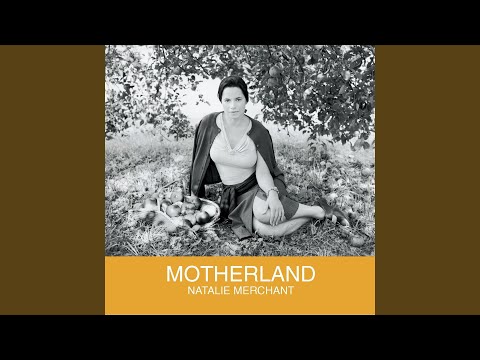
Motherland (2001) brought her political and social consciousness to the foreground, and Leave Your Sleep (2010) saw her set the poems of various poets to music — an unconventional project by any measure. The freedom that Tigerlily's success had created made these uncommercial artistic experiments possible. She drifted from the mainstream, but her influence can be heard clearly in the generation of thoughtful singer-songwriters that followed — Colin Meloy of The Decemberists, Weyes Blood, and others who share her instinct for literary, socially conscious songwriting.

The album's title track, “Motherland,” is a desperate prayer to be held and sheltered from the encroaching concrete of modern life. Its repeated refrain — a plea to be cradled, lulled to sleep, kept safe — reads not as simple nostalgia but as a direct confrontation with the alienation of contemporary society. The song was completed just days before September 11, 2001. Merchant later said: “I was far more cynical when I wrote it. But now the song has become the death of nostalgia and dreams.” An act of violence rewrote the meaning of a song she had already finished — and that fact alone speaks to how wide a net her writing casts.

🔗 Read the full lyrics to “Motherland” on Genius

Natalie Merchant — Big Girls

On “Big Girls” from Keep Your Courage (2023), a duet with Black vocalist Abena Koomson-Davis, she sings of women holding each other up through the storm. Her eye for those pushed to the margins has not dimmed past sixty.

Losing Her Voice, Finding It Again

In 2019, Natalie was visiting the V&A Museum in London when her arm suddenly went numb. Back home, tests revealed she had OPLL (ossification of the posterior longitudinal ligament) — a degenerative spinal condition in which the ligaments of the spine calcify and compress the spinal cord, potentially leading to paralysis in severe cases. Emergency surgery was unavoidable.

The operation lasted six hours. Surgeons made an incision in her throat, moved her vocal cords aside, and removed three bones from her spine. When she came around, she couldn't sing.

“It took me to a place of panic,” she has said. “It made me wish I had made more records.”

For ten months, her voice didn't return. While that silence stretched on, the pandemic closed over the world. Natalie found a collection of poetry by Robin Robertson, and words began to move through her throat again. She started writing songs. The result was Keep Your Courage (2023).

Peter Asher, who had produced her work years earlier, said: “I've been a fan for decades, but this might be her greatest album.” The chart numbers don't match the heights of Tigerlily's commercial peak. But in an album made after losing her voice, getting it back, and turning sixty, there is something that no chart position could measure.

Natalie Merchant — Keep Your Courage

“Keep Your Courage” (2023). Her first collection of original songs in nine years, born from the silence of spinal surgery and the solitude of a pandemic.

The Gaze That Never Changed

Her voice has aged. But the core of how she sings has not.

The style of speaking directly to the listener, the eye for those the world has pushed aside, the ability to fold feminism and social consciousness into music people actually wanted to hear — all of it has been there since the day a seventeen-year-old walked into a Jamestown band rehearsal, and none of it has left.

A girl who dropped out of high school, was shaped by the strong women of a commune, and found her way into music through a library record collection has been speaking to the world for over forty years. Is there a voice like that in your own life — one that has never quite changed?

When people think of Sigur Rós, they picture Jónsi's falsetto, the bowed guitar, the drift of meaningless syllables in Vonlenska. But behind that sound stands an American artist who arrived from outside Iceland. Alex Somers is not a member of the band, yet he was Jónsi's partner for over a decade — and since 2005 has been one of the most crucial figures in shaping the group's ambient depth.

A Meeting in Boston

Alex Somers was born in Baltimore, Maryland in 1984. At thirteen, alongside a guitar he received for Christmas, he acquired a Tascam four-track recorder and fell into a fascination with recording itself. “It wasn't about playing an instrument,” he recalled. “It was about controlling my own sonic environment.” He taped down keyboard keys with his brother, letting drones run for days. This analog experimentation became the root of everything that followed.

What matters here is that Somers went on to study at the Berklee College of Music in Boston, completing a double major in film scoring and music therapy — a full formal music education. Berklee's curriculum gave him a rigorous grounding in orchestration, music theory, and scoring technique, producing in Somers a rare duality: the instinctive experimenter and the structural designer who could build music on paper.

Sigur Rós, for all their musical grandeur, are a band whose language grew from intuition rather than academic training. Jónsi is a self-taught guitarist and the poet who invented Vonlenska; the band's entire vocabulary was shaped by feeling and experiment, not by the conservatoire. Somers's presence in that world is therefore strikingly singular: here was someone who could read and write orchestral scores, someone who could talk about arrangement as architecture — and he was standing closer to the band than almost anyone.

In 2002, while still at Berklee, Somers was introduced to Jónsi on the street outside the college when Sigur Rós came through Boston on tour. Jónsi is openly gay, and the two became a couple almost immediately. In the early months of the relationship, Jónsi would stay at Somers's Cambridge apartment between tours and recording sessions. Then in 2005, Somers made the decision to follow Jónsi to Reykjavík. The fact that a boy from Baltimore left his home country to live with his partner in Iceland is the origin point for everything that came after. In Reykjavík, Somers also enrolled at the Iceland Academy of the Arts (Listaháskóli Íslands) to study visual art. “Art school was far more musical than music school,” he later reflected. “Almost all my classmates were playing and experimenting. At music school, most people were just studying music.”

Riceboy Sleeps — Collaboration as Silence

Living together in Reykjavík as a couple, music became inseparable from daily life. They recorded at home — the string quartet Amiina (longtime Sigur Rós collaborators) playing in the living room, the Kópavogsdætur Choir recorded in the same apartment. That handmade quality became embedded in the texture of the sound.

In February 2009, the pair retreated to a solar-powered raw-food commune in Hawaii to mix the tracks they had been recording intermittently over several years. Released that July as Riceboy Sleeps, under the name Jónsi & Alex, the album presented a world distinct from Sigur Rós's post-rock grandeur — more delicate, more ethereal, acoustic instruments and choir dissolving into one another.

Somers later recalled: “Before I opened a studio, music was always just in the house. It came from the walls. That felt very natural.” Riceboy Sleeps is that naturalness preserved in amber.

Somers's Berklee training works quietly in this album. Combining Amiina's string quartet with the Kópavogsdætur Choir, shaping each piece so that the whole functions as a structure of silence — that is not something made by instinct alone. It requires someone who understands the grammar of music as a language.

YouTube video


All Animals — A Commission Born in a Biennial

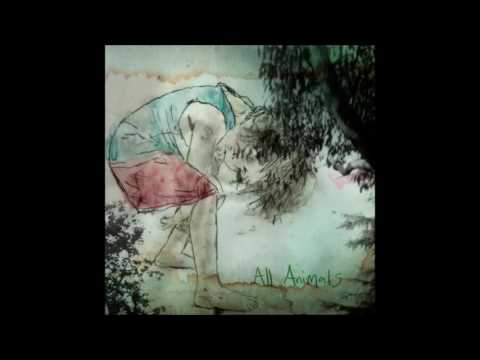
The Jónsi & Alex work All Animals has a different origin entirely from Riceboy Sleeps. It was commissioned by Thyssen-Bornemisza Art Contemporary (TBA21) for The Morning Line, a monumental public art structure designed by artist Matthew Ritchie. The piece was written and recorded in September 2008 in Reykjavík, using primarily acoustic instruments — piano, voice, and animal sounds.

The Morning Line itself was first unveiled at the 3rd Seville International Contemporary Art Biennial in 2008: a structure 8 metres high and 20 metres long, built from 17 tonnes of coated aluminium, conceived as a platform for exploring the intersections of art, architecture, music, mathematics, cosmology, and science. Jónsi & Alex were not the only composers commissioned — alongside them were Bryce Dessner, Mark Fell, Lee Ranaldo, Chris Watson, and others, each contributing works encoded for the installation's 47-channel spatial sound system.

All Animals was later included as a bonus CD in the limited-edition Riceboy Sleeps box set (3,500 numbered copies), first pressed on vinyl in 2017 in a run of 100 hand-painted copies, and repressed for Record Store Day 2018 in an edition of 1,000.
YouTube video


Valtari — Sculpting in Fog

Immediately after Riceboy Sleeps, Sigur Rós began attempting a new album. They started recording in 2009 — ambient sketches, long drones — but lost their sense of direction and scrapped everything in 2010, entering an indefinite hiatus. The material existed. What the band had lost was the perspective to assemble it into something coherent.

In 2011 the band reconvened, this time at Somers's Reykjavík studio. He had been brought on to mix. But after a week spent deep in the material, he found something buried there. “I realized I was listening to an amazing collection of songs,” he said. “But the guys were at a stage where they were losing focus, and it was difficult to assemble everything and make sense of it all.”

What Somers did was concrete: he surveyed the scattered drones and sketches from above, then redesigned them — deciding what to add, what to cut, how to sequence. He added texture and focus to ambient drones, presented the band with a list of overdubs to record, and encouraged them to use Icelandic lyrics in place of Vonlenska. The intuition Berklee had sharpened — the ability to think of music as a whole rather than a collection of parts — was being applied directly to a Sigur Rós album for the first time. After six weeks of sessions, the fragments coalesced into Valtari (2012). The word means “steamroller” in Icelandic; Jónsi described it as “something large that slowly rolls over you.”

Drowned in Sound wrote: “In 2011, the band alongside Alex Somers started the painstaking forensic task of piecing together a cohesive and magical work from disparate constituent parts.” It was work only someone with an outsider's perspective, a deep insider's fluency, and the structural vocabulary of a trained musician could have done.

YouTube video


Liminal — Music Living on the Threshold

In 2018, Sigur Rós launched the ambient project Liminal, run jointly by Jónsi, Alex Somers, and producer Paul Corley. Corley is an American composer and producer known for his work with Oneohtrix Point Never and Tim Hecker, and a member of the Icelandic label Bedroom Community. He became Sigur Rós's live Music Director in 2016, and has since been the electronic and sonic anchor of the band's ambient work.

Liminal means “threshold” — the project draws listeners into the membrane between waking and sleep, neither here nor there. Crucially, Liminal was made by exactly the same team as 2016's Route One. NPR introduced Liminal's launch by noting it followed “last year's Route One” by “the same crew.” Route One and Liminal are not separate works; they are the first and second movements of a sustained ambient investigation by Jónsi, Somers, and Corley.

Of Liminal Sleep (2019), the centrepiece of the project, the three wrote: “We like the fact that sleep remains defiantly mysterious; something we all do — all need to do — but can't ever get fully inside. This playlist is a modest attempt to mirror the journey of a sleep cycle, with its curves, steady states and natural transitions.”

Somers here is not merely a collaborator but one of the project's architects — weaving the entirety of the Sigur Rós catalogue, solo work, film scores, and AI-generated music into what the project describes as “a multi-faceted perspective on the whole Sigur Rós creative universe.” His lifelong understanding of ambient music as environmental design is the skeleton holding this project upright.

YouTube video

Route One — The Algorithm Drives the Ring Road

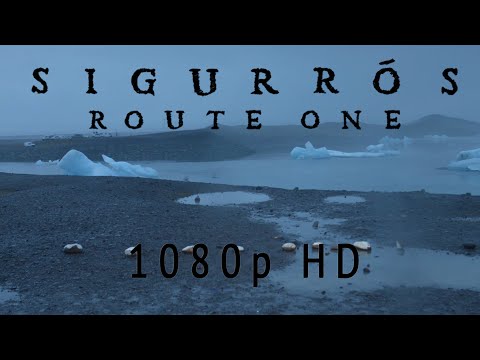
Route One precedes Liminal by two years and represents the starting point of the same team's ambient exploration. On the longest day of summer 2016, Sigur Rós drove the entire 1,332-kilometre loop of Iceland's ring road, broadcasting the 24-hour journey live on YouTube while a soundtrack was generated in real time alongside it. This was the Slow TV ambient experiment Route One — and 2016 was also the year Paul Corley joined as live Music Director and co-produced the single “Óveður.” Route One was the first fruit of the moment Somers and Corley both arrived in the band's orbit.

The music was generated using BRONZE, a dedicated generative music platform developed in 2011 by Mike Grierson of Goldsmiths University and musician Gwilym Gold. The system's design principle: “every sound is subject to a set of laws, with a new and unique track generated in real time on every playback.” It is not random — the composer sets the rules — which places it philosophically in the same lineage as Max/MSP or Pure Data, the music programming environments taught in many music schools and universities.

Multi-track stems from “Óveður” were fed into BRONZE, which endlessly recombined them in real time. That is what made 24 hours — or over 25 in the full version — of continuous music possible. This is neither a remix nor an improvisation; it is algorithmic variation, directly analogous to Brian Eno's earliest ambient experiments with tape loops displaced slightly in phase.

There is no public record of Somers directly programming the BRONZE system, but Corley's deep background in electronics work — honed across years of collaboration with Oneohtrix Point Never and Tim Hecker — likely made him the bridge between the system and the band's musical intentions. Somers, trained at Berklee in an environment where music programming tools like Max are standard, was not far from this mode of thinking either. The record of their direct involvement may be incomplete; what Route One's achievement makes clear is how naturally this team connected to the idea of composing music as programmable law.

Each track takes its name from the GPS coordinates of a stop along the road: 63°32'43.7”N 19°43'46.3”W, 64°02'44.1”N 16°10'48.5”W, and so on — location data as title. The album was initially released at Iceland's Norður og Niður festival in hand-painted sleeves by artist Sigga Björg, then repressed for Record Store Day 2018.

As Treble Zine observed, Route One bridges the placid serenity of Valtari with the ice-burned sullenness of Kveikur, a continuation of the aesthetic universe the band has been building toward: pagan sea caves, volcanic glass, old Viking space. And Route One connects directly into Liminal: the three — Jónsi, Somers, Corley — pursued throughout both projects a single consistent thought: that music need not be a finished object, but a perpetually generated environment.
YouTube video

Formal Training, and the Bridge to the Orchestra

Sigur Rós's musical language grew from somewhere other than formal education. Jónsi is self-taught; the band's entire expression was shaped by instinct and experiment rather than the conservatoire. When the band began moving seriously toward orchestral collaboration, they always needed someone who could speak that language structurally. Alex Somers filled that gap.

His Berklee training in orchestration and film scoring gave him the practical ability to write specific musical instructions for strings, woodwind, brass, and choir. When he combined Amiina's quartet with the Kópavogsdætur Choir on Riceboy Sleeps, when he layered texture and focus onto Valtari's drones, when he designed the ensemble architecture of Liminal — all of it was work that requires a trained musician's ear.

At the Barbican in 2019, Jónsi and Somers performed Riceboy Sleeps in its entirety with the London Contemporary Orchestra — 25 players spanning strings, woodwind, horns, and percussion. “It's pretty amazing that we get to play the whole album in running order with an orchestra and choir,” Jónsi said. “It brings new meaning, new life, different shades and textures.”

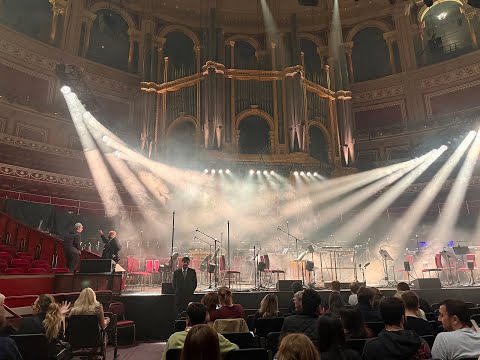
Since the release of ÁTTA in 2023, Sigur Rós have established full orchestral accompaniment as their standard touring format — conductor Robert Ames leading local 41-piece orchestras (the Wordless Music Orchestra, the LCO, the Detroit Symphony Orchestra, and others) across Europe and North America. In 2025, at the Royal Albert Hall, they performed “Ára bátur” live for the first time with the LCO. The 2026 final tour leg has seen them collaborate with the Scottish Chamber Orchestra, the Bilbao Symphony Orchestra, and others city by city.

The foundation for all of this was laid over years: the string arrangements of Riceboy Sleeps, the layering on Valtari, the ensemble design of Liminal — work that only someone with formal musical training could have done. That Sigur Rós now stand in the world's great concert halls alongside full orchestras owes something, at least in part, to this accumulated groundwork.
YouTube video

Takk... (The Tape Variations) — Tape as Memory

In December 2025, Sigur Rós released Takk... (The Tape Variations): a full reworking of the 2005 classic by Sidney Satorsky, a Toronto-based producer. “Takk... has been one of my favourite albums since it was released 20 years ago,” Satorsky wrote. “When I was invited to collaborate, I wanted to explore creating alternate versions of the songs that felt at home somewhere between sleep and awake.”

Satorsky had already served as co-producer on Jónsi & Alex's Lost and Found (2019), placing him well inside this ambient creative orbit rather than as an unknown outsider.

A suggestive thread runs through the choice. Alex Somers has been manipulating tape since he was thirteen — layering recordings on a Tascam, building environments from sound. The official description of Lost and Found explicitly cites “tape experiments” as central to the work. In Satorsky, Somers may have found a collaborator who shared not just musical sensibility but a particular relationship to tape as material — the sense that recording is less about capture than transformation. Tape is, for Somers, the origin point of what it means to make music at all. That memory and aesthetic instinct may well have shaped the eye that selected the person to reinterpret a twenty-year-old masterpiece.

YouTube video

What One American Changed

If Alex Somers's contribution must be summarised in a phrase, it is this: an ear that could speak the inside language from the outside. He was never a band member, but by living in Reykjavík with Jónsi as his partner, he came to understand Sigur Rós's musical grammar more deeply than almost anyone. The two separated in 2019, but their creative relationship has continued — Jónsi and Somers remain collaborators and friends.

His film-scoring training at Berklee, his immersion in visual art at the Iceland Academy of the Arts, his lifelong accumulation of tape experiments — all of these fed into a singular role in Sigur Rós's ambient deepening.

In Valtari, he sculpted material out of fog. In Liminal, he designed the border between sleep and music. In Route One, he helped set algorithm and Icelandic geography dissolving into one another. In Takk... (The Tape Variations), he passed a love of tape as material to the next collaborator in the circle. These are not separate events — they are expressions of a single coherent sensibility.

Sigur Rós remains Sigur Rós. But much of the ambient depth in their music may trace back to the moment a boy from Baltimore first put his hands on a Tascam four-track at the age of thirteen — and realized that sound was an environment you could control.
One day, a piece of music drifting out of BBC Radio 3's Late Junction made me stop what I was doing. Strings and guitar dancing around each other in an interplay unlike anything I'd heard before. I jotted down the song title and the band name, and started working my way through their albums. Then, somewhere deep into that listening, a melody came on that I recognized — the one I'd been hearing in HP commercials for years.

Penguin Cafe Orchestra. I had been living with their music for years before I ever learned their name.

“You know it, but you don't know whose it is.” That's what Penguin Cafe Orchestra has always been.

Music Born from a Fever Dream

To talk about Penguin Cafe Orchestra, you have to start in the south of France in 1972. British guitarist Simon Jeffes ate some bad fish and fell ill. Laid up in bed, burning with fever, he kept seeing the same strange vision.

Arthur Jeffes — Simon's son — later described it this way: “My father had a nightmare about the near future. People lived in enormous concrete buildings, staring at screens. In the corner of each room sat a large camera, watching them constantly. In one room, a couple was having loveless sex. In another, a musician sat surrounded by mountains of equipment — but wearing headphones, so no actual music filled the room.”

At the opposite pole of that inhuman world, Simon saw in his dream a place called the Penguin Cafe. Walking down a dark street, you'd come upon an old building spilling out light and noise. Inside, a long table where strangers sat shoulder to shoulder. And at the far end, a small ensemble playing — music that felt somehow familiar, yet impossible to place.

When the fever broke, Simon made a decision: he would write the music that dream ensemble was playing. And so, in 1972, Penguin Cafe Orchestra was born.

Chamber Music Called an “Orchestra”

The word Orchestra conjures images of a large symphonic ensemble. The actual Penguin Cafe Orchestra was something far removed from that — a small, intimate group.

Guitar, cello, violin, ukulele, trombone, percussion. The lineup shifted from piece to piece, and Simon brought in harmonium, penny whistle, rubber bands, and even telephone dial tones as instruments. This was chamber music — or something even freer than that, something that refused any category.

The name Orchestra was Simon's joke, and also his musical manifesto. He borrowed a word with authoritative weight and quietly dismantled what it implied. Not music to fill a concert hall, but music to be played in the back of a café — intimate, warm, bodily. That was what Simon was after.

YouTube video

“Perpetuum Mobile” (1987). Written in the irregular meter of 15/8, this piece carries the sensation of a perpetual motion machine that seems always about to end but never does. It became widely known as the theme for the TV adaptation of The Handmaid's Tale and the film Mary and Max.

The Music of Its Moment, and Something Distinctly British

When Penguin Cafe Orchestra released their debut album in 1976, they were emerging from — and in conversation with — a rich landscape of contemporary music.

In America, Steve Reich and Philip Glass were developing Minimalism: repeating patterns, layered voices, quiet transformation. PCO's music shares structural affinities with all of that. But it keeps a clear distance from Minimalism's abstraction and cool detachment.

Where contemporary Minimalism pursued intellectual structural beauty and rigorous systems, PCO's music is shot through with an irrepressible sense of play. Rubber bands as instruments. Telephone dial tones looped into a piece literally called “Telephone and Rubber Band.” Odd time signatures and intricate counterpoint that, in Simon's hands, read not as complexity but as humor. He borrowed Minimalism's language and then let the air out of its tension — that was Simon Jeffes's particular genius.

Part of the source of that playfulness, I think, lies in British and Irish traditional music. Trad has long been built around the repetition of short phrases for dancing — reels and jigs, melodies cycling with small variations. The repetition that Minimalism pursued intellectually was already embedded there, in the body, in the feet. PCO brought both kinds of repetition together not as an academic proposition but as physical joy.

The origin story of “Music for a Found Harmonium” is emblematic. On a Japanese tour, Simon happened upon an old foot-pedal organ abandoned by the roadside. The simple melody that emerged from that imperfect instrument slipped so naturally into the grammar of Irish reels that traditional players — Patrick Street, De Dannan, Kevin Burke, Sharon Shannon — began covering it as if it had always belonged to them. Not classical music, not contemporary art music, but the music people have danced and laughed and made noise to across generations — that was what supported PCO's humor and lightness.

The debut album was released on Obscure Records, the label run by Brian Eno. Eno's ambient music proposed a static kind of space — music that could be listened to or ignored equally. Simon's vision was different: it contained the warmth and noise of people actually gathered together. PCO's music has that particular friendliness because, against Eno's depopulated atmosphere, it always carries the body heat of other people in the room. Meanwhile, Kraftwerk was inventing an entirely new musical language called techno. PCO shared in the same contemporary questions, and turned toward something more human, somewhere warmer.

The rhythmic vitality of folk, the structure of Minimalism, the atmosphere of ambient, the intimacy of chamber music — all of it dissolved into a distinctly British lyricism. None of Philip Glass's chill, none of Eno's self-erasure, none of Kraftwerk's mechanization. Something more human, more frayed at the edges, and funnier.

YouTube video

“Music for a Found Harmonium” (1984). Inspired by a foot-pedal organ Simon discovered abandoned on a street. The melody was adopted by Irish traditional musicians as their own, and was later featured in the film Napoleon Dynamite.

Success, Forgetting, and Ubiquity

Penguin Cafe Orchestra were never obscure. The 1987 album Signs of Life charted in the UK, and they toured internationally. They found an audience in Japan. The Royal Ballet incorporated their music into productions. They appeared on The South Bank Show and on Terry Wogan's television programme.

But their debut came out in 1976 — the year I was born — and that music is now “old.” Streaming algorithms favor new releases. And Simon Jeffes died in 1997, of a brain tumor, at forty-eight. There would be no new music, no new tours.

Still, the music kept living. As film scores, as television soundtracks, as background music in commercials. HP was only the most prominent of countless advertisements. The Handmaid's Tale, Mary and Max, Napoleon Dynamite, Capitalism: A Love Story — the list of screen works drawing on PCO is long.

This is how the “you know it but you don't know whose it is” phenomenon works. The music continued to reach people's ears through different circuits even after the name faded from common knowledge. Only the name was left behind as time moved on.

What the Son Inherited

Ten years after Simon's death, in 2007, former members gathered at Union Chapel in London for a memorial concert. On that stage, Simon's son Arthur Jeffes played percussion and keyboards. All three nights sold out.

Encouraged by that response, Arthur formed a new band in 2009 called simply Penguin Cafe — a completely new ensemble, with none of the original PCO members.

Arthur studied archaeology and anthropology at Cambridge — an intellectual by formation — while also nurturing a passion for experimental music. There's a story from his childhood of him striking piano keys with a hammer, which Simon apparently read not as destruction but as the first stirrings of an experimental spirit.

Penguin Cafe has now released five albums, every one of them on Erased Tapes — the post-classical label that has been home to Nils Frahm, Ólafur Arnalds, and Jóhann Jóhannsson. That fact alone signals that Arthur is not simply preserving Simon's legacy, but actively situating Penguin Cafe within the contemporary conversations of post-classical and neo-classical music.

YouTube video

In the repeating structures and unique sense of play that animate Penguin Cafe, the weight of his father's influence is not hard to find.

Still Playing, in the Back of the Café

The latest album, Rain Before Seven… (2023), represents the current horizon of Arthur's Penguin Cafe. Its title draws from an old British weather saying — “Rain before seven, fine before eleven” — and the music carries Simon's spirit forward while speaking in Arthur's own voice.

Violin, cello, double bass, percussion alongside balafon, ukulele, melodica. Just as Simon made rubber bands and telephone tones into instruments, Arthur brings “unexpected sounds” into the chamber music frame. The approach is faithful throughout to his father's philosophy: “Take an interesting, slightly weird idea and do something weird with it. But make it beautiful, and emotionally accessible.”

The dream café is still open. The ensemble in the back is still playing. And you have almost certainly already heard them. You just didn't know their name.