The Architect of Ambient — What Alex Somers Brought to Sigur Rós
When people think of Sigur Rós, they picture Jónsi's falsetto, the bowed guitar, the drift of meaningless syllables in Vonlenska. But behind that sound stands an American artist who arrived from outside Iceland. Alex Somers is not a member of the band, yet he was Jónsi's partner for over a decade — and since 2005 has been one of the most crucial figures in shaping the group's ambient depth.
A Meeting in Boston
Alex Somers was born in Baltimore, Maryland in 1984. At thirteen, alongside a guitar he received for Christmas, he acquired a Tascam four-track recorder and fell into a fascination with recording itself. “It wasn't about playing an instrument,” he recalled. “It was about controlling my own sonic environment.” He taped down keyboard keys with his brother, letting drones run for days. This analog experimentation became the root of everything that followed.
What matters here is that Somers went on to study at the Berklee College of Music in Boston, completing a double major in film scoring and music therapy — a full formal music education. Berklee's curriculum gave him a rigorous grounding in orchestration, music theory, and scoring technique, producing in Somers a rare duality: the instinctive experimenter and the structural designer who could build music on paper.
Sigur Rós, for all their musical grandeur, are a band whose language grew from intuition rather than academic training. Jónsi is a self-taught guitarist and the poet who invented Vonlenska; the band's entire vocabulary was shaped by feeling and experiment, not by the conservatoire. Somers's presence in that world is therefore strikingly singular: here was someone who could read and write orchestral scores, someone who could talk about arrangement as architecture — and he was standing closer to the band than almost anyone.
In 2002, while still at Berklee, Somers was introduced to Jónsi on the street outside the college when Sigur Rós came through Boston on tour. Jónsi is openly gay, and the two became a couple almost immediately. In the early months of the relationship, Jónsi would stay at Somers's Cambridge apartment between tours and recording sessions. Then in 2005, Somers made the decision to follow Jónsi to Reykjavík. The fact that a boy from Baltimore left his home country to live with his partner in Iceland is the origin point for everything that came after. In Reykjavík, Somers also enrolled at the Iceland Academy of the Arts (Listaháskóli Íslands) to study visual art. “Art school was far more musical than music school,” he later reflected. “Almost all my classmates were playing and experimenting. At music school, most people were just studying music.”
Riceboy Sleeps — Collaboration as Silence
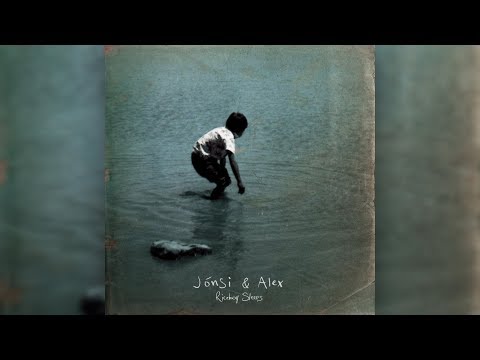
Living together in Reykjavík as a couple, music became inseparable from daily life. They recorded at home — the string quartet Amiina (longtime Sigur Rós collaborators) playing in the living room, the Kópavogsdætur Choir recorded in the same apartment. That handmade quality became embedded in the texture of the sound.
In February 2009, the pair retreated to a solar-powered raw-food commune in Hawaii to mix the tracks they had been recording intermittently over several years. Released that July as Riceboy Sleeps, under the name Jónsi & Alex, the album presented a world distinct from Sigur Rós's post-rock grandeur — more delicate, more ethereal, acoustic instruments and choir dissolving into one another.
Somers later recalled: “Before I opened a studio, music was always just in the house. It came from the walls. That felt very natural.” Riceboy Sleeps is that naturalness preserved in amber.
Somers's Berklee training works quietly in this album. Combining Amiina's string quartet with the Kópavogsdætur Choir, shaping each piece so that the whole functions as a structure of silence — that is not something made by instinct alone. It requires someone who understands the grammar of music as a language.
All Animals — A Commission Born in a Biennial
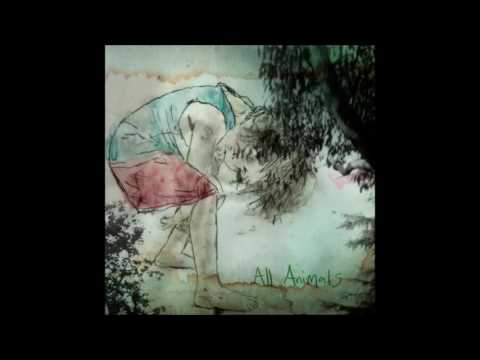
The Jónsi & Alex work All Animals has a different origin entirely from Riceboy Sleeps. It was commissioned by Thyssen-Bornemisza Art Contemporary (TBA21) for The Morning Line, a monumental public art structure designed by artist Matthew Ritchie. The piece was written and recorded in September 2008 in Reykjavík, using primarily acoustic instruments — piano, voice, and animal sounds.
The Morning Line itself was first unveiled at the 3rd Seville International Contemporary Art Biennial in 2008: a structure 8 metres high and 20 metres long, built from 17 tonnes of coated aluminium, conceived as a platform for exploring the intersections of art, architecture, music, mathematics, cosmology, and science. Jónsi & Alex were not the only composers commissioned — alongside them were Bryce Dessner, Mark Fell, Lee Ranaldo, Chris Watson, and others, each contributing works encoded for the installation's 47-channel spatial sound system.
All Animals was later included as a bonus CD in the limited-edition Riceboy Sleeps box set (3,500 numbered copies), first pressed on vinyl in 2017 in a run of 100 hand-painted copies, and repressed for Record Store Day 2018 in an edition of 1,000.
Valtari — Sculpting in Fog
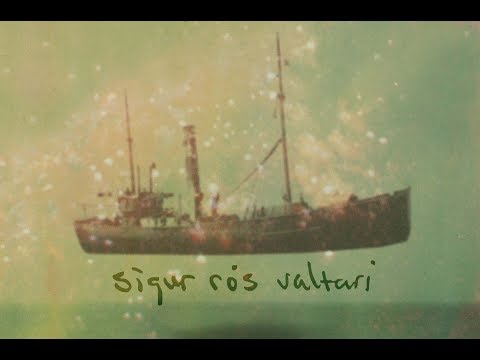
Immediately after Riceboy Sleeps, Sigur Rós began attempting a new album. They started recording in 2009 — ambient sketches, long drones — but lost their sense of direction and scrapped everything in 2010, entering an indefinite hiatus. The material existed. What the band had lost was the perspective to assemble it into something coherent.
In 2011 the band reconvened, this time at Somers's Reykjavík studio. He had been brought on to mix. But after a week spent deep in the material, he found something buried there. “I realized I was listening to an amazing collection of songs,” he said. “But the guys were at a stage where they were losing focus, and it was difficult to assemble everything and make sense of it all.”
What Somers did was concrete: he surveyed the scattered drones and sketches from above, then redesigned them — deciding what to add, what to cut, how to sequence. He added texture and focus to ambient drones, presented the band with a list of overdubs to record, and encouraged them to use Icelandic lyrics in place of Vonlenska. The intuition Berklee had sharpened — the ability to think of music as a whole rather than a collection of parts — was being applied directly to a Sigur Rós album for the first time. After six weeks of sessions, the fragments coalesced into Valtari (2012). The word means “steamroller” in Icelandic; Jónsi described it as “something large that slowly rolls over you.”
Drowned in Sound wrote: “In 2011, the band alongside Alex Somers started the painstaking forensic task of piecing together a cohesive and magical work from disparate constituent parts.” It was work only someone with an outsider's perspective, a deep insider's fluency, and the structural vocabulary of a trained musician could have done.
Liminal — Music Living on the Threshold
In 2018, Sigur Rós launched the ambient project Liminal, run jointly by Jónsi, Alex Somers, and producer Paul Corley. Corley is an American composer and producer known for his work with Oneohtrix Point Never and Tim Hecker, and a member of the Icelandic label Bedroom Community. He became Sigur Rós's live Music Director in 2016, and has since been the electronic and sonic anchor of the band's ambient work.
Liminal means “threshold” — the project draws listeners into the membrane between waking and sleep, neither here nor there. Crucially, Liminal was made by exactly the same team as 2016's Route One. NPR introduced Liminal's launch by noting it followed “last year's Route One” by “the same crew.” Route One and Liminal are not separate works; they are the first and second movements of a sustained ambient investigation by Jónsi, Somers, and Corley.
Of Liminal Sleep (2019), the centrepiece of the project, the three wrote: “We like the fact that sleep remains defiantly mysterious; something we all do — all need to do — but can't ever get fully inside. This playlist is a modest attempt to mirror the journey of a sleep cycle, with its curves, steady states and natural transitions.”
Somers here is not merely a collaborator but one of the project's architects — weaving the entirety of the Sigur Rós catalogue, solo work, film scores, and AI-generated music into what the project describes as “a multi-faceted perspective on the whole Sigur Rós creative universe.” His lifelong understanding of ambient music as environmental design is the skeleton holding this project upright.

Route One — The Algorithm Drives the Ring Road
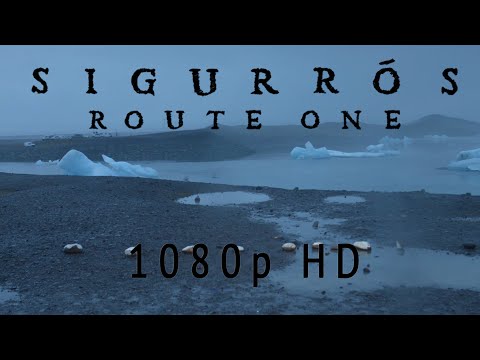
Route One precedes Liminal by two years and represents the starting point of the same team's ambient exploration. On the longest day of summer 2016, Sigur Rós drove the entire 1,332-kilometre loop of Iceland's ring road, broadcasting the 24-hour journey live on YouTube while a soundtrack was generated in real time alongside it. This was the Slow TV ambient experiment Route One — and 2016 was also the year Paul Corley joined as live Music Director and co-produced the single “Óveður.” Route One was the first fruit of the moment Somers and Corley both arrived in the band's orbit.
The music was generated using BRONZE, a dedicated generative music platform developed in 2011 by Mike Grierson of Goldsmiths University and musician Gwilym Gold. The system's design principle: “every sound is subject to a set of laws, with a new and unique track generated in real time on every playback.” It is not random — the composer sets the rules — which places it philosophically in the same lineage as Max/MSP or Pure Data, the music programming environments taught in many music schools and universities.
Multi-track stems from “Óveður” were fed into BRONZE, which endlessly recombined them in real time. That is what made 24 hours — or over 25 in the full version — of continuous music possible. This is neither a remix nor an improvisation; it is algorithmic variation, directly analogous to Brian Eno's earliest ambient experiments with tape loops displaced slightly in phase.
There is no public record of Somers directly programming the BRONZE system, but Corley's deep background in electronics work — honed across years of collaboration with Oneohtrix Point Never and Tim Hecker — likely made him the bridge between the system and the band's musical intentions. Somers, trained at Berklee in an environment where music programming tools like Max are standard, was not far from this mode of thinking either. The record of their direct involvement may be incomplete; what Route One's achievement makes clear is how naturally this team connected to the idea of composing music as programmable law.
Each track takes its name from the GPS coordinates of a stop along the road: 63°32'43.7”N 19°43'46.3”W, 64°02'44.1”N 16°10'48.5”W, and so on — location data as title. The album was initially released at Iceland's Norður og Niður festival in hand-painted sleeves by artist Sigga Björg, then repressed for Record Store Day 2018.
As Treble Zine observed, Route One bridges the placid serenity of Valtari with the ice-burned sullenness of Kveikur, a continuation of the aesthetic universe the band has been building toward: pagan sea caves, volcanic glass, old Viking space. And Route One connects directly into Liminal: the three — Jónsi, Somers, Corley — pursued throughout both projects a single consistent thought: that music need not be a finished object, but a perpetually generated environment.
Formal Training, and the Bridge to the Orchestra
Sigur Rós's musical language grew from somewhere other than formal education. Jónsi is self-taught; the band's entire expression was shaped by instinct and experiment rather than the conservatoire. When the band began moving seriously toward orchestral collaboration, they always needed someone who could speak that language structurally. Alex Somers filled that gap.
His Berklee training in orchestration and film scoring gave him the practical ability to write specific musical instructions for strings, woodwind, brass, and choir. When he combined Amiina's quartet with the Kópavogsdætur Choir on Riceboy Sleeps, when he layered texture and focus onto Valtari's drones, when he designed the ensemble architecture of Liminal — all of it was work that requires a trained musician's ear.
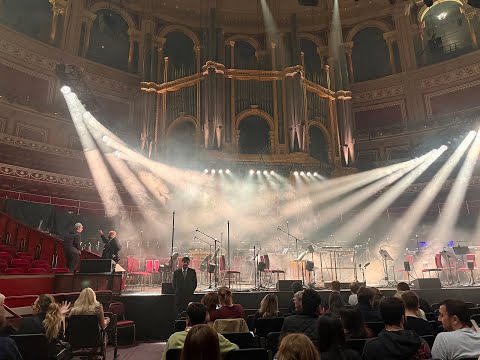
At the Barbican in 2019, Jónsi and Somers performed Riceboy Sleeps in its entirety with the London Contemporary Orchestra — 25 players spanning strings, woodwind, horns, and percussion. “It's pretty amazing that we get to play the whole album in running order with an orchestra and choir,” Jónsi said. “It brings new meaning, new life, different shades and textures.”
Since the release of ÁTTA in 2023, Sigur Rós have established full orchestral accompaniment as their standard touring format — conductor Robert Ames leading local 41-piece orchestras (the Wordless Music Orchestra, the LCO, the Detroit Symphony Orchestra, and others) across Europe and North America. In 2025, at the Royal Albert Hall, they performed “Ára bátur” live for the first time with the LCO. The 2026 final tour leg has seen them collaborate with the Scottish Chamber Orchestra, the Bilbao Symphony Orchestra, and others city by city.
The foundation for all of this was laid over years: the string arrangements of Riceboy Sleeps, the layering on Valtari, the ensemble design of Liminal — work that only someone with formal musical training could have done. That Sigur Rós now stand in the world's great concert halls alongside full orchestras owes something, at least in part, to this accumulated groundwork.
Takk... (The Tape Variations) — Tape as Memory
In December 2025, Sigur Rós released Takk... (The Tape Variations): a full reworking of the 2005 classic by Sidney Satorsky, a Toronto-based producer. “Takk... has been one of my favourite albums since it was released 20 years ago,” Satorsky wrote. “When I was invited to collaborate, I wanted to explore creating alternate versions of the songs that felt at home somewhere between sleep and awake.”
Satorsky had already served as co-producer on Jónsi & Alex's Lost and Found (2019), placing him well inside this ambient creative orbit rather than as an unknown outsider.
A suggestive thread runs through the choice. Alex Somers has been manipulating tape since he was thirteen — layering recordings on a Tascam, building environments from sound. The official description of Lost and Found explicitly cites “tape experiments” as central to the work. In Satorsky, Somers may have found a collaborator who shared not just musical sensibility but a particular relationship to tape as material — the sense that recording is less about capture than transformation. Tape is, for Somers, the origin point of what it means to make music at all. That memory and aesthetic instinct may well have shaped the eye that selected the person to reinterpret a twenty-year-old masterpiece.
What One American Changed
If Alex Somers's contribution must be summarised in a phrase, it is this: an ear that could speak the inside language from the outside. He was never a band member, but by living in Reykjavík with Jónsi as his partner, he came to understand Sigur Rós's musical grammar more deeply than almost anyone. The two separated in 2019, but their creative relationship has continued — Jónsi and Somers remain collaborators and friends.
His film-scoring training at Berklee, his immersion in visual art at the Iceland Academy of the Arts, his lifelong accumulation of tape experiments — all of these fed into a singular role in Sigur Rós's ambient deepening.
In Valtari, he sculpted material out of fog. In Liminal, he designed the border between sleep and music. In Route One, he helped set algorithm and Icelandic geography dissolving into one another. In Takk... (The Tape Variations), he passed a love of tape as material to the next collaborator in the circle. These are not separate events — they are expressions of a single coherent sensibility.
Sigur Rós remains Sigur Rós. But much of the ambient depth in their music may trace back to the moment a boy from Baltimore first put his hands on a Tascam four-track at the age of thirteen — and realized that sound was an environment you could control.