When Jazz Meets Islamic Soundscapes: 3 Masterpieces of Afro-Eastern Fusion You Might Have Missed
Description: There is a specific alchemy that happens when jazz's rhythmic openness meets the modal, microtonal traditions of the Islamic world—something more transformative than crossover. This piece moves through four albums: the near-miraculous ECM session where Zakir Hussain's tabla meets Jan Garbarek's saxophone; Dhafer Youssef's Electric Sufi, where Sufi vocal incantation collides with electric jazz grooves; Amir ElSaffar's Not Two, a 17-piece ensemble that runs Mesopotamian maqam through the density of Miles Davis's electric period; and Anouar Brahem's Blue Maqams, an album that proves the most profound jazz statement can be whispered in near-silence.
For decades, the boundaries of jazz have been wonderfully fluid. But there is a specific kind of alchemy that happens when the modal, microtonal, and spiritual traditions of the Islamic world collide with the rhythmic freedom of jazz. It's not just a superficial crossover; it's a profound dialogue that reshapes the horizon of modern music.
If you are looking to expand your sonic horizons, here are three incredible albums and artists that masterfully bridge the world of jazz with the profound textures of Islamic and Middle Eastern musical heritage.
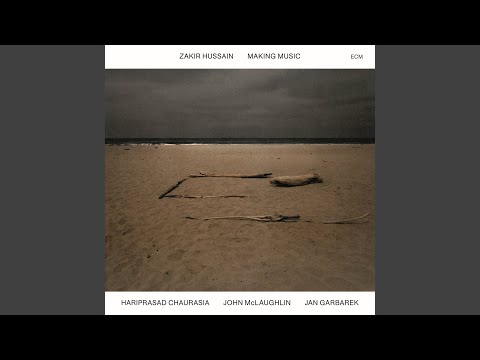
1. The Overlooked ECM Masterpiece: Making Music – Zakir Hussain
(The Spiritual Sublimation of Disparate Worlds)
When people think of the legendary ECM Records, they often picture cool, spacious European jazz or Nordic minimalism. But tucked away in their vast catalog is a hidden gem that beautifully captures the intersection of Eastern spiritual heritage and contemporary improvisation: Zakir Hussain's Making Music (1987).
Hussain himself is Hindu, but the tabla he plays is an instrument deeply rooted in both Hindu and Islamic musical cultures across South Asia, from India to Pakistan. This paired drum—combining the higher-pitched dayan and the lower bayan—is indispensable to Hindu devotional music and Islamic Sufi music (qawwali) alike. That quality of the tabla as a cultural bridge between traditions resonates deeply with the spirit of this album.
The lineup he leads looks like an impossible experiment:
- Zakir Hussain (Tabla)
- Hariprasad Chaurasia (Bansuri/Flute)
- John McLaughlin (Acoustic Guitar)
- Jan Garbarek (Saxophone)
You might expect a chaotic clash of cultures, but what transpires is a miracle of active listening. Tracks like “Sabah” (Arabic for “morning”) evoke the serene, contemplative atmosphere of the dawn. The fiery precision of McLaughlin's guitar and Hussain's incredible tabla rhythms melt effortlessly into Garbarek's haunting sax tones and Chaurasia's breathy flute. It is an overlooked masterpiece where seemingly incompatible musical DNAs meet, strip away their boundaries, and elevate into pure, universal emotion.
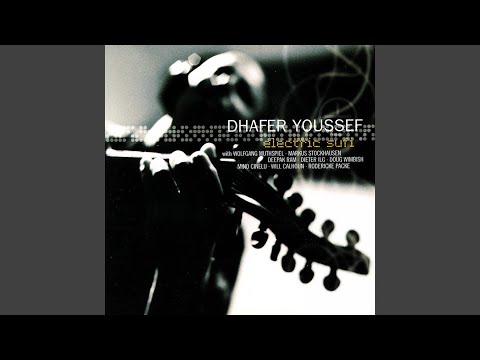
2. The Mystic Oud Modernized: Electric Sufi – Dhafer Youssef
(Translating Sufi Spirituality into Contemporary Jazz)
The Oud is an ancient, fretless lute deeply rooted in Middle Eastern and Islamic classical traditions. In the hands of Tunisian master Dhafer Youssef, however, it becomes a vessel for fierce modern jazz exploration. His seminal album, *Electric Sufi* (2001), is a masterclass in this transformation.
Youssef doesn't just play the oud; he integrates its rich, resonant, and inherently spiritual Eastern textures into a vibrant, electric jazz landscape. Backed by cutting-edge electronic grooves and stellar jazz instrumentation, the album feels both ancient and futuristic.
Within this brilliant catalog, the track “La nuit sacrée” stands out as an absolute masterpiece. This particular piece features the brilliant Austrian trumpeter Markus Stockhausen. Here, yet again, disparate elements collide, sparking a beautiful musical alchemy that transcends genres. It is a sublime example of how two seemingly contrasting worlds can meet and create pure magic through their sonic chemistry.
The Secret Weapon: Beyond his virtuosic oud playing, Youssef possesses a breathtaking, soaring vocal range rooted in traditional Sufi vocal incantations. When his voice and Stockhausen's haunting trumpet pierce through the modern jazz rhythm section, it creates an otherworldly, hypnotic prayer that completely redefines what jazz fusion can be.
3. The Miles Davis Groove of the Orient: Not Two – Amir ElSaffar & Rivers of Sound
(Maqam Meets Big Band Heavy Grooves)
If you crave the dense, urgent, and utterly hypnotic groove of Miles Davis's electric era (think Bitches Brew or On the Corner), but want to hear it filtered through the mystical lens of Iraqi traditional music, look no further than Amir ElSaffar and Rivers of Sound's Not Two (2017).
ElSaffar, an Iraqi-American trumpeter and vocalist, has achieved something monumental here. He plays a custom-tuned trumpet that allows him to play the microtones (maqams) of traditional Arabic and Islamic music. In Not Two, he leads a massive 17-piece ensemble—Rivers of Sound—which blends Western jazz instruments (saxophones, trumpet, drums) with traditional Middle Eastern instruments like the oud, the buzuq, the santur (hammered dulcimer), and the darbuka.
The result? An absolute wall of sound driven by an overwhelming, complex groove. The polyrhythms shift and churn with the same gritty, unstoppable momentum of a Miles Davis avant-garde ensemble, yet the melodic DNA is purely Mesopotamian. It is dense, exhilarating, and completely transcendent.
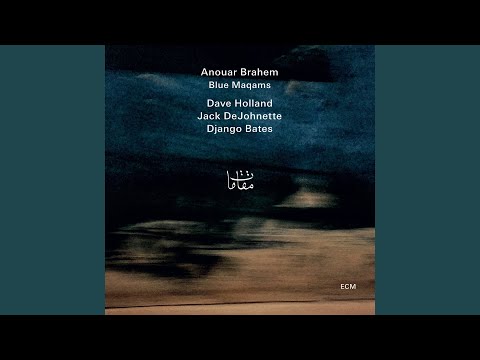
4. The Ambient Chamber-Jazz of the Maghreb: Blue Maqams – Anouar Brahem
(The Subtle Alchemy of Active Listening and Functional Stillness)
To close out this journey, we must look at an album that redefines the relationship between jazz pacing and spiritual space. While the previous entries thrive on complex polyrhythms or soaring vocal peaks, Tunisian oud master Anouar Brahem's Blue Maqams (2017) operates in the realm of profound, deliberate restraint.
For this ECM release, Brahem assembled an absolute jazz royalty lineup:
- Anouar Brahem (Oud)
- Dave Holland (Double Bass)
- Jack DeJohnette (Drums)
- Django Bates (Piano)
On paper, seeing legends like Holland and DeJohnette might make you expect a driving, hard-swinging post-bop session. However, Blue Maqams strips away the typical urgency of modern jazz. If you are looking for an intense, physical jazz groove, you won't find it here. Instead, the rhythm section masterfully practices the art of “subtraction”—providing a minimalist, spacious heartbeat rather than a pushy momentum.
What makes this album an absolute masterpiece is its dual nature. On one hand, the delicate dialogues between Brahem's microtonal oud and Django Bates' luminous piano offer rich rewards for deep, focused listening. On the other hand, its pristine ECM acoustic resonance and steady, non-intrusive temper make it one of the finest ambient-like experiences in modern instrumental music.
It is an album that refuses to agitate the listener's mind. For those looking for an impeccable sonic backdrop to deep thinking, writing, or creation, Blue Maqams serves as a high-art sanctuary—proving that sometimes, the most profound spiritual statement in jazz is the one whispered in absolute serenity.
Final Thoughts
These four releases prove that jazz is a universal canvas, uniquely capable of absorbing and reflecting the profound spiritual depths of the Islamic musical world. Whether it's the delicate chamber-fusion of Making Music, the electro-mysticism of Electric Sufi, the roaring microtonal big-band grooves of Not Two, or the tranquil, ambient-like focus of Blue Maqams, these albums offer an unforgettable journey.