What Inspired Me

unknown music lover from Japan. This blog wrote in both Japanese and English.

かつて何者にもなれずに解散したイリノイの大学生たちは、2026年、それぞれの「生活」の傍らで、ロックという器を静かに踏み越えた。

プロローグ:誰も気にしていなかった「緑の家」

1999年、アメリカ・イリノイ州の大学キャンパスの片隅で、ひとつのアルバムがひっそりと録音された。予算はわずか2000ドル、期間はたったの4日間。メンバーの卒業に伴い、バンドはアルバムのリリースを待たずしてすでに解散モードに入っていた。スタジオに入るまでの3年間で行ったライブはわずか15本から30本。それも観客が数人の、閑散としたものだった。

「誰もこのバンドを気にしていなかった」

後にメンバーのSteve Holmesが振り返った通り、彼らの1stアルバム(通称『LP1』)は、誰に届くこともなく、青春の終わりとともに引き出しの奥へ片付けられた「思い出の品」になるはずだった。当時のアンダーグラウンド・シーンが求めていたのは、もっと激しく、衝動的に感情を叫ぶパンクとしての「エモ」だったからだ。

【エモとは】 “Emotional hardcore”を略した呼称で、1980年代後半にアメリカのハードコア・パンクから分岐して生まれたロックの一ジャンル。激しいサウンドを保ちながら、失恋・孤独・アイデンティティの揺らぎといった個人の内面を赤裸々に歌うことを特徴とする。90年代にはBlinkやGetup Kidsのようなポップ寄りのバンドが主流を形成する一方、American FootballやOwens、Cap'n Jazzが生まれたイリノイ州シカゴ近郊では「ミッドウェスト・エモ」と呼ばれるサブジャンルが育ち、複雑なギター・アルペジオや変拍子を取り入れた知的・内省的な様式を展開した。2010年代には当時のバンドが再評価され「エモ・リバイバル」と呼ばれる第三波が世界規模で起きている。地味で、静かで、複雑な彼らの音楽は、時代の空気感と完全に齟齬をきたしていた。

しかし、バンドが不在の14年間に、奇妙な逆流現象が起きる。ファイル共有ソフトLimewireやインターネットのメッセージボードを通じて、あの「緑の家」のジャケットは音楽マニアの間でカルト的な聖典として語り継がれ、2010年代のエモ・リバイバル世代のバンドたちによって「源流」として逆輸入されたのだ。

2014年、リイシュー盤の発売を機に再結成が実現したとき、彼らを待っていたのは世界中のソールドアウトのステージだった。このとき、Mike KinsellaのいとこであるNate Kinsellaがベーシストとして加入し、バンドはトリオからカルテットへと生まれ変わる。解散したときは誰にも知られていなかった彼らは、再結成したときには世界から求められる伝説になっていた。

YouTube video

驚異の「副業プロフェッショナリズム」

このバンドの特異性は、奇跡的な再結成を遂げた後も、彼らが決して「専業ミュージシャン」に戻らなかったことにある。

メンバーのSteve Lamosはコロラド大学ボルダー校でライティング・レトリック学の准教授として教壇に立ち、Holmesはソフトウェア会社に勤め、フロントマンのMike Kinsellaは子育てをしながら自身のソロプロジェクト「Owen」を営む。彼らは年間20〜30本のライブが限界の、堅実な「生活者」であり、完全なる「副業」としてAmerican Footballを運営している。

あなたがLP2を聴いたときに覚えた「副業で作ったとは思えない完成度」への驚愕。それは、音楽構造的に正しい必然が生んだものだ。

Kinsellaは後に、仕事や子育ての合間、ツアーバスの中で歌詞を書き殴るような過酷なスケジュールの中で「多くの妥協があった」と語っている。しかし、音楽で飯を食うためのギラギラしたエゴや商業的打算が必要ないからこそ、彼らは日常の傍らで、スタジオの残響や音圧を1ミリ単位でコントロールする「大人のストイシズム」を貫くことができた。かつて大学時代に鳴らしていた変則チューニングやポリリズムは、17年間の人生経験を経て、完全にコントロールされた狂気的な職人技へと昇華されていたのだ。

なお、Lamosは2021年に一度バンドを離れているが、2023年に復帰。LP4の制作にも加わっている。

YouTube video

2026年の新境地:霧の向こうのアルペジオ

そして2026年、7年ぶりの新作として送り出したLP4は、これまでのどの作品よりも美しく、そして彼らの過去のサウンドからは最も遠い場所へと到達している。

一聴して耳を引くのは、そのドラスティックな音響の変化だ。かつてキャンパスの片隅で鳴っていた瑞々しいインディー・ロックのテクスチャーは一歩後退し、そこにはモダン・クラシカルやエレクトロニカ、さらにはポストロックやアンビエント・ドローンに近い、豊潤で深い音響空間が広がっている。生活者としての年齢を重ね、インプットされる音楽的語彙がさらに成熟したことが、この大胆な拡張を生んだのだろう。

テーマの面でも、LP4は過去作とは比べものにならない重さを持つ。Polyvinylはこのアルバムを「容赦なく重い」と評し、自殺、羞恥、離婚、依存症、自己嫌悪、そして再生といった主題が、しばしば1曲の中に同居すると説明している。青春の揺らぎを描いたLP1の叙情性は、中年の生々しいリアルへと深化している。

しかし、この新しい音響の霧を1枚めくったその中心で、楽曲を構造的に支えているのは、やはりあの「2本のギターが織りなす、執拗に繰り返される変則チューニングのアルペジオ」だ。

彼らの音楽のルーツには、パンクの衝動ではなく、スティーヴ・ライヒ直系のミニマリズムがある。短いフレーズを反復し、わずかな位相のズレや和声の変化で感情の起伏を描くという方程式は、周囲の環境(テクスチャー)がどれほど変わろうとも、一切揺らいでいない。その結実のひとつが、LP4収録の「Desdemona」だ。この曲はライヒの代表作『Music for 18 Musicians』(1978年)に着想を得た持続的なリズム・パルスを軸に構築されており、バンドが長年口にしてきたライヒへの傾倒が、ついに楽曲の骨格に刻み込まれた形となっている。インディー・ロックの衝動を愛したリスナーにとっては、この霧深い音響はあまりにも遠くへ行きすぎたように映るかもしれない。しかし彼らにとっては最初のアルバムの打ち立てた金字塔からの開放であるのかもしれない。

かつて青春の揺らぎや痛みを表現していたあの小刻みなギターのアルペジオは、2026年の今、まるで「淡々と、しかし確実に続いていく日常の営み」そのものを象徴するループのように響く。

YouTube video

世代を超えた「尊敬の連鎖」

American Footballの影響力が単なる「評論家のお墨付き」ではなく、同時代および次世代のミュージシャンたちの実際の行動に刻まれているという事実は、彼らの音楽の本質的な強さを物語っている。

その最も顕著な証左が、2024年に発表されたLP1の25周年記念カバーアルバムだ。Iron & Wine、Manchester Orchestra、Blondshellなど多彩なアーティストが参加したこの企画で、とりわけ注目を集めたのがEthel Cainによる「For Sure」のカバーだった。現在のオルタナティヴ・シーンを代表するアーティストの一人であるEthel Cainは、自らこの曲を選んでカバーを申し出、原曲の3分16秒を約10分の楽曲へと昇華させた。「私がレコードをかけるたびにいつも際立って聴こえる曲で、自分のサウンドにどう翻訳するかはすぐにわかった」と彼女は語っている。また「American Footballは、デビュー盤でひとつの時代にこれほど深く刻み込まれたバンドだ。その音楽的ストーリーテリングは、数えきれないほどの方法で私にインスピレーションを与え続けてきた」とも述べており、彼女の傾倒が表面的なものでないことは、楽曲「American Teenager」のMVがLP1のジャケットのフォント・レイアウトを意識的に模倣していることからも伝わってくる。

LP4においても、コラボレーションの顔ぶれがそのままバンドの影響力の地図となっている。ハードコア・シーンの最前線に立つTurnstileのBrendan Yatesが参加した「No Feeling」は、もともとコーラスの合唱パートの一員として招かれたものだったが、スタジオで即興的に高音ハーモニーを試みたところ、その声の個性が楽曲を別次元へと引き上げた。Kinsellaはその瞬間を「スタジオ全員の顎が落ちた」と振り返っている。エモとハードコアという一見異なる文脈に立つ二者が、こうして自然な化学反応を起こすこと自体、American Footballが特定のジャンルの枠を超えて機能していることの証明だろう。

LP3(2019年)でのParamoreのHayley Williamsとのコラボレーションも同様の文脈で理解できる。ポップ・ロックのメインストリームで活躍するWilliamsが「Uncomfortably Numb」への参加を承諾したのは、彼女がAmerican Footballの長年のファンだったからに他ならない。さらにLP4では、90年代のエモ・シーンで活動をともにした同時代人Rainer MariaのCaithlin De Marraisも名を連ねる。世代の異なるアーティストたちが、それぞれの理由でこのバンドに引き寄せられてくる—その事実そのものが、American Footballというバンドの稀有な磁場の強さを示している。

3rd album is as good as others YouTube video

エピローグ:反復される日常の美学

American Footballの音楽が、普段エモを聴かないリスナーの耳にすらこれほど深く刺さる理由。それは、彼らが感情を爆発させるバンドだからではない。

Red House PaintersやSun Kill Moonが持つ「静けさの中に重い感情を封じ込める」あのサッドコアの情景にも通じる、剥き出しの真正性。スロウコアとの共通のゆっくりと奏でられるアルペジオがそう感じさせるのかもしれない。それを、数学的とも言えるミニマリズムの「構造」によって冷徹に設計しているからだ。

一度は完璧に死んだはずのプロジェクトが、SNSという現代の地下水脈を通じて神格化され、大人になった彼らの「生活の余白」で再び息を吹き返す。2026年の最新作が証明しているのは、彼らが人生の景色を変えながらも、あの1999年から何も変わらない「反復の美学」を指先で編み続けているという、静かな、しかし圧倒的な事実なのだ。

概要: BBC Radio 3の深夜番組「Late Junction」は、ジョン・アダムズの次にシガー・ロスをかけ、その後シューベルトをかける。ジャンルも時代も国境も関係なく、ただ「耳に届いたときの体験の質」だけを選択基準にするプログラミングだ。この記事では、アルゴリズムでもなくプレイリストでもない、人間のキュレーションが音楽との出会いにどんな可能性をもたらすかを、Late Junctionという番組を軸に考える。

音楽を深く探求する者たちにとって、深夜のラジオは常に神聖な聖域であり続けてきた。しかし、アルゴリズムが音楽を「lo-fiスタディビーツ」や予測可能なストリーミングのムードプレイリストといった受動的なものへと商品化していく中で、真の意味でのアーティスティックなキュレーションは希少な贅沢になりつつある。

もしあなたの耳が、構造的な知性、生々しい音響的テクスチャー、そして徹底したジャンルへの反抗を渇望しているなら、ぜひ聴くべき放送上の金字塔がある。BBC Radio 3の「Late Junction」だ。

そのキャッチコピーがすべてを物語っている。「太古から未来へと続く、音楽の旅。冒険的なリスナーのための居場所。」

激動の歴史:ふたつの異なるヴィジョンを生んだ番組編成をめぐる闘い

今日のLate Junctionが持つ重みを理解するには、現在の形に至るまでの局内での闘いと、そこから生まれた姉妹番組について知る必要がある。

20年近くにわたり、Late Junctionは平日の複数夜にわたって放送される、BBC Radio 3の看板番組だった。あらゆる境界が消え去る、伝説的な領域だ。2019年、BBCの経営陣は大規模な番組編成の見直しと予算の再配分に乗り出し、Late Junctionの平日放送枠を大幅に削減する案を提示した。これに対する世界中の音楽コミュニティの反応は迅速かつ激烈だった。ブライアン・イーノ、ジャーヴィス・コッカー、ピーター・ガブリエル、そしてレディオヘッドのエド・オブライエンとフィル・セルウェイを含む、何百人ものアーティストや文化人が公開書簡に署名し、Late Junctionの過激なまでの自由を削ることは、独立系・実験的音楽にとっての生命線を断つことになると訴えた。

この妥協案は、単に番組を縮小しただけでなく、Radio 3の深夜帯のあり方そのものを再構築するものだった。Late Junctionは、毎週金曜の夜90分という、凝縮されたひとつの枠に集約された。そして空いた平日の夜の時間帯には、まったく異なる哲学に基づいて作られた新番組が割り当てられた。それがNight Tracksである。

Night Tracksを「より勇敢だったものに取って代わった、慰め程度の代替品」として捉えるのは簡単だ。しかしそれでは、この番組が実際にやっていることを過小評価してしまう。Night Tracksは「Late Junctionの劣化版」を目指して設計されたのではない。むしろ、Late Junctionがそもそも解決しようとしていなかった問題、すなわち「現代音楽やアンビエント、シネマティックなサウンドを、単なる作業用BGMではなく真摯な芸術として扱いながら、毎晩持続的で没入感のある深夜のリスニング環境をリスナーに提供するにはどうすればよいか」という問いに応えるために設計されたのだ。

フォーマット:ふたつの異なる、卓越したキュレーションのかたち

Late Junctionは今や週1回の枠に凝縮されたことで、そのキュレーションは驚くほど濃密なものになった。金曜の一回の放送の中で、この番組はルネサンス期のポリフォニーを生々しく時代考証に基づいて演奏したアーリーミュージック、北欧の前衛ジャズ即興演奏が持つ冷ややかな抑制、世界の辺境から届く飾り気のないトラディショナル・ミュージックのフィールドレコーディング、そして左翼的な実験音響アートを、軽々と接続してみせる。そこに学術的な気取りはない。番組は、400年前の宗教的な声楽作品が、先月地下スタジオで録音されたモジュラーシンセサイザーのトラックとまったく同じ精神的な重みと構造的な野心を持つものとして扱う。

一方Night Tracksは、これとは異なる、しかし同じくらい意図的な論理のもとに成り立っている。Late Junctionが摩擦と衝突を重んじるのに対し、Night Tracksは流れを重んじる。そしてそれは、技術の不在ではなく、れっきとしたキュレーションの技術なのだ。主にエリザベス・オールカーが担当するこの番組は、現代音楽やアンビエントの作曲家たちが現実のオーディエンスに届くための、イギリス国内でも有数の重要なプラットフォームとなっている。アーラン・クーパー、マックス・リヒター、ハニア・ラニ、フローティング・ポインツといったアーティストの初放送や新曲初出しは、しばしばNight Tracksから生まれてきた。多くのリスナーにとって、Night Tracksは入り口だ。Late Junctionの鋭い切れ味を受け止める準備が整う前に、真夜中にアンビエントや現代音楽を感情的に身近なものとして感じさせてくれる、最初の番組なのである。そのシームレスでムード主導のつなぎ方は妥協の産物ではない。それはジャンルの衝突ではなく、ペース、キー、テクスチャーを軸に組み立てられた、プレイリスト・アルゴリズムというよりもDJセットの構築に近い、ひとつの職人技である。

結論:ふたつの番組、ひとつのリスニング実践

このふたつの番組をライバル関係として捉えてしまうと、BBC Radio 3の深夜編成を特別なものにしている本質を見失う。それは、ひとつのモデルではなく、ふたつの異なる、しかし同じくらい真摯なキュレーションのモデルを提供しているという点だ。Night Tracksは、専門知識を必要とせずに現代音楽への入り口を求め、毎晩の没入を求めるリスナーに報いる。Late Junctionは、意図的なジャンルの衝突と未知の伝統音楽への、週に一度の深い潜行に挑む準備ができたリスナーに報いる。

BBC SoundsのオンデマンドアーカイブはGeoブロックが厳しいため、英国外のリスナーがどちらの体験も得たいと思うなら、信頼できるVPNは真っ当な投資といえる。自動レコメンドをオフにし、平日の夜はNight Tracksの没入的な流れのためにBBC Soundsを立ち上げ、金曜の夜はLate Junctionの意図的な衝突のために取っておこう。このふたつを併用することで、世界でも有数の完成度を誇る音楽探求の習慣が手に入るはずだ。

最近のNightTracksプレイリストの一つをお見せしよう

#曲名アーティスト
1China GatesJohn Adams
2Hoppipolla - The Tape VariationsSigur Rós
3Prelude Op. 9 No. 1Alexander Scriabin
4Talking RainLarry Chernicoff
5Ambient BeautyThomas Newman
6Shoulder Length (Solo Piano Version)Thomas Newman
7Love SceneGavin Bryars
8Syncopes (From "The Talented Mr Ripley")Gabriel Yared
9Der LeiermannFranz Schubert
10Improvisation on Der LeiermannFranz Schubert
11Winter 2Antonio Vivaldi & Max Richter
12White Landscapes, Op. 47a: I. Divination by SnowTakashi Yoshimatsu
13Come, Heavy SleepJohn Dowland
14Nocturnal After John Dowland, Op. 70: IX. Slow and QuietBenjamin Britten
154 Last Songs: No. 3, TiredRalph Vaughan Williams
16Lux AeternaIvo Antognini
17Near LightÓlafur Arnalds
18Innerglow Portal / Aqua Drawer LampImaginary Softwoods
19Handel: "Will the Sun Forget to Streak" from Oratorio 'Solomon', HWV 67George Frideric Handel
20Tilliboyo ("Sunset")Foday Musa Suso
21Di sera for 2 Oboes & Strings, P. 48Ottorino Respighi
22The LightGeorgia Duncan

このように、アメリカの偉大なミニマリズム作曲家ジョンアダムス、ポストロックの牽引者シガーロス、そして近代の偉大な作曲家シューベルトを同時にかけている番組はNightTracksだけだろう。ジャズやクラシックに詳しくない人はこの番組から入ると抵抗が少ないと思う。

Description: Post-classical music is not just an Icelandic or European story. Masayoshi Fujita places metal strips and felt on vibraphone bars, turning the instrument into something close to an acoustic modular synthesizer. Taiwan's Cicada recreates sequencer rhythms using only strings and piano, without a single electronic element. This piece introduces four artists from East Asia who are quietly redrawing the boundaries of post-classical music from the inside—building something that doesn't sound derivative of what came before.

The landscape of modern ambient and post-classical music is shifting. While the genre has long been anchored in the frosty chill of Iceland or the minimalist studios of Berlin and London, a distinct, compelling resonance is emerging from East Asia.

Rather than relying on the heavy use of electronic synthesizers to construct space, contemporary artists from this region are treating traditional acoustic instrumentation with a remarkably modern, sharp sensibility. Here, we introduce two essential acts redefining the post-classical architecture: Japan's Masayoshi Fujita, Taiwan's Cicada, Japan's [.que] and Japan's shuta hasunuma.


Masayoshi Fujita: Re-architecting the Vibraphone

Often associated with the prestigious London/Berlin-based imprint Erased Tapes, Masayoshi Fujita is a master of structural stillness. His primary instrument is the vibraphone—a choice that, in lesser hands, can easily fall into flat, uniform repetition.

Fujita avoids this trap not by overpowering the instrument, but by treating it like an acoustic modular synthesizer. By placing strips of metal, felt, or foil directly onto the vibraphone bars, he alters the very texture of the decay.

In albums like his vibraphone triptych Stories (2012), Apologues (2015), and Book of Life (2018), his music strips away the ego of the performer. What remains is a hyper-focused, cold, and beautiful environment where every strike and shimmering vibration behaves like a calculated pocket of air. It is minimal music at its most honest, where the silence between the notes carries as much weight as the resonance itself.

YouTube video

Cicada: The Acoustic Waves of Modern Minimalism

Hailing from Taiwan and frequently championed by the Japanese label flau, Cicada is a stellar chamber ensemble consisting of piano, violin, cello, and acoustic guitar.

What makes Cicada so thoroughly unique is their methodology. They use absolutely zero electronics, yet their music feels entirely informed by post-rock and electronica. They achieve a shimmering, modern pulse purely through acoustic dexterity—the rapid, intricate bowing of the strings and the continuous, precise patterning of the piano mimic the rhythmic cadence of a sequencer.

Their seminal album, Ocean, is a masterful piece of structural design. The ensemble captures the physical dynamics of the sea—the cold undertow, the foaming tide, and the vast open space. While their sweeping arrangements occasionally lean into rich, expressive climaxes, the underlying foundation remains a tight, disciplined exercise in contemporary minimalism. They prove that you do not need digital manipulation to create a profoundly modern sense of space.

YouTube video

My best track

Their seminal track, “into the ocean (匯流向海),” serves as a masterclass in this approach. The composition structures itself around a hyper-minimal, crystalline piano loop that slices through the silence. When the interlocking strings finally pierce through this rigid framework, the transformation is staggering—it doesn't lean on romantic melodrama, but rather channels an elite, sharp urgency that expands the sonic horizon instantly.

YouTube video

[.que]: The Melodic Intersection of Pop and Post-Classical Structure

While Fujita and Cicada occupy a space of structural discipline, Japan's [.que] (Nao Kakimoto) introduces a vibrant, highly melodic counterpoint that challenges the boundaries of the genre. At first listen, his intricate blend of beautiful piano melodies, crisp acoustic guitar, and organic drum patterns might feel almost too pop-centric to fit cleanly under the “post-classical” umbrella.

Yet, to dismiss [.que] as mere pop would be a mistake. He populates a crucial, often overlooked territory: music that possesses the deep harmonic sophistication of modern minimalism but is overlooked by the mainstream pop machinery due to its fragile, instrumental nature. By weaving infectious, song-like lyricism through a meticulous electronic-acoustic framework, [.que] reminds us that modern space can also be warm, nostalgic, and undeniably catchy.

YouTube video

YouTube video

Shuta Hasunuma: The Genius of Maximalist Freedom

A note on genre: Shuta Hasunuma does not sit squarely within post-classical music. His ensemble, the Shuta Hasunuma Philharmonic Orchestra, is best described in his own words as a “contemporary philharmonic pop orchestra”—a world that freely incorporates pop, rap, and electronics alongside acoustic instrumentation. He is included here as a composer who writes detailed scores for a large ensemble of diverse instruments, and whose approach to collective, multi-layered acoustic architecture speaks directly to the spirit of this list.

If Fujita is a master of reduction, Shuta Hasunuma represents the ultimate liberation of sound through collective harmony. Leading his massive contemporary ensemble (Shuta Hasunuma Philharmonic Orchestra), Hasunuma commands an astonishingly wide array of acoustic instrumentation—ranging from woodwinds and brass to complex percussions and field recordings.

His sheer genius lies in his ability to orchestrate this vast multitude of voices without ever falling into the dense, suffocating weight of traditional classical arrangements. Instead, Hasunuma treats every individual instrument as an independent, breathing entity, weaving them into a soundscape that is incredibly light, transparent, and undeniably modern. It is a brilliant masterclass in how to build a complex, multi-layered acoustic architecture that remains effortless and profoundly human—a true visionary who deserves far greater global recognition.

His approach mirrors the communal, polyrhythmic joy of music built on collective improvisation—capturing the pure, unadulterated ecstasy of multiple human beings interlocking in sound. It is not about classical discipline; it is about collective liberation.

My best live video is here YouTube video


A Quiet Dialogue Between Wood, Metal, and Space

To place Masayoshi Fujita and Cicada in the same space is to witness a beautiful sonic contrast. Fujita works with the cold, metallic, and deliberate isolation of a solitary craftsman, while Cicada builds fluid, interlocking acoustic currents that breathe together.

For those seeking to move beyond the well-trodden paths of Western post-classical music, these two artists offer a masterclass in how to command silence, structure, and texture. They are the new modern classics.

On May 29, 1997, in Memphis, Tennessee, Jeff Buckley walked down to Wolf River — a tributary of the Mississippi — with a friend. He was in town recording his second album. He waded into the water fully clothed and disappeared. His body was found six days later. He was thirty years old. The autopsy found no alcohol or drugs in his system. The fact that he was still dressed when he entered the water is among several details that have never been fully explained. That mysterious end has only deepened the legend of a man who left behind just one album.

That album was Grace, released in 1994.

A Music of Unlikely Mixtures

Jeff Buckley was born in 1966 in Anaheim, California. His father was the folk singer Tim Buckley, but Jeff was raised apart from him and the two had almost no relationship. He eventually made his way to New York, where he built a following playing solo at a small East Village club called Sin-é, and signed with Columbia Records. Grace came out in August 1994.

What makes Grace such a singular record is its musical promiscuity. The hard rock intensity of Led Zeppelin, the soul and jazz of Nina Simone, the spiritual vocal ecstasy of Pakistani qawwali singer Nusrat Fateh Ali Khan — all of it was somehow channeled through one voice and one guitar. Buckley once described himself in his own press bio as “the warped lovechild of Nina Simone and all four members of Led Zeppelin.”

YouTube video

The album's most celebrated track is a cover of Leonard Cohen's “Hallelujah.” Cohen wrote the original in 1984, a work dense with religious and poetic weight. Buckley's direct reference point, however, was not Cohen's version but the spare 1991 recording by former Velvet Underground member John Cale — piano only, stripped of the synth-heavy original arrangement. Buckley took that as his starting point and rebuilt the song into something entirely his own: sensual, almost unbearably fragile, yet emotionally overwhelming. Today, when people say “Hallelujah,” they mean Buckley's version. The cover has eclipsed the original.

YouTube video

“Lover, You Should've Come Over” is perhaps the most purely lyrical moment on the record — the side of Buckley that was above all a songwriter. The vocal delicacy and the density of the words occupy the same space without crowding each other.

YouTube video

Why Britain Claimed Him

Grace sold poorly in the United States on release. In Britain, the reaction was different. Critics recognized something singular in it immediately, and a devoted audience followed. David Bowie cited it in Pulse as one of the albums he would take to a desert island. Bono called Buckley “a pure drop in an ocean of noise” in the U2 fanzine Propaganda and dedicated multiple shows on the PopMart tour to him.

Part of what drew British audiences to Buckley was the nature of his voice itself. A staggering four-octave range, an absolute commitment to emotional honesty, and the freedom to move between falsetto and full-throated power without it ever sounding mannered — it spoke directly to what British rock in that moment was reaching for.

Legacy Part One: Thom Yorke and “Fake Plastic Trees”

On September 1, 1994, Radiohead and their producer John Leckie attended a Jeff Buckley show at The Garage in London. They were in the middle of recording The Bends and struggling. Buckley played alone — just a Telecaster and a pint of Guinness. Bassist Colin Greenwood later recalled it in an interview with Uncut: “It was just fucking amazing, really inspirational.”

The next day, Yorke went back into the studio and recorded “Fake Plastic Trees” alone on acoustic guitar. He played three takes and then burst into tears. He didn't want to use the recordings — “too vulnerable,” he said. His bandmates convinced him otherwise. Those takes became the final version. Producer Leckie described what the Buckley concert had unlocked: “It made him realize you could sing in a falsetto without sounding dripping.”

YouTube video

Legacy Part Two: Chris Martin and “Shiver”

In a 2008 interview on BBC Radio 1, Coldplay's Chris Martin was asked about the band's debut single “Shiver.” His answer was unambiguous: “It's a blatant Jeff Buckley attempt. Not quite as good, that's what I think. We were 21 and he was very much a hero, and as with those things it tends to filter through.”

In a separate interview, Martin went further: “One of the key people who's responsible for us being a band is probably Jeff Buckley. His music was so powerful — that's when we were getting the band together, and I certainly found a lot of inspiration in it, to the point of trying to actually sound like him for at least the first few singles.”

YouTube video

Where His Voice Reached — Further Testimonies

Radiohead and Coldplay are only the most documented cases. The reach of Grace extended well beyond them, across generations and genres.

Jimmy Page (Led Zeppelin) In a 2003 interview, Page said: “Nothing has had the impact on me that Jeff Buckley did.” He and Robert Plant made a point of going to see Buckley live, and Page described the experience as “absolutely scary.” Watching Buckley play in standard tuning what seemed impossible, he said: “I thought, oh gee, he really is clever, isn't he?”

Elton John When asked by Mojo to name his all-time favourite album, John cited Grace: “Like an album made by someone from another planet.”

Bono (U2) Listening to “Hallelujah” on the radio, Bono said: “I was just envious — just raw envy.” He singled out Buckley's 22-second held note and added: “For me, as a singer, it's very humbling.”

Chrissie Hynde (The Pretenders) “He was such a great guitar player, Jeff. When someone is a good singer and songwriter you tend to overlook that, but he was a shit-hot guitar player — he really blew us away that night when we saw what he was really up to with the guitar.”

Matt Bellamy (Muse) Bellamy acquired the Fender Telecaster Buckley had used on stage and in the studio. “I didn't buy it to hang it on the wall,” he said, “but to actually use it and keep this guitar part of music. I'd like to believe that's what Jeff would have wanted.”

The Unfinished

When Buckley died, the sessions for his second album — working title My Sweetheart the Drunk — had barely begun. The demos and studio recordings that existed were released posthumously as Sketches for My Sweetheart the Drunk, but no one listening could mistake them for a finished work.

With a single album, Buckley changed the course of British rock. An American, he reached into the heart of the British scene and left his mark on some of its most defining music. What he might have made next is a question that will never have an answer. Which is perhaps why Grace keeps sounding the way it does — like something that isn't finished yet.

How Masakatsu Takagi Invokes a Non-Western, Animistic Soundscape

Masakatsu Takagi is widely celebrated for his deeply emotional cinematic scores, most notably “Kito Kito” from Mamoru Hosoda’s Wolf Children. Yet, when we strip away the cinematic narratives and listen to his foundational lifework—specifically his ongoing improvisational piano series culminating in his recent release, Marginalia VIII—we are confronted with a beautiful, striking bewilderment.

There are no grand climaxes here, nor any obvious hooks. Instead, we encounter a dense, shimmering cascade of notes that constantly shifts shape and slips away like water through fingers.

This refusal to guide the listener—this inherent sense of emotional detachment—is precisely what makes Takagi one of the most profoundly non-Western, traditionally Japanese creators working in contemporary ambient and experimental music today. He's music not seen influence by classic and jazz as this post is except.

YouTube video

Breaking Free from Structure and Repetition

The history of Western music is essentially a history of architecture—an endeavor to capture time, partition it, and confine it within structural cages. Consider post-minimalist icons like Max Richter. No matter how quiet or ambient their compositions, their work relies on a bedrock of rigid structural patterns and stubborn repetition (loops). The listener willingly surrenders to this calculated, beautiful architecture, finding a sense of emotional security within it.

Even in the realm of jazz improvisation, where freedom seems paramount, the performance is governed by shared linguistic codes: chord progressions, tempos, and physical syncopation.

Takagi’s recent improvisations discard both of these blueprints. His fingers spin a thread of sound that rejects both the bodily groove of jazz and the formal teleology of Western classical music. It is a literal fluid state—a melody that flows like a river, never resting on a single motif long enough to be commodified as a standard “song.”

The Distant Comfort of an Absent Ego

Why does his music feel so beautifully elusive, almost aloof? Because when Takagi sits at the piano, he completely surrenders the egoistic urge to “express human emotion.”

Living deep in the mountains of Hyogo Prefecture, Takagi records with his windows wide open, inviting the surrounding environment into his creative process. He jams with the calls of birds, the droning of insects, and the patterning of rain. Within this acoustic ecology, the piano ceases to be the protagonist. It is demoted—or perhaps elevated—to a mere peer within a massive, non-human ensemble.

Nature does not operate on a fixed tempo, nor does it care for dramatic, narrative arcs. Acting as a biological medium that translates the ambient friction of the world into sound, Takagi improvises as if through automatic writing.

Those who approach his music expecting a human-centric message or an easy emotional payoff will find themselves gently turned away by this absolute absence of ego. Yet, this is the very essence of a deeply Japanese, animistic relationship with sound—one that views the self not as a master of nature, but as an indistinguishable part of it.

Transforming the Living Space into a Mountain Sanctuary

Takagi’s music is not designed for analytical listening from the sweet spot of a stereo setup. It demands an audio environment that can breathe.

When played through a system capable of handling the sheer density of his notes, the micro-nuances of his touch, and the background rustle of the biosphere, the boundaries of your listening room begin to dissolve. Suddenly, the cascading piano notes coming from the speakers and the actual wind passing outside your own window melt into a singular, seamless reality.

This is neither pop music meant for consumption nor academic modern music meant for analysis. It is the luxurious, wild sound of time itself, indifferently and beautifully passing by.

みなさんはスピーカーに何を使っていますか?私が愛用しているのは、Bang & OlufsenのBeosound A5です。

ただし、正直に言うと最初の印象は違った。箱から出して最初に鳴らしたとき、高音と低音が強調されたいわゆるドンシャリ型の音に聞こえ、このスピーカーの評判と自分の耳の感覚が一致しなかった。ところが数十時間ほど鳴らしていくうちに——いつからとは言えないが——低音域から高音域までのつながりが非常に滑らかになり、印象がガラリと変わった。これがエージング(慣らし運転)による変化なのか、耳が慣れたのかは断言できないが、いずれにせよ今の音には満足している。購入直後に判断を急がず、しばらく鳴らし続けることをすすめたい。

デンマークの老舗オーディオブランドBang & Olufsenが2023年にリリースしたポータブルスピーカー、Beosound A5。価格は25万円を超える。ポータブルスピーカーとしては異例の価格帯だが、このスピーカーには納得させるだけの理由がある。

Beosound A5

スペック

ドライバー5.25インチ ウーファー×1、2インチ フルレンジ×2、3/4インチ ツイーター×1
アンプクラスD 70W×4(合計280W)
周波数特性32Hz〜23,000Hz
接続Wi-Fi 6、Bluetooth 5.3、AirPlay 2、Chromecast built-in、Spotify Connect
バッテリー連続再生約12時間、充電約3時間
防水・防塵IP65
サイズ28.5×18.7×13cm
重量約3.7kg

音の話

32Hzから23,000Hzという広い周波数特性を、合計280Wのクラスアンプが駆動する。このサイズのポータブルスピーカーとしては破格のスペックで、低域の沈み込みから高域の繊細な表現まで、音域の全体を過不足なく鳴らす。

普段はポストクラシカルや環境音楽、アンビエントを中心に、ポストロック、アンビエントテクノ、現代ジャズまで幅広く聴いている。繊細な音楽ほどスピーカーの素直さが問われるが、Beosound A5は余計な色付けをせず、録音に込められたニュアンスをそのまま届けてくれる。ポストロックの轟音も、テクノの低域の圧も、ジャズのシンバルの倍音も、同じ一台で破綻なく鳴らせる。

全音域にわたってフラットに近い特性を持つため、楽器を弾くときのモニタースピーカーとしても十分に機能する。USB-C端子経由でPCに接続してオーディオ出力として使うことも可能で、ワイヤレス接続に縛られない柔軟な使い方ができる。

BluetoothとWi-Fi——接続方式で音質は大きく変わる

Beosound A5はBluetoothとWi-Fiの両方に対応しているが、接続方式によって音質に大きな差が生じる。

Bluetoothはそもそも帯域が非常に狭い。プロトコルのオーバーヘッドを差し引いた実効帯域は1Mbps以下で、CDクオリティ(16bit/44.1kHz)の非圧縮ストリームが必要とする1,411kbpsにすら届かない。そのためBluetoothで音声を送るには必ず非可逆圧縮が入る。iPhoneが対応するのはSBCと最大256kbpsのAACのみで、AndroidやソニーデバイスがサポートするLDAC(最大990kbps)やaptXには対応していない。つまりiPhoneからBluetoothで送った時点で、音源のクオリティに関わらずAAC 256kbps相当に劣化する。

一方Wi-Fi接続では帯域の制約がほぼなく、音声データをそのまま送ることができる。AirPlay 2は24bit/48kHzまでのロスレス伝送に対応しており、ALAC(Apple Lossless)のファイルを劣化なく届けられる。Chromecast built-inはさらに24bit/96kHzまで対応するが、iOSのApple Musicアプリには現時点でCastボタンがなく、AndroidかPCからでないと利用できない制約がある。

Wi-Fi接続とBluetooth接続の差は「好みの問題」ではなく、数字で裏付けられた音質の差だ。せっかくロスレス音源を持っているなら、Wi-Fi接続で聴くことを強くすすめる。

(ちなみにBluetoothスピーカーでaux接続があるものがお使いの方は、今すぐaux接続に切り替えることをお薦めする。コードが邪魔になっても、それだけBluetoothは音の面で劣る。)

セパレートスピーカーなしで部屋が鳴る理由

Beosound A5はモノラルの一体型スピーカーだが、セパレートのステレオシステムがなくても部屋全体が音で満たされる感覚がある。これは背面に配置された2基のフルレンジドライバーによるものだ。

仕組みはこうだ。前面にウーファーとツイーターを配置し、背面の左右コーナーに2インチのフルレンジドライバーを2基追加することで、音が前方だけでなく後方・側方にも放射される。後方に向かった音は壁や天井に反射して部屋中に広がり、スピーカーの位置を意識させない「空間に満ちた音」として聴き手に届く。これが360度サウンドと呼ばれるOmniモードの原理だ。

通常のステレオスピーカーは左右のスピーカーの中間に定位した音像(スイートスポット)を作り出す。正確な音場再現という点ではそちらが優れているが、部屋のどこにいても均質に音が届くわけではない。Beosound A5のOmniモードは音場の厳密な再現よりも「空間全体への拡散」を優先した設計で、どの位置に置いても、どの角度から聴いても音が自然に届く。

B&OアプリではOmniモードと前方指向のFrontモードを切り替えられる。じっくり聴き込みたいときはFrontモード、部屋全体に音楽を流したいときはOmniモードと使い分けられる。私は普段Omniモードで使っている。一台で部屋ごと鳴らせるこの感覚が、セパレートシステムへの未練を感じさせない。

小型で、バッテリーで動く

このスピーカーを選んだ理由のひとつが、持ち運びの自由さだ。木製のハンドルを持てば家中どこへでも運べる。寝室に持ち込んで、バッテリー駆動で音楽を聴きながら眠る——そういう使い方ができる。コンセントや配線の都合に縛られない。

IP65の防水・防塵性能を備えているので、屋外に持ち出すこともできる。

試聴するなら、この一曲を

購入を検討している方には、ぜひB&Oのショールームに足を運んで試聴してほしい。

そのときに持っていく音源として、Max Richterの「Shadow Journal」をおすすめしたい。低域から高域まで広い音域を使った録音で、弦の繊細なテクスチャーと重厚な低音が同居している。このスピーカーが全音域にわたって均質に、かつ力強く鳴らせることを、よく確かめられる一曲だと思う。

YouTube video

デザインと長期的な付き合い

Beosound A5のデザインはデンマーク・イタリアのデザインユニットGamFratesiによるもので、1960年代のB&O製品から受け継いだ丸みと木のハンドルが特徴的だ。

私はOakモデルを使っているが、木材部分の美しさは高級家具に近い。この木製ハンドルとカバーはデンマークの家族経営の木工工房で一点ずつ手仕上げされており、量産品にはない個体ごとの木目のゆらぎがある。B&O自身も「完全な均一性は人工的に見える」として、あえて木目の自然な差異を活かす方針をとっている。精密ミリングされたアルミフレームと手仕上げのオーク材の組み合わせは、音を出す道具というよりインテリアの一部として部屋に置ける佇まいをつくっている。

また、モジュラー設計により部品交換やソフトウェアアップデートで長く使い続けられる設計になっている。「高い買い物を長く使う」という思想がスピーカー本体の設計にも反映されている点が、このブランドらしいと感じる。

買い替えるのではなく、育てていく道具として。そういう意味でも、Beosound A5は私の音楽生活に馴染んでいる。

Sigur Rósの音楽について語るとき、人はJónsíのファルセット、弓で弾かれるギター、ヴォンレンスカ語の意味を持たない音節が揺蕩う響きを思い浮かべる。しかしその背景には、アイスランドの外から来たひとりのアメリカ人アーティストの存在がある。Alex Somers。バンドの正規メンバーではないが、Sigur RósのフロントマンであるJónsíの元恋人であり、2005年以降のSigur Rósのアンビエント的深化において誰より重要な役割を担い続けた人物だ。

ボストンでの邂逅

Alex Somersは1984年、メリーランド州ボルティモア生まれ。13歳のとき、クリスマスにもらったギターとともにTascamの4トラック・レコーダーを手に入れ、録音という行為そのものに魅了された。「楽器を弾くことではなく、音という環境を自分でコントロールすることに気がついた瞬間だった」と彼は語っている。兄とともにキーボードの鍵盤にテープを貼ったまま数日間音を流し続けるという実験を繰り返し、アナログな音の探求が彼のすべてのルーツとなった。

ここで重要なのは、Somersがその後バークリー音楽大学(Berklee College of Music)に進み、映画音楽と音楽療法の二重専攻で正規の音楽教育を受けたことだ。バークリーは即興と理論の両輪を持つ実践的な音楽教育機関であり、そこでのオーケストレーション、音楽理論、スコアリングの訓練は、Somersに「感覚的な実験者」であると同時に「音楽を構造として設計できる者」という二面性を与えた。

Sigur Rósというバンドは、その音楽的才能の壮大さとは対照的に、メンバーの誰もいわゆる音楽院的な正規教育を経たわけではない。Jónsíはギター奏者として独学で技術を磨き、ヴォンレンスカ語という「意味のない言語」を生み出した詩人であり、バンド全体の語法は教育よりも直感と実験から育ったものだ。Somersの存在はその文脈においてきわめて特異だ。オーケストラのスコアを読み書きし、アレンジの構造を語れる人間が、バンドのもっとも近い場所にいた。

バークリーで学ぶ期間中の2002年、Sigur Rósがボストンを訪れ、Somersはバークリーの外の路上でバンドのフロントマンであるJónsíと出会った。Jónsíはゲイであることを公言しており、ふたりはすぐに恋人関係となった。交際初期はJónsíがツアーや録音の合間にSomersのケンブリッジのアパートに滞在するという形だったが、2005年、SomersはJónsíを追ってレイキャビクへ移住することを決める。恋人とともにアイスランドで暮らすためにボルティモア育ちのアメリカ人が故郷を離れたという事実は、後のすべての音楽的協働の出発点だ。レイキャビクではさらにアイスランド芸術大学(Listaháskóli Íslands)に入学し、視覚芸術を学んだ。「音楽学校よりも美術学校の方がずっと音楽的だった。クラスメートのほとんどが演奏し、実験していた。音楽学校では、ほとんどの人は音楽を『勉強』しているだけだった」と彼は振り返っている。

Riceboy Sleeps ── 静寂という共同作業

恋人としてレイキャビクで同居するようになったふたりにとって、音楽は生活の不可分な一部だった。自宅のリビングルームで録音し、弦楽四重奏のAmiina(Sigur Rósの長年の協力者)をアパートに招いて演奏させ、コーラスも同じ部屋で録音した。この手作り感そのものが、音の手触りに宿った。

2009年2月、ふたりはハワイの太陽電池で動くロー・フード・コミューンに滞在しながら、それまで断続的に録音してきたトラックをミックスした。Riceboy Sleepsとして同年7月にJónsi & Alex名義でリリースされたこの作品は、アコースティック楽器、ストリングス、コーラスが静かに絡み合う、Sigur Rósのポスト・ロック的壮大さとはまた異なる、より繊細でエーテル的な世界を示した。

のちにSomersはこう語っている。「スタジオを開く前は、音楽はいつも家の中にあった。壁から流れ出てくるようだった。それはとても自然なことだった」。Riceboy Sleepsはその自然さをそのまま封じ込めたアルバムだ。

Somersがバークリーで身につけたアレンジの感覚は、このアルバムにも静かに働いている。Amiina弦楽四重奏とKópavogsdætur合唱団を組み合わせながら、楽曲全体が「静寂の構造」として機能するように設計されている。それは感覚だけで作れるものではなく、音楽という言語の文法を理解している者にしかできない仕事だ。

YouTube video

All Animals – Riceboy Sleepsと並ぶ傑作

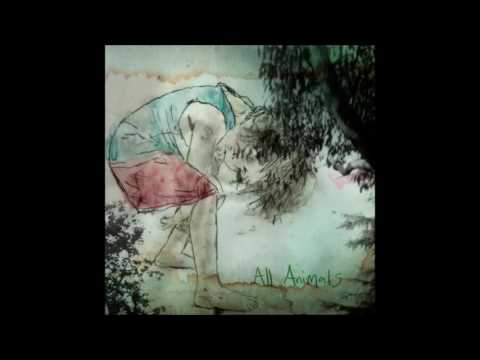
同じjonsi & alex名義のアルバムAll Animals はThyssen-Bornemisza Art Contemporary(TBA21)によって委嘱された楽曲で、アーティストMatthew Ritchieが設計した大型公共アートインスタレーション「The Morning Line」のために作られた。2008年9月にレイキャビクでピアノ、声、動物の音など主にアコースティック楽器で録音された。 The Morning Lineは2008年のセビリア国際現代芸術ビエンナーレで初公開された、高さ8メートル・長さ20メートル、17トンのアルミニウム製の公共アート構造物で、芸術・建築・音楽・数学・宇宙論・科学の交差点を探求するプラットフォームだった。 音楽委嘱作品はJónsi & Alex Somersだけでなく、Bryce Dessner、Mark Fell、Lee Ranaldo、Chris Watsonらも並列で依頼されており、47チャンネルの立体音響システムに対応したマルチチャンネル・オーディオ作品として設計された。 e-flux そしてAll Animals は後にRiceboy Sleepsの限定ボックスセット(3500部)のボーナスCDとして収録され、2017年に初めてヴァイナル化(手描きスリーブ付き限定100部)、2018年のRecord Store Dayで1000部再プレスされました。

YouTube video

Valtari ── 霧の中の彫刻

Sigur RósはRiceboy Sleepsの直後から次のアルバムの録音を試みた。2009年から着手し、長いアンビエントなドローンをいくつか録音したが、方向性を見失い、2010年に録音をすべて破棄して活動休止に入った。素材はあった。しかしバンド自身には、それをひとつのアルバムとして組み立てる視点が持てなくなっていた。

2011年、バンドは再び集まり、今度はSomersのレイキャビクのスタジオで録音を再開した。Somersは当初、ミキシングのみを担当するつもりだった。ところが1週間かけて素材を聴き込んだSomersは、そこに埋もれた可能性を見出した。「素晴らしい曲の集まりを聴いていると気づいた。しかし彼らは完全に焦点を失い、すべてを組み立てて意味のある形にするのが困難な状況にあった」と彼は語っている。

Somersがしたことは明確だ。散らばったドローンとスケッチを俯瞰し、「何を加え、何を削り、どう並べるか」を設計し直すことだった。アンビエントなドローンにテクスチャーと焦点を与え、必要なオーバーダブのリストをバンドに提示し、ヴォンレンスカ語に代えてアイスランド語の歌詞を使うことも促した。バークリーで身につけた「音楽を全体として設計する」感覚が、ここで初めてSigur Rósのアルバムに直接注ぎ込まれた瞬間だ。6週間のセッションを経て、バラバラだった素材はついてひとつのアルバムとして立ち上がった。それがValtari(2012年)だ。ヴァルタリとはアイスランド語で「蒸気ローラー」を意味し、Jónsíはこう説明した。「ゆっくりと転がってくる大きなものみたいな感じ」。

Drowned in Sound誌はこう評した。「2011年、バンドはAlex Somersとともに、バラバラな断片から一貫した魔法のような作品をつくる骨の折れる作業に取り掛かった」。外部の目と耳を持ちながらもバンドの内側の言語を深く理解し、さらに音楽を構造として語れるSomersにしかできない仕事だった。

YouTube video

Liminal ── 閾値に生きる音楽

2018年、Sigur RósはアンビエントプロジェクトLiminalを始動させた。運営するのはJónsi、Alex Somers、そしてプロデューサーのPaul Corleyの三者だ。Paul CorleyはOneohtrix Point NeverやTim Heckerとのコラボレーションで知られるアメリカ人作曲家・プロデューサーで、アイスランドのレーベルBedroom Communityのメンバーでもある。2016年にSigur Rósのライヴ・ミュージックディレクターに就任して以来、バンドのアンビエント志向の仕事において電子音響面の要として機能してきた人物だ。

Liminalとは「閾値」を意味し、ここでも外でもない、夢と覚醒のあいだに聴き手を誘う。注目すべきは、このLiminalプロジェクトが2016年のRoute Oneと完全に同じチームによって連続して手がけられているという点だ。NPRはLiminalの開始を「昨年のRoute Oneに続き、同じ面々が今度はSigur Rósのアーカイブを掘り起こして…」と紹介している。Route OneとLiminalは別々の作品ではなく、Jónsi・Somers・Corleyの三者によるアンビエント的探求の前編と後編として捉えるべきプロジェクト群だ。

代表作であるLiminal Sleep(2019年)についてSomersたちはこう記している。「睡眠はどこまでも謎のままだ。私たちは誰もが眠り、眠らなければならないが、その内側に完全に入ることはできない。このプレイリストは睡眠サイクルの旅を——その曲線、定常状態、自然な移行を——映し出す試みだ」。

Somersはここでも単なる共同作業者ではなく、プロジェクトの設計者のひとりとして機能している。Sigur Rósのカタログ全体を素材に、ソロ作品、コラボレーション、映画音楽、AIによる音楽までを織り交ぜた「Sigur Rós的宇宙の多面的な断面」をつくりあげる。彼が長年培ってきたアンビエント音楽への深い理解と、音楽を「環境として設計する」という感覚が、このプロジェクトの骨格を支えている。

YouTube video

Route One ── アルゴリズムが走る環状道路

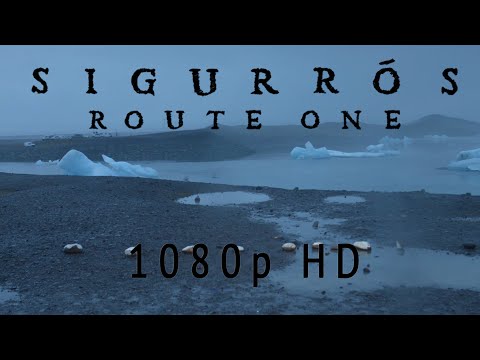
LiminalよりわずかにさかのぼるRoute Oneは、同じチームによるアンビエント探求の出発点だった。2016年夏至の日、Sigur Rósはアイスランドの環状道路(Route 1)を一周する24時間のドライブを決行した。その全行程1332kmをYouTubeでライヴ配信しながら、音楽もリアルタイムで生成された。これがSlow TV的アンビエント実験「Route One」だ。なお同年はPaul CorleyがSigur Rósのライヴ・ミュージックディレクターに就任した年でもあり、Óveðurの共同プロデュースにも名を連ねている。Route OneはSomers・Corleyというふたりの外部の音楽的知性がバンドに合流した直後の産物だった。

音楽の生成にはBRONZEという専用のジェネレイティブ・ミュージック・プラットフォームが使われた。BRONZEはGoldsmith大学のMike GriersonとミュージシャンGwilym Goldが2011年に共同開発したシステムで、「すべての音は一連のルールに従い、再生のたびにリアルタイムで新しくユニークなトラックが生成される」という設計だ。ランダムではなく、制作者が「法則」を設定する点でMaxやPure Dataといった音楽プログラミング環境に通じる思想を持つ。

「Óveður」のマルチトラック・ステムをこのシステムに入力し、BRONZEが無限に組み換えてリアルタイムで新しい音楽的方向を生み出し続けた。だからこそ24時間超(完全版は25時間以上)という長大な音楽が可能だった。これはリミックスでも即興演奏でもなく、アルゴリズムによる変奏だ。ちょうどブライアン・イーノが最初のアンビエント・シリーズで試みた「テープ・ループをわずかにずれた位相で重ね合わせる」実験に相似している。

SomersがBRONZEのプログラミングを直接手がけたという記録はないが、Oneohtrix Point NeverやTim Heckerとのエレクトロニクス・ワークで鍛えられたCorleyの存在が、こうしたシステムとバンドの音楽的意図を橋渡しした可能性は高い。バークリーで映画音楽を学んだSomersもまた、アカデミックな音楽プログラミング環境(多くの音楽大学でMaxが教えられている)と無縁ではない。記録の上では確認できないが、音楽を「プログラムによって設計する」という発想に対して、このチームがどれほど自然に接続できたかは、Route Oneの完成度そのものが示している。

各トラックの名前はアイスランド環状道路の停車地点のGPS座標だ——63°32'43.7”N 19°43'46.3”W、64°02'44.1”N 16°10'48.5”Wといった具合に。位置情報がそのまま曲名となる。アルバムはアイスランドのNorður og NiðurフェスティバルでアーティストSigga Björgによる手描きスリーブとともに限定リリースされ、2018年のRecord Store Dayで再プレスされた。

Treble Zineが評したように、Route OneはValtariの静謐なアンビエントとKveikurの焦げついた陰鬱さを橋渡しする作品であり、バンドが向かってきた「異教的な海の洞窟、火山性のガラス、古いヴァイキングの空間」という美的宇宙の延長線上にある。そしてRoute Oneは翌年のLiminalへとそのまま接続する。Jónsi・Somers・Corleyの三者は、音楽を「一度完結した作品」ではなく「永続的に生成される環境」として捉えるという思想を、この二つのプロジェクトで一貫して追い続けた。

YouTube video

正規音楽教育という特異性、そしてオーケストラへの橋

Sigur Rósの音楽的語法は、その根のところで「正規の音楽教育とは別のところ」から来ている。Jónsíは独学であり、バンド全体の表現は教科書よりも直感と実験から育ってきた。そのため、オーケストラとの本格的なコラボレーションを志向したとき、バンドはつねに「構造を語れる誰か」を必要としていた。

Alex Somersはその空白を埋めた。バークリーでのオーケストレーションと映画音楽の訓練は、弦楽、木管、ブラス、合唱のそれぞれに対して具体的な音楽的指示を与えられる能力をSomersに与えた。Riceboy SleepsでAmiina弦楽四重奏とKópavogsdætur合唱団を組み合わせたときも、Valtariで過剰なドローンにテクスチャーと焦点を与えたときも、そしてLiminalで「眠りの構造」をアンビエント音楽として設計したときも、Somersが担ったのはこの「音楽の設計」という仕事だった。

Riceboy Sleepsの10周年ツアー(2019年)では、バービカン公演においてロンドン・コンテンポラリー・オーケストラ(LCO)25名の演奏家とともに同アルバムを全曲演奏した。弦、木管、ホルン、パーカッションまでを用いたこの編成でRiceboy Sleepsが演奏されたことについてJónsíはこう語っている。「アルバム全体を管弦楽と合唱で演奏できることは驚くべきことだ。新しい意味、新しい命、異なる色彩とテクスチャーをもたらしてくれる」。

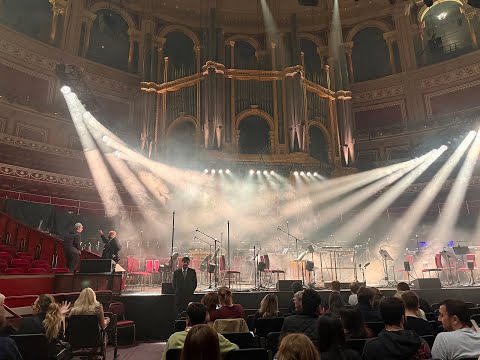
そして2023年のアルバムÁTTAの発表以降、Sigur Rósはオーケストラ伴奏をライヴの標準形態として確立させた。ロバート・エイムズ(Robert Ames)が指揮を執り、各都市の地元オーケストラ(Wordless Music Orchestra、London Contemporary Orchestra、Detroit Symphony Orchestra等)とともに41名編成でステージに立つスタイルだ。2025年にはロンドン・ロイヤル・アルバート・ホールでLCOとともに「Ára bátur」を初めてライヴ演奏し、2026年の最終ツアーレグではスコットランド室内管弦楽団、ビルバオ・シンフォニー・オーケストラ等と各地で共演している。

このオーケストラとの協働の下地には、Somersが長年にわたって育ててきた「ロック・バンドとオーケストラとの間にある言語の橋」がある。Riceboy Sleepsの弦楽アレンジ、Valtariでの弦のレイヤリング、Liminalでのアンサンブルの設計——これらはすべて、正規の音楽教育を受けた者のみが担える仕事だった。Sigur Rósが今日、世界の名だたるコンサートホールでオーケストラとともに立てるのは、ひとつにはこの積み重ねによるものだ。

YouTube video

Takk... (The Tape Variations) ── 記憶の中のテープ

2025年12月、Sigur Rósはひとつの試みを世に出した。Takk... (The Tape Variations)。2005年の名作『Takk...』を、Sidney Satorsky(シドニー・サトースキー)というトロントのプロデューサーが全曲リワークした作品だ。「Takk...はリリースから20年間、ずっとお気に入りのアルバムのひとつだった。コラボレーションへの招待を受けたとき、眠りと覚醒の境界にいるような、オリジナルの曲の別バージョンをつくりたいと思った」とサトースキーは語っている。

サトースキーはすでにJónsi & Alexの2019年作Lost and Foundにも共同プロデューサーとして参加しており、このSigur Rós周辺の「アンビエント的創作圏」に深く根ざした人物だ。

ここで興味深い連想が浮かぶ。Alex Somersが13歳でTascamを手にしてから、テープによる音の変形を繰り返し続けてきたこと、そしてその審美的記憶が、彼の協力者選びにも働いているのではないかという可能性だ。Lost and Foundの公式説明には「テープ実験、モジュラー・シンセ処理、アコースティックのサウンドスケープが焦点の内と外を漂う」とある。Somersがサトースキーを選んだことには、単なる音楽的相性を超えた、テープという素材への共鳴があったのではないだろうか。テープはSomersにとって「音楽を変容させること」の原点だ。その記憶と審美眼が、Takk...という20年前の傑作の再解釈者を選ぶ目にもつながっていると考えることは、それほど的外れではない。

YouTube video

ひとりのアメリカ人が変えたもの

Alex Somersがもたらしたものを一言で言うとするなら、それは「外側の感覚を持ちながら内側の言語を話せる耳」だろう。バンドのメンバーではないが、Jónsíの恋人としてレイキャビクで共に暮らしたことでSigur Rósの音楽的文法を誰より深く理解した。ふたりは2019年に別れたが、その後も音楽的パートナーとしての関係は続いており、JónsíとSomersはいまも創作上の友人であり協力者だ。バークリーで培った映画音楽・オーケストレーションの技法、アイスランド芸術大学での視覚芸術への没入、そして13歳から積み上げてきたテープ実験の記憶——これらすべてが、Sigur Rósのアンビエント的深化において独自の役割を果たした。

Valtariで霧のなかの素材を彫刻し、Liminalで眠りと音楽の境界を設計し、Route Oneでアルゴリズムとアイスランドの地形を溶け合わせ、Takk... (The Tape Variations)ではテープという素材への愛着を次世代の協力者につなぐ。これらはバラバラな出来事ではなく、ひとつの一貫した感性の表れだ。

Sigur Rósは依然としてSigur Rósだ。しかしその音楽が持つアンビエント的深みの多くは、ボルティモア生まれのひとりの人物が13歳のときにTascamを手にした瞬間から、すでにはじまっていたのかもしれない。

One day, a piece of music drifting out of BBC Radio 3's Late Junction made me stop what I was doing. Strings and guitar dancing around each other in an interplay unlike anything I'd heard before. I jotted down the song title and the band name, and started working my way through their albums. Then, somewhere deep into that listening, a melody came on that I recognized — the one I'd been hearing in HP commercials for years.

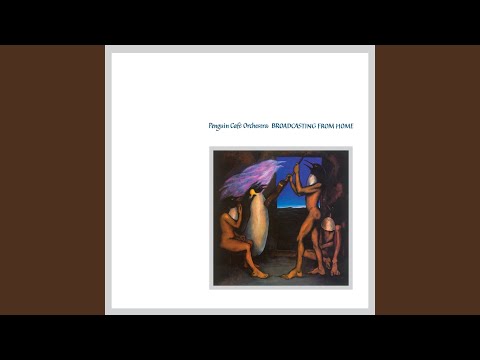
Penguin Cafe Orchestra. I had been living with their music for years before I ever learned their name.

“You know it, but you don't know whose it is.” That's what Penguin Cafe Orchestra has always been.

Music Born from a Fever Dream

To talk about Penguin Cafe Orchestra, you have to start in the south of France in 1972. British guitarist Simon Jeffes ate some bad fish and fell ill. Laid up in bed, burning with fever, he kept seeing the same strange vision.

Arthur Jeffes — Simon's son — later described it this way: “My father had a nightmare about the near future. People lived in enormous concrete buildings, staring at screens. In the corner of each room sat a large camera, watching them constantly. In one room, a couple was having loveless sex. In another, a musician sat surrounded by mountains of equipment — but wearing headphones, so no actual music filled the room.”

At the opposite pole of that inhuman world, Simon saw in his dream a place called the Penguin Cafe. Walking down a dark street, you'd come upon an old building spilling out light and noise. Inside, a long table where strangers sat shoulder to shoulder. And at the far end, a small ensemble playing — music that felt somehow familiar, yet impossible to place.

When the fever broke, Simon made a decision: he would write the music that dream ensemble was playing. And so, in 1972, Penguin Cafe Orchestra was born.

Chamber Music Called an “Orchestra”

The word Orchestra conjures images of a large symphonic ensemble. The actual Penguin Cafe Orchestra was something far removed from that — a small, intimate group.

Guitar, cello, violin, ukulele, trombone, percussion. The lineup shifted from piece to piece, and Simon brought in harmonium, penny whistle, rubber bands, and even telephone dial tones as instruments. This was chamber music — or something even freer than that, something that refused any category.

The name Orchestra was Simon's joke, and also his musical manifesto. He borrowed a word with authoritative weight and quietly dismantled what it implied. Not music to fill a concert hall, but music to be played in the back of a café — intimate, warm, bodily. That was what Simon was after.

YouTube video

“Perpetuum Mobile” (1987). Written in the irregular meter of 15/8, this piece carries the sensation of a perpetual motion machine that seems always about to end but never does. It became widely known as the theme for the TV adaptation of The Handmaid's Tale and the film Mary and Max.

The Music of Its Moment, and Something Distinctly British

When Penguin Cafe Orchestra released their debut album in 1976, they were emerging from — and in conversation with — a rich landscape of contemporary music.

In America, Steve Reich and Philip Glass were developing Minimalism: repeating patterns, layered voices, quiet transformation. PCO's music shares structural affinities with all of that. But it keeps a clear distance from Minimalism's abstraction and cool detachment.

Where contemporary Minimalism pursued intellectual structural beauty and rigorous systems, PCO's music is shot through with an irrepressible sense of play. Rubber bands as instruments. Telephone dial tones looped into a piece literally called “Telephone and Rubber Band.” Odd time signatures and intricate counterpoint that, in Simon's hands, read not as complexity but as humor. He borrowed Minimalism's language and then let the air out of its tension — that was Simon Jeffes's particular genius.

Part of the source of that playfulness, I think, lies in British and Irish traditional music. Trad has long been built around the repetition of short phrases for dancing — reels and jigs, melodies cycling with small variations. The repetition that Minimalism pursued intellectually was already embedded there, in the body, in the feet. PCO brought both kinds of repetition together not as an academic proposition but as physical joy.

The origin story of “Music for a Found Harmonium” is emblematic. On a Japanese tour, Simon happened upon an old foot-pedal organ abandoned by the roadside. The simple melody that emerged from that imperfect instrument slipped so naturally into the grammar of Irish reels that traditional players — Patrick Street, De Dannan, Kevin Burke, Sharon Shannon — began covering it as if it had always belonged to them. Not classical music, not contemporary art music, but the music people have danced and laughed and made noise to across generations — that was what supported PCO's humor and lightness.

The debut album was released on Obscure Records, the label run by Brian Eno. Eno's ambient music proposed a static kind of space — music that could be listened to or ignored equally. Simon's vision was different: it contained the warmth and noise of people actually gathered together. PCO's music has that particular friendliness because, against Eno's depopulated atmosphere, it always carries the body heat of other people in the room. Meanwhile, Kraftwerk was inventing an entirely new musical language called techno. PCO shared in the same contemporary questions, and turned toward something more human, somewhere warmer.

The rhythmic vitality of folk, the structure of Minimalism, the atmosphere of ambient, the intimacy of chamber music — all of it dissolved into a distinctly British lyricism. None of Philip Glass's chill, none of Eno's self-erasure, none of Kraftwerk's mechanization. Something more human, more frayed at the edges, and funnier.

YouTube video

“Music for a Found Harmonium” (1984). Inspired by a foot-pedal organ Simon discovered abandoned on a street. The melody was adopted by Irish traditional musicians as their own, and was later featured in the film Napoleon Dynamite.

Success, Forgetting, and Ubiquity

Penguin Cafe Orchestra were never obscure. The 1987 album Signs of Life charted in the UK, and they toured internationally. They found an audience in Japan. The Royal Ballet incorporated their music into productions. They appeared on The South Bank Show and on Terry Wogan's television programme.

But their debut came out in 1976 — the year I was born — and that music is now “old.” Streaming algorithms favor new releases. And Simon Jeffes died in 1997, of a brain tumor, at forty-eight. There would be no new music, no new tours.

Still, the music kept living. As film scores, as television soundtracks, as background music in commercials. HP was only the most prominent of countless advertisements. The Handmaid's Tale, Mary and Max, Napoleon Dynamite, Capitalism: A Love Story — the list of screen works drawing on PCO is long.

This is how the “you know it but you don't know whose it is” phenomenon works. The music continued to reach people's ears through different circuits even after the name faded from common knowledge. Only the name was left behind as time moved on.

What the Son Inherited

Ten years after Simon's death, in 2007, former members gathered at Union Chapel in London for a memorial concert. On that stage, Simon's son Arthur Jeffes played percussion and keyboards. All three nights sold out.

Encouraged by that response, Arthur formed a new band in 2009 called simply Penguin Cafe — a completely new ensemble, with none of the original PCO members.

Arthur studied archaeology and anthropology at Cambridge — an intellectual by formation — while also nurturing a passion for experimental music. There's a story from his childhood of him striking piano keys with a hammer, which Simon apparently read not as destruction but as the first stirrings of an experimental spirit.

Penguin Cafe has now released five albums, every one of them on Erased Tapes — the post-classical label that has been home to Nils Frahm, Ólafur Arnalds, and Jóhann Jóhannsson. That fact alone signals that Arthur is not simply preserving Simon's legacy, but actively situating Penguin Cafe within the contemporary conversations of post-classical and neo-classical music.

YouTube video

In the repeating structures and unique sense of play that animate Penguin Cafe, the weight of his father's influence is not hard to find.

Still Playing, in the Back of the Café

The latest album, Rain Before Seven… (2023), represents the current horizon of Arthur's Penguin Cafe. Its title draws from an old British weather saying — “Rain before seven, fine before eleven” — and the music carries Simon's spirit forward while speaking in Arthur's own voice.

Violin, cello, double bass, percussion alongside balafon, ukulele, melodica. Just as Simon made rubber bands and telephone tones into instruments, Arthur brings “unexpected sounds” into the chamber music frame. The approach is faithful throughout to his father's philosophy: “Take an interesting, slightly weird idea and do something weird with it. But make it beautiful, and emotionally accessible.”

The dream café is still open. The ensemble in the back is still playing. And you have almost certainly already heard them. You just didn't know their name.

description Why does repetition—the thing we're taught to avoid in composition—have the power to alter consciousness? Steve Reich's phasing technique and Berlin techno share the same underlying neurological mechanism: when a pattern loops with microscopic variation, the brain stops tracking it as sequence and starts inhabiting it as space. This piece traces the genealogy of that discovery, from Reich's tape-loop experiments in the 1960s through the architecture of Tresor and Berghain, and asks what it tells us about how music bypasses the thinking mind to act directly on the body.

Sitting still in a room and listening, it can sound almost boring. An ascetic, unrelenting repetition that refuses melody and dramatic chorus at every turn. But what if this sound — hovering just one step short of tedium — were actually a terrifying machine for overturning three centuries of European orchestral tradition and directly hacking the listener's cognitive system?

Steve Reich, one of the towering figures of contemporary classical music, and Ellen Allien, the queen who has kept Berlin's underground shaking for decades. Two artists from entirely different worlds and eras, yet both arrived — each by their own route — at the same destination: the transformation of perceptual flow, and the architecture of trance. Follow the thread far enough, and an invisible line connecting them comes into view.

1. A Revolution Born from Two Tape Recorders: Steve Reich's Background

Born in New York in 1936, Steve Reich was one of the pioneers of minimalism — a composer who turned sharply away from the direction postwar contemporary music was heading, toward ever more complex, quasi-mathematical avant-garde forms like atonalism and serialism. La Monte Young, Terry Riley, and Philip Glass were all working in the same current, but Reich stood out among them for his singular obsession with physical pulse.

His background was academically elite — philosophy at Cornell, composition at the Juilliard School and Mills College — yet it was always bound to the body. At fourteen, hearing Kenny Clarke play for the first time, he was seized by percussion. He went on to study with the great local drummer Roland Kohloff, who would later become principal timpanist of the New York Philharmonic. His subsequent fieldwork in Ghana studying African drumming and in Bali studying the ritual loop structures of gamelan became the very marrow of his music.

From Tape Phase-Shifting to Music for 18 Musicians

In the mid-1960s, before electronic instruments and synthesizers had entered the mainstream, Reich stumbled upon what would become the central discovery of his musical life — phasing — through an accidental equipment error.

In his early experimental works It's Gonna Rain (1965) and Come Out (1966), he ran the same recorded fragment of voice on two open-reel tape recorders simultaneously. The machines, each slightly different in manufacture, drifted by milliseconds, and the phase relationship between the two loops gradually shifted apart.
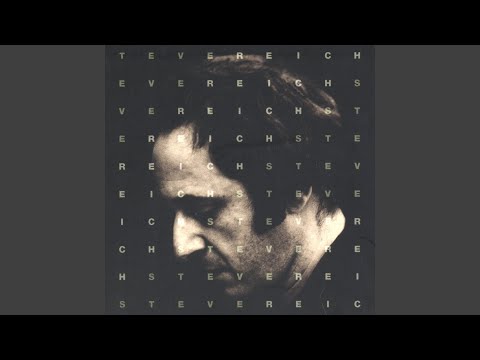
YouTube video

[Reich's Tape Hack]
Loop A: [■■■■■■■■]
Loop B: [ ■■■■■■■■]  ← running fractionally slow, drifting out of phase

What Reich witnessed was something close to a glitch in the brain itself. As the same sound overlapped out of sync, the gaps between sounds began to interlock — and phantom melodies and rhythms that were never recorded on the tape at all began playing unbidden inside the listener's mind. Confronted with an unpredictable pattern of drift, the brain attempts to fill the gaps, spontaneously generating sounds of its own.

This is not mere auditory illusion. A brain that has been exposed to steady repetition over-adapts, trying to predict the pattern ahead — and when an unexpected shift is introduced into that flow, perception itself is rewritten, and a soundscape that doesn't exist in physical reality suddenly materializes. This transformation of perceptual flow is the fundamental mechanism by which Reich's music draws listeners into a trance.

The radical upscaling of this discovery — using not tape machines but human bodies and acoustic instruments — became his masterwork, Music for 18 Musicians (1976).

By the way, for those looking to experience this pulse-driven brain hack first-hand, the recording by the Colin Currie Group comes highly recommended. Reich himself famously praised their performance as being even more flawless and dynamic than his own ensemble’s original recordings. It perfectly captures an exacting, stoic precision and a stunningly resonant beauty capable of jolting the mind awake. YouTube video
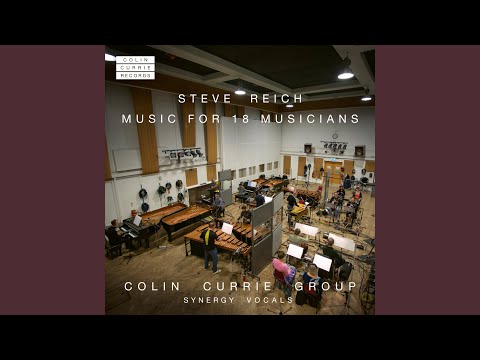
For nearly an hour, eighteen musicians — marimba, piano, strings — pulse incessantly, producing phasing by hand. By stripping the intellect of any opening to be moved by grand melody and locking the listener into a sustained pulse, the brain is drawn inexorably into a trance state. Reich found a form of hacking: shift the same thing, and new life emerges from the spaces between.

This work would later be cited as a direct source for the ambient trance music pioneered by Orbital, Aphex Twin, and The Orb. The circuit Reich discovered — perceptual transformation through repetition — already carried within it the seeds of what would eventually flow into techno.

Orbital live: YouTube video

2. Industrial Ruins: The Stagnation That Cradled Berlin Techno

The trance gene that Reich had sounded in concert halls crossed an ocean and, in the 1990s, detonated in a very strange city — in a very different form. That detonation was the birth of Berlin techno.

Music culture blooms not in times of prosperity and satisfaction, but when society is grinding to a halt — when a suffocating sense of a closed future hangs in the air, and people's bottled frustration becomes fuel. Just as punk rock and Joy Division were born from the despair of late-1970s British industrial towns, Berlin in the 1990s was saturated with its own specific atmosphere of stagnation.

In November 1989, the Berlin Wall fell. Reunification looked, on the surface, like a jubilant happy ending — but the economic reality was chaos and paralysis. State enterprises in the East collapsed in rapid succession, unemployment flooded the streets, infrastructure and industry ground to a halt. An anxiety about which way things would fall covered everything.

But this industrial shutdown created, for music, a miraculous dead zone.

On the former East Berlin side, vast ruins with no clear owners — underground vaults, abandoned power plants, cavernous concrete-and-steel shells — sat untouched. With industry collapsed and property values in freefall, rent in Berlin was absurdly cheap, or spaces could simply be occupied. Young people had time to spare.

Anarchic young people who hated the old European orchestral tradition — the idea of being a slave to scores and harmony — and who had dropped out of the grind-and-work system gathered in those ruins and flipped the switch on cheap drum machines. No jobs, no money — but as night fell, in cold concrete spaces, they danced until morning under relentless electronic four-to-the-floor kicks. That brutal, industrial techno low-end developed as a kind of raw, bodily prayer — the force required to break through the darkness of social stagnation.

And here is what matters: they arrived — almost certainly without knowing it — at exactly the same principle as Reich. The unceasing four-four pulse locks the listener's brain into a kind of predictive mode. The moment a minute variation is inserted into that locked flow, perception wavers and the door to trance opens. What Reich had discovered experimentally through tape drift, the floors of Berlin were reinventing through flesh and movement.

The greatest public spectacle Berlin techno ever produced was the Love Parade. Initiated in July 1989 by DJ and producer Matthias Roeingh — known as Dr. Motte — the event began as a political demonstration: 150 people taking to the streets in the name of peace and international understanding through music. Through the 1990s it grew explosively, and by 1999 it had become the largest dance music event the world had ever seen, with 1.2 to 1.5 million ravers filling Berlin's streets. The sight of an endless human mass dancing from the Brandenburg Gate to the Victory Column, under pounding four-four kicks from enormous speaker stacks, made visible to the world what techno had always been beyond club culture: a ritual of collective trance. Dr. Motte resisted the tide of commercialization to the end; when the event's trademark was sold in 2006, he distanced himself from it. The spirit lives on today in its successor, Rave the Planet.
YouTube video

3. Ellen Allien's New Album and the Hack of the Foreign Object

The queen who lived through the genuine chaos and freedom of that pre- and post-Wall Berlin from behind a DJ booth is Ellen Allien. Raised in West Berlin, she became a resident at Tresor and E-Werk in 1992, at the very heart of the scene's emergence.

Her musical approach — devastating, ferocious industrial beats that contradict her composed blond appearance — carries on in her 2026 album New Life with a perceptual transformation no less connected to Reich than anything she has done before. Weaving together minimal techno, darkwave, and hypnotic euphoria, the record uses repetition-as-perceptual-transformation as its primary weapon to speak to the themes of community and collective action.

What deserves attention in Allien's work is not just the swelling movement of refined synth pads, but her technique of dropping alien material into stoic, repeating rhythms:

[Techno's Sampling Hack]
Fixed rhythm:      [🥁──🥁──🥁──🥁]  (the hard four-four skeleton)
Foreign object:    [   🎙️   ✨   💥   ]  ← sampled material collides

Where Reich rewrote perceptual flow by shifting the same thing, the Berlin techno approach — Allien's approach — takes the opposite vector toward the same destination.

She locks an iron, absolutely undeviating rhythm loop into place and holds it there. The listener's brain fully adapts to that pitiless repetition, the borders of daily reality dissolve, and in that moment of trance — she drops in a sampled fragment: a worn chord, a noise shard, a processed voice.

The kick's hard refrain hasn't moved by a single beat. Yet the moment the dropped sample collides with it, the bassline and rhythm seem to physically deform into an entirely different shape. This is not auditory illusion — it is the transformation of perceptual flow produced when the brain has over-adapted to a repeating stream. By hurling a foreign object at a fixed skeleton, she rewrites perception from the inside, pulling the listener into a deeper trance. This is techno's own form of intellectual hacking.

Reich discovered transformation-through-disruption with a slipping tape. Allien weaponizes transformation-through-adaptation with a colliding sample. Their methods are mirror images of each other — but the destination, pulling the listener through a break in perceptual flow and into trance, is identical.

Ellen Allien's New Life is available on Apple Music as a partial advance release. Below: a live DJ set. YouTube video

Coda: Minimalism Closing the Circle

The initial feeling — this is too monotonous to sit still for — is simply evidence that the trap has worked. It is precisely because the obvious chorus has been stripped away, subtracted, that the human ear becomes acutely sensitive to the most infinitesimal changes in the spaces between pulses. When the brain has habituated to the repetition and perceptual flow converges on a single point — it is that tiny shift or foreign object that rewrites the flow and opens the door to trance.

The circuit of perceptual transformation that Reich found spinning open-reel tape took up residence in the four-four pulse of electronic machines among Berlin's stagnant ruins, and through Ellen Allien's colliding samples, it still bares its teeth on floors somewhere tonight. This pleasure of minimalism — inherited in altered form, passed forward again — is right now, in some dark room somewhere, slowly drawing out someone's dopamine, beat by beat.


Description: Long before humans synthesized a waveform, the natural world had already mastered the mixing desk. Acoustic ecologist Bernie Krause observed that vocalizing organisms partition the frequency spectrum to avoid interfering with each other—an evolutionary form of multitrack recording. Two releases on the UK label Touch make this audible: Chris Watson's field recordings from the Holy Island of Lindisfarne, and a dense Thai rainforest soundscape that sounds indistinguishable from drone music. And then there is Fennesz, who arrives at the same sonic territory from the opposite direction—destroying a guitar with digital processing until what remains breathes like the earth itself.

For centuries, humanity has debated the origins of music. Is it a purely human invention, an abstract manifestation of mathematical beauty? Or is it, at its core, a sophisticated imitation of the natural world?

When we look at the field of acoustic ecology—specifically through the lens of Krause’s Biophony, which states that vocalizing organisms partition the acoustic spectrum into specific frequency bands to avoid competing with one another—nature reveals itself as the ultimate orchestral masterpiece.

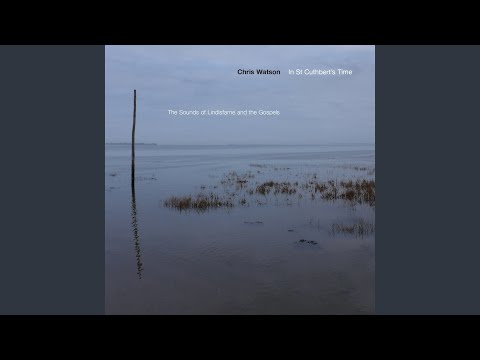
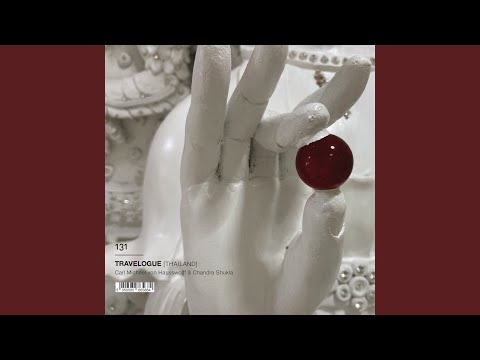
Two profound works released by the legendary avant-garde label Touch perfectly illustrate this concept: Chris Watson’s In St Cuthbert's Time and Carl Michael von Hausswolff & Chandra Shukla’s Travelogue: Thailand. Both demonstrate that what we call “music” is already happening in the wild, perfectly harmonized through evolutionary design.

The Acoustic Niches of In St Cuthbert's Time

Chris Watson, a master of field recording and a founding member of Cabaret Voltaire, takes us to the Holy Island of Lindisfarne in In St Cuthbert's Time. The album is a sonic recreation of the seventh-century landscape.

What Watson captures is not a chaotic wall of noise, but a highly organized sonic architecture:

  • The Low-End: The rhythmic, heavy thrum of the North Sea waves acting as the rhythm section.
  • The Mid-Range: The distinct, melodic calls of wading birds and mammals, perfectly timed.
  • The High-End: The sharp, piercing cries of terns and gulls cutting through the wind.

Watson doesn't need to arrange these sounds; the animals have already arranged themselves over millennia. Each creature occupies its own frequency band to ensure its message is heard, resulting in a naturally occurring, flawless harmony.

YouTube video


Spatial Polyphony in Travelogue: Thailand

Shifting from the desolate British coast to the dense, humid tropics, Carl Michael von Hausswolff and Chandra Shukla’s Travelogue: Thailand offers a different perspective on nature's symphony.

In the tropical rainforest, the competition for acoustic space is fierce. Travelogue: Thailand captures a dense, almost electronic-sounding grid of noise:

  • Insects lock into precise, high-frequency oscillations that sound like analog synthesizers.
  • Amphibians hold down the lower-mid drone.
  • Birds pierce through the canopy with sharp, rhythmic punctuation.

Hearing this, the line between “natural soundscape” and “drone/noise music” completely blurs. The creatures of the Thai jungle are practicing a form of spatial polyphony, frequency-hopping just like modern telecommunication devices to avoid jamming each other's signals.

YouTube video

The Touch Phenomenon: More Than a Record Label

You cannot discuss these works without highlighting the singular importance of Touch, the UK audio-visual label founded in 1982 by Jon Wozencroft and Mike Harding.

Touch occupies a unique, almost sacred space in contemporary music. It is not merely an ambient or experimental label; it is a curator of focused listening.

Why Touch is Unique:

  • Elevating the Status of Sound: Touch treated field recordings not as “sound effects” or background textures, but as definitive musical compositions. They forced listeners to realize that a bird in a storm is just as virtuosic as a violinist in a concert hall.
  • The Multi-Sensory Philosophy: Through Jon Wozencroft’s striking, high-purity photography and meticulous typography on the album covers, Touch creates a physical gateway into the audio. The art reminds us that sound is deeply tethered to geography, ecology, and time.
  • Acoustic Ecology as Art: Touch bridged the gap between scientific acoustic ecology and high art, proving that nature's survival tactics—like frequency slotting—are the true blueprints for human minimalism, drone, and ambient music.

Fennesz: When Guitar Noise Becomes Environmental Sound

Fennesz—the Austrian artist Christian Fennesz—releases music on Touch that arrives at the same acoustic territory from the opposite direction. Where Watson and von Hausswolff capture the natural world directly, Fennesz destroys a guitar through layers of digital processing until what remains is indistinguishable from environmental sound: shimmering, breathing, alive. The instrument disappears. The earth remains.

YouTube video

Conclusion: The Ultimate Imitation

So, is music ultimately an imitation of natural environmental sounds?

Works like In St Cuthbert's Time and Travelogue: Thailand strongly suggest that the answer is yes. Long before humans synthesized a waveform or arranged a choir, the natural world had already mastered the mixing desk. The frequency bands were assigned, the tracks were panned across the horizon, and the volume was perfectly balanced for survival.

When we compose music, we aren't creating something from nothing. We are simply remembering the ancient, perfectly harmonized language of the earth—a language that Touch has spent decades beautifully documenting.

What do you think? When you listen to a synthesizer drone, do you hear a machine, or do you hear the ancient roar of a tropical insect choir?