Why Spangle call Lilli line Sings in Abstract Words
Why does Spangle call Lilli line (SCLL) sing in such abstract words?
I touched on them briefly before, in Three Incredible Japanese Indie Musicians You Need to Hear, where I described their lyrics as existing purely in service of the melody. That was more of an introduction than an explanation. This time, I want to dig into the “why” itself — what special intent sits behind that choice.
“Floating, hazy vocals.” “Lyrics you can never quite grasp.” That's how this band has always been described, and it's not wrong, exactly. But it's a shame to leave it at impressions. There's a fairly deliberate design at work here.
Abstract lyrics are a way of freeing a song from the kind of musical development that pop music tends to default to — one built around the emotional rise and fall of the voice, the quiet verse building toward the big, cathartic chorus. By choosing words that carry no fixed person and no story, the vocal steps down from its usual job of pulling the listener into an emotional identification. It quietly recedes into being one element of the melody among others.
As a result, the momentum of the song shifts to the guitars and drums. SCLL's songs are vocal songs, and yet they claim the structural freedom that instrumental post-rock is built on.
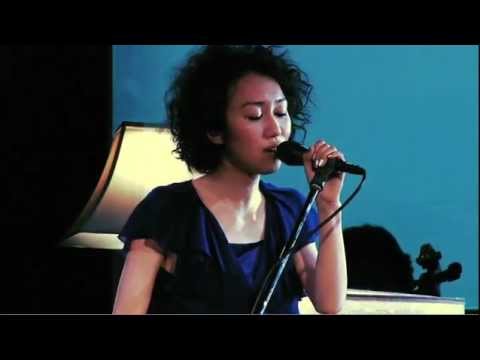
One high point of this is “zola,” from the 2010 album forest at the head of a river. At 9 minutes 56 seconds, the song is carried not by any emotional swell in the vocal, but purely by the development of guitar and drums.
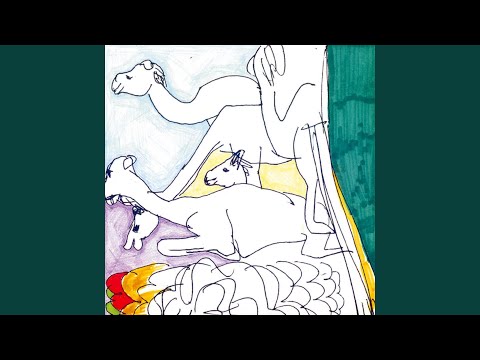
And this isn't some trick they picked up late in their career. Back in 2002, on their second album nanae, “Veek” already runs 7 minutes 37 seconds, built on the same kind of long-form structure.
So for SCLL, a song that doesn't depend on the vocal seems to have been a consistent instinct from the very start. The abstract lyrics, I'd argue, were refined as a tool in service of that instinct — not the other way around.
Why does this logic hold up? Let's go through it in three layers: the grammar of the lyrics, the choice of vocabulary, and where the voice sits within the ensemble itself.
Three People from Art School, Each with a Day Job
SCLL was formed in 1998 by Kana Otsubo (vocals) and Ken Fujieda (guitar), classmates at Tokyo Zokei University. Kiyoaki Sasahara (guitar), another friend from their student days, joined soon after. The band was originally a four-piece with drummer Nobuyuki Kabasawa, but after his departure in 2003, they settled into the three-piece core they still have, bringing in support musicians as needed.
Fujieda works as a graphic designer, Sasahara as a photographer. Every member holds down work outside music. It's this arrangement, I think, that has let them keep making records at their own pace for over two decades, free from the pressure of any commercial schedule.
Live, the core three are joined by bass, drums, and keyboard, and depending on the song, real piano or strings as well.
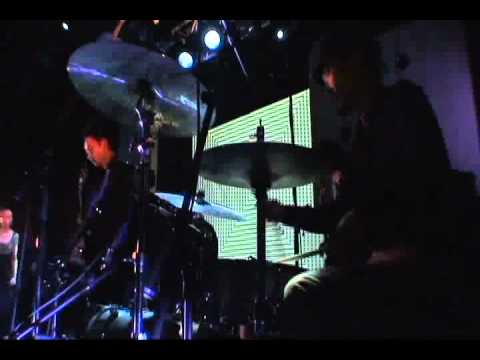
In this footage, keyboard and piano are clearly playing as separate parts. Even within the keyboard instruments, the roles are already split — one layer holding the harmony, another carrying something more melodic. Fujieda himself has said that these days he “can't make the music without the current support members,” and has gone as far as saying “maybe the three support members count as Spangle too.” Whatever fixed idea of a three-person band once existed, it's this loose, additive lineup that has become part of the music itself.
Lyrics That Belong to No One
Even Wikipedia notes that SCLL's lyrics favor “abstract words” over anything conventional or easy to parse. Let's start with the sentence structure itself, since that's where this abstraction begins.
Their lyrics rarely use a first person, and almost never address a specific “you.” There's no timeline of events to follow. What's left are fragments of nouns and verbs set side by side, with no way to pin down whose story, if anyone's, is being told.
In other words: the minimal scaffolding a listener needs to project themselves into a song — a narrator, someone being spoken to — has been deliberately removed.
Two Different Tricks of Vocabulary
On top of that “story belonging to no one,” the vocabulary itself does further work in pulling meaning apart. Let's look at two songs as examples — since I can't quote the lyrics themselves for copyright reasons, this stays at the level of individual words.

The opening of “nano” is built from a cluster of stiff, almost archaic nouns you'd never hear strung together in ordinary conversation. Pulling in words nobody actually uses makes it that much harder to assemble any coherent story.
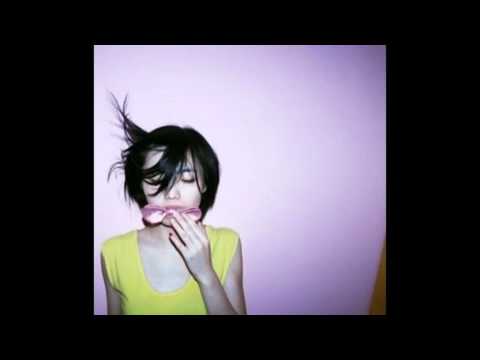
“B” works a different angle. Short English phrases — colors, feelings — get dropped in among the Japanese nouns with no obvious connection. Switching back and forth between English and Japanese forces a listener's mode of processing meaning to keep resetting, which makes it even harder to follow any narrative thread.
What's striking here is that the lyrics actually contain the word “falsetto,” naming the vocal technique itself, alongside the act of singing. It's a strangely self-referential touch — the lyrics taking the voice's own delivery as their subject.
A Lineage of Symbolism, and Where Sigur Rós Diverges
Holding onto real vocabulary while cutting the thread of meaning isn't something SCLL invented. It has an old lineage in the history of poetry.
Starting with Baudelaire in the late 19th century, through Verlaine's pursuit of the sheer musicality of language, to Mallarmé's attempt to build a self-contained symbolic world out of language alone — this current of Symbolism casts a long shadow over Dada and Surrealism that came after (this lineage is covered in more depth in Kotobank's entry on poetry from the World Encyclopedia; I won't go further into it here, just note that this kind of cultural continuity exists).
With that lineage in mind, it's worth being precise about how SCLL differs from Sigur Rós, a comparison that comes up often.
Sigur Rós's “Hopelandic” aims at something purely acoustic, prior to language itself. Since the vocabulary doesn't actually exist, no association or image can ever take root. SCLL, by contrast, never lets go of real Japanese vocabulary. The sentence's meaning may be gone, but the particular texture and atmosphere each word carries — the very thing Symbolist poets were chasing, language's power to evoke rather than explain — remains fully intact.
Both seem to be running from meaning in the same direction. But they're running toward different places. Sigur Rós heads outside language entirely, into pure sound. SCLL stays inside one of language's other functions — its power to resonate as symbol — and simply lets go of the other one.
So where does this “voice stripped of meaning” actually sit inside the ensemble, physically? From here, let's step away from the text of the lyrics and look at how the voice is placed among the instruments.
An Ensemble of Rising and Falling Motifs
The playing itself in SCLL is nothing avant-garde. A vocal carrying the main melody, guitar chords behind it — that's about as ordinary a skeleton as a song gets.
Look closer, though, and the guitar work splits into two distinct roles rather than one. One guitar plays the chords straight, holding the harmony. The other picks specific notes out of those chords, builds a short phrase, and repeats it. Add a bass anchoring the root notes, plus keyboard, piano, and sometimes strings, and what emerges is a structure where several short motifs rise and fall, continually reshaping the landscape of the song.
This isn't unique to SCLL, either. The same approach shows up in Ten to Sen, the instrumental duo Fujieda and Sasahara run alongside SCLL.
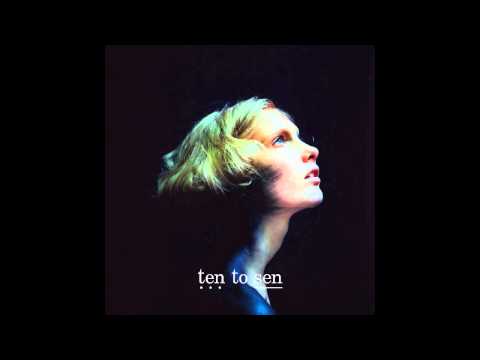
“scene-1 -it was.–” has no vocal at all. And yet more instruments join as the track goes on, and phrases — a repeated string line, say — hold for a while before dropping out. The song moves forward through this in-and-out arrangement of blocks.
It's not a standout instrumental piece by any means. But it does establish one thing: Fujieda and Sasahara clearly have the compositional chops to build a song that holds together without the strongest pull a song can have — a voice.
Which means this layered melodic structure isn't something that emerged only because the lyrics are abstract, or because there's no vocal. It's a compositional habit these two writers already have. In SCLL proper, Otsubo's abstract voice simply gets folded in as one more layer on top of it — even the vocal ends up absorbed into that same layered structure.
A Voice at Room Temperature
Even when a song is building to a peak, SCLL's vocal never climbs into some dramatic upper register. At most, a note gets held a little longer.
That evenness matches the texture of the delivery itself. Rather than belting, or retreating into falsetto or a whisper, there's a careful, almost meticulous way of laying each word of the lyric onto the melody, one at a time — this is purely an impression from listening, not something I've verified acoustically. Instead of shaping the phrasing to stir emotion, the words are set down flatly, in sequence, on top of the melody. That's probably why the voice ends up feeling continuous with the instruments around it, part of the same texture rather than something set apart.
The song's climaxes are built by adding layers of instruments, not by any change in the vocal's range or volume. The vocal stays on the main melody throughout, but emotionally, it never leaves room temperature.
Freedom from Verse and Chorus
The verse-chorus structure is, at its core, built around the vocal's own rise and fall — tension held, then released. A chorus functions as a chorus because that's where the vocal builds to its emotional peak.
SCLL has taken the vocal off that job, so there's no real reason to hold onto that form. Instead, changes in guitar phrasing and the addition or subtraction of instruments carry the song forward.
Most post-rock bands that do bring in vocals still end up drifting back toward that same “quiet verse, cathartic chorus” dynamic. SCLL, because the vocal stays at room temperature, manages to slip free of that pull.
Conclusion
What all this adds up to, I think, is this: it's the abstract lyrics themselves that make SCLL such a rare band — one that keeps a vocal and still achieves the dynamics of instrumental post-rock.
Lyrics with no fixed person, no story, built from rare vocabulary that cuts the thread of meaning — this isn't just a stylistic choice. It's a precisely engineered device: one that removes the vocal from its role as the emotional lead, while still letting it keep its structural seat — carrying the main melody — as it settles into being just one part of the texture.
The result is a band that, while still singing, claims the structural freedom that belongs to instrumental rock — the freedom to carry a song forward on guitar and drums alone. That “zola” holds together for 9 minutes 56 seconds without a single moment of vocal catharsis is simply the natural consequence of that design.