Two Cellists Who Crossed the Line: Anne Müller and Clarice Jensen
1. Beyond Electronica: The Pleasures of Acoustic Drone
The ambient music of Last Days — Graham Richardson's project out of Edinburgh — carries a beauty that is precise and self-contained, like a miniature world built from digital light. Synths and field recordings intertwine quietly, enveloping the listener. The craftsmanship is genuine.
And yet. There is something that electronic sound alone cannot reach — the moment when the physical vibration of an acoustic instrument collides with effects processing and space. When strings move air, and their overtones glow inside a digital fog, the sensation is something else entirely. The kind that raises the hairs on your arms.
This article focuses on two female cellists who, despite their classical foundations, have crossed that boundary with remarkable clarity. One brings a thrilling sense of propulsion born from the collision of cello and glitch. The other descends into the deep end of pure sound. Their approaches are opposite — yet both arrive at the same place: acoustic music as ambient.
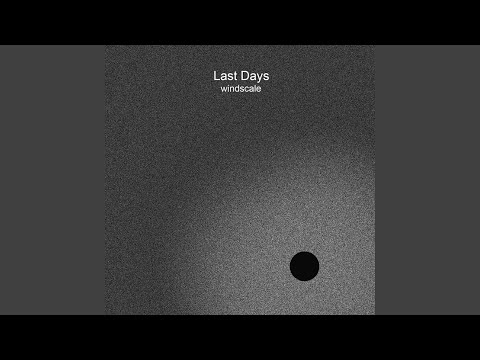
Start from Last Days album Windscale
Last Days' sixth album Windscale (2023) is a concept record built around Britain's most significant nuclear disaster — the Windscale reactor fire of 1957 in Northwest England. Track by track, it follows the timeline of the accident: from the early promise of nuclear energy through the reactor's fire and the radioactive fallout that followed. It is a document in sound — melancholic, elegiac, and quietly cautionary. The album makes extensive use of acoustic instruments, including cello, woven into its electronic textures — a reminder that even from the electronica side, the pull of physical sound is hard to resist. My reason for featuring Last Days' album here isn't that his music falls short of the two cellists from classical backgrounds. On the contrary, his work shines with a contrasting brilliance, standing out as a magnificent piece of ambient music.
2. The Anomaly at the Border: Anne Müller
A Place Called Erased Tapes
Anne Müller is a Berlin-based cellist who trained at the Frankfurt University of Music and Performing Arts and went on to perform in several of the city's orchestras — a thoroughly classical background. What brought her to wider attention was her connection to Erased Tapes, the London label that has become one of the defining homes of post-classical music. With Nils Frahm and Ólafur Arnalds at its core, Erased Tapes has built its identity by deliberately blurring the line between classical composition and electronics. Müller was part of that community from the very beginning, not as a solo act but as a vital collaborator.
She is also well known for her long-standing partnership with singer-songwriter-composer Agnes Obel, with whom she toured for five years and contributed to two albums.
7fingers — A Cello Racing Through Glitch
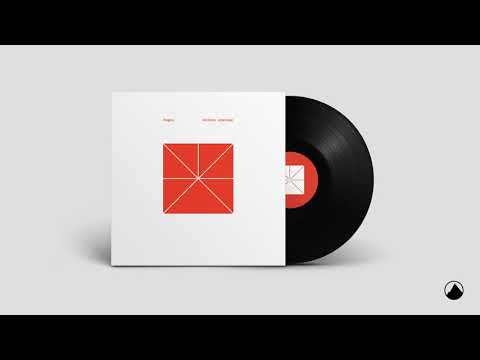
Nils Frahm & Anne Müller, 7fingers (2011, Erased Tapes)
This is a masterpiece. It is also one of the most singular records in Müller's discography.
On this album, Frahm is not operating as a pianist. He is the architect of resistance — deploying loops, samples, and relentless glitch to place obstacles in front of Müller's cello. And the cello does not dissolve into that noise. It cuts through it, tracing a clear, unwavering line. The outline never blurs.
The sensation recalls Nils Petter Molvær's trumpet slicing through electronic fog — that particular exhilaration of an acoustic instrument refusing to be absorbed. The glitch builds a percussive grid; the cello crosses it. Organic and inorganic, striking sparks against each other. There is nothing quite like it.
Müller's cello does not settle into the ambient. If anything, the resistance of the glitch makes it more vivid, more present. That tension is the heart of this record.
An Honest Word of Warning
That said, something needs to be said plainly. Among Müller's recordings, 7fingers stands essentially alone.
Her 2019 solo debut Heliopause, released on Erased Tapes, is a more inward, cello-centred work. The tension generated by Frahm's interference is gone. The cello moves to the foreground — but without the resistance to push against, it loses its forward momentum. If you come to Heliopause expecting the charged, glitchy energy of 7fingers, you will likely find it underwhelming.
7fingers is best understood as a miracle produced by a specific chemical reaction between two musicians. Listen to it in that context.
3. Builder of Deep Resonance: Clarice Jensen
From Juilliard to Max Richter
Clarice Jensen is a New York-based composer and cellist who earned both her bachelor's and master's degrees from the Juilliard School. As artistic director of ACME (the American Contemporary Music Ensemble), she has brought the works of Philip Glass, Steve Reich, and Terry Riley to contemporary audiences. Her collaborative credits are wide: Björk, The National, Jóhann Jóhannsson, and Max Richter's Sleep (2015), the eight-hour ambient work whose string parts she helped record — a project that places her squarely at the intersection of acoustic performance and ambient music.
In her solo work, Jensen layers her cello through shifting loops and chains of electronic effects, building drone-based sound fields through improvisation and processing. The music is meditative, but with a sculptural precision that keeps it far from easy New Age territory. Her earlier albums — The experience of repetition as death (2020) and Esthesis (2022) — are both genuinely accomplished. If you're looking for a more purely ambient entry point into her work, Esthesis is the place to start.
In holiday clothing, out of the great darkness — A Record Apart
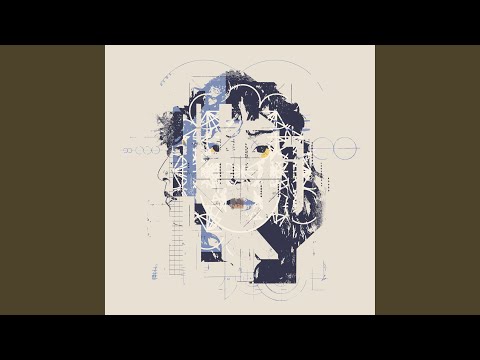
Clarice Jensen, In holiday clothing, out of the great darkness (2025, 130701/FatCat Records)
Jensen has produced strong work throughout her career, but this latest album is something else.
Just as Richter became known worldwide for Recomposed — his radical deconstruction and reimagining of Vivaldi's Four Seasons through the lens of minimalist music — Jensen follows a similar path on this album. Richter has long made it his practice to reread the great works of the classical canon through a contemporary eye, and Jensen clearly inherits that approach here. Recorded at Studio Richter Mahr — the creative space co-founded by Max Richter and Yulia Mahr in Oxfordshire, England — the album takes the Suites of JS Bach as its starting point, dismantling them minimally and rebuilding through loops and electronic processing. The methodology is an inheritance from her host; the voice that emerges is unmistakably her own.
From the very first track, a bass tone that sounds electronically boosted and irregular synth pads wind themselves around the cello. The sonic image is of extraordinary quality. The resonance of the cello body, the spread of the effects, the air of the room — this is a recording that rewards a good listening environment. The better your speakers, the more it gives back.
And this music becomes furniture. In the best possible sense: it achieves what Brian Eno described when he defined ambient music — sound that can be actively listened to or allowed to recede, without demanding one or the other. Jensen's cello relinquishes its identity as a cello and becomes the acoustic space itself.
NPR named it one of the twelve best albums of 2025, across all genres. That recognition is well earned.
4. The Happy Border Between Digital and Physical
Music like Last Days — approaching stillness from the electronica side — is genuinely beautiful. There is a precision to digitally constructed sustained sound that has its own integrity.
But what Anne Müller achieved in 7fingers, with that collision of glitch and cello, and what Clarice Jensen proved in an extraordinary acoustic space — that the cello can generate drone as deep and immersive as any synthesiser — these things are only possible because of a body, an instrument, and the physics of vibration.
The two women crossed the same border by different roads. Müller crossed through collision with another artist; Jensen crossed by picking up the effects chain herself. Where they arrived is different too — Müller's cello cuts through the ambient, Jensen's dissolves into it.
And yet both are answering the same question. How far can a cello go?