The Sustenance of Bass: The Single Thread Connecting Vivaldi's Hidden Masterpieces and Max Richter
When we listen to music, we unconsciously seek out the bass. This is because the ear possesses a natural tendency to compensate for missing low frequencies by reconstructing them from overtones, even when the bass isn't actually sounding. This is precisely why we can perceive bass lines even through the tiny speakers of a mobile phone.
If so, what exactly does the ear receive when that bass is not an illusion, but is actually and continuously sounding?
Pursuing this question, I would like to connect two composers separated by 300 years with a single thread. Vivaldi, who, in the shadow of The Four Seasons, wrote 37 bassoon concertos that pushed the characteristics of bass to their absolute limits. And Max Richter, who reconstructed that same Four Seasons using the non-decaying sustained tones of a synthesizer. Let us trace the reasons why these two were so fixated on the sustenance of bass.
The Ear Automatically Compensates for the Bass
To say that “bass forms the foundation of music” is not a metaphor; it is a fact rooted in the actual mechanics of the ear.
The 18th-century theorist Jean-Philippe Rameau posited that the “root” of a chord was not merely a notational convention, but a phenomenon actually perceived by our hearing. This intuition is corroborated by modern psychoacoustics. The human ear possesses the ability to autonomously reconstruct a root note from multiple overtones—a phenomenon known as the “missing fundamental.” For instance, even if only the overtones of 120Hz, 180Hz, and 240Hz are sounding, the brain will compensate and hear a 60Hz frequency that is not physically present. The aforementioned mobile phone speaker example is a manifestation of this exact mechanism.
In other words, the ear prioritizes bass so much that it tries to compensate for its absence. Therefore, when the bass is actually sounding, the ear no longer needs to deduce anything, and it resonates with a much more definitive sense of stability.
What is fascinating is that the bassoon itself inherently triggers this phenomenon. While not an extreme low-register instrument like the double bass, the bassoon is characterized by a weak fundamental tone in its sound, compensated by rich overtones that sometimes ring louder than the fundamental itself. Consequently, when the ear listens to a bassoon, it is fully engaging this “automatic bass compensation” mechanism. Vivaldi’s fixation on the bass expression of this instrument might have been driven by an acoustic inevitability rather than mere personal preference.
Exhausting the Potential of Basso Continuo
Vivaldi's primary occupation was not as a court composer, but as the music director of the Ospedale della Pietà, an orphanage in Venice. At the time, the standardized concept of an “orchestra” did not yet exist, and the scale of ensembles varied wildly from institution to institution. Amidst this, the Pietà enjoyed stable funding and maintained a permanent, highly skilled group of musicians (selected from the girls at the orphanage)—a remarkably privileged environment for its era. Under a contract to write two concertos a month, Vivaldi was able to use this environment as his laboratory.
The astonishing 37 bassoon concertos are the product of those experiments. Exactly for whom they were written remains unidentified even today. Nevertheless, judging by their technical demands, it is undeniable that a player of considerable skill was present.
What makes this body of work so intriguing is that the very invention of the concerto genre functioned as an “apparatus to prevent the bass instrument from being buried.” The concerto is a method devised by Baroque composers to construct a piece by alternating and contrasting a soloist with an ensemble. If the bassoon were merely embedded within the string section, its low tones would be drowned out by the mountain of violins. The concerto, however, carves out moments of silence for the ensemble, isolating and illuminating the soloist's voice during those intervals.
RV 495 is precisely one of those concertos for the bassoon. In its second movement, the upper strings are completely stripped away, reducing the music to a pure dialogue between the solo bassoon and the basso continuo. Basso continuo is a style where a keyboard instrument like a harpsichord pairs with a bass instrument like a cello or double bass to continuously sound the root note whenever the harmony shifts, seamlessly supporting the harmony beneath the melody. In other words, what this movement is executing is the very theme of this article—the act of creating a musical foundation through the relentless sustenance of bass—presented in its most naked form, having removed the “mountain” of the ensemble.
Listening to the 2019 performance by Thomas Dunford's ensemble “Jupiter” provides a clear understanding of how this sounds in practice. With the participation of outstanding musicians, the contrast between the bassoon and the ensemble inherent in this piece is brilliantly drawn out. Reviews noting that the bass section functions as the skeleton of the entire performance further corroborate how this structure comes alive in actual execution.
What the Classical Era Stripped Away from the Bass
Originally, basso continuo was a highly flexible style where the composer provided only the bass melody and the numbers for the accompanying chords (figured bass), leaving the exact voicing and realization of those chords to the performer's discretion. It was a system predicated on improvisation, meaning the same piece would sound different depending on who played it. This basso continuo gradually disappeared from orchestras between roughly 1750 and 1775. The reasons include composers ceasing to leave things to performer discretion—opting instead to notate every single note of the accompaniment themselves—and the expanding size of the orchestra. The bass retreated from being the “active generator of harmony” to a “mere supporting actor,” and music transitioned toward a homophonic texture of main melody and accompaniment.
The opening of Beethoven's Eroica appears, at first glance, to be a counterexample to this trend. It is the cellos, not the violins, that present the theme. However, “a bass instrument playing the leading role” and “having thickness in the bass register” are two different matters. The cellos in that passage are merely playing a monophonic melody; there is no sustained layer of bass supporting it anywhere. The other strings merely add quiet syncopated chords, leaving the overall texture surprisingly thin. Whereas Vivaldi's basso continuo continuously sounded the harmony to provide weight, here, a bass instrument merely happens to be carrying the melody, and the thickness as a foundation has actually been lost.
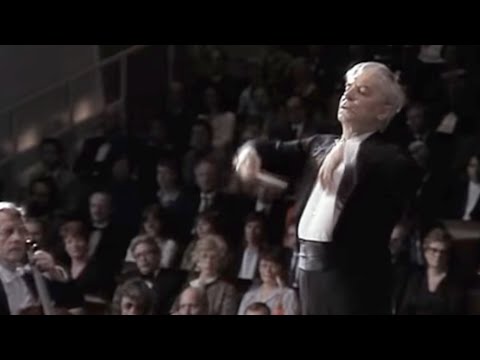
The performance by Herbert von Karajan and the Berlin Philharmonic offers one answer to this notational thinness. Karajan's performances are often described as a “beautiful wall of sound,” but they are also praised for having “greater depth” due to his strong emphasis on the lower instrumental sections. One could interpret this as the performance's interpretation retroactively supplementing a bass foundation that is compositionally absent.
Why Richter Chose the Synthesizer
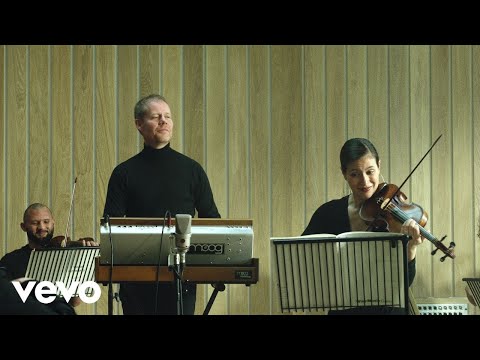
When Max Richter reconstructed The Four Seasons, it was no accident that he replaced the free-flowing melodic lines of the violin with minimalist repetitive figures, while simultaneously rebuilding the role of the basso continuo with the sustained tones of a synthesizer. He stated:
“Vivaldi's music is modular; it's made up of layers of small patterns. That was exactly the same as my own way of making music.”
This structure of repetition and imitation, where soloist and ensemble alternate, is superficially quite close to minimalist techniques like phasing. It was precisely because of this proximity that the reconstruction of Vivaldi became a project of structural inevitability, rather than mere nostalgic indulgence.
He describes the vintage Moog synthesizer as “the equivalent of a Stradivarius from the Baroque era.” There is a technical fascination here as well. The basso continuo of a plucked instrument like a harpsichord has a sharp attack and a rapid decay, generating a driving energy that always pushes forward. A synth bass like the Moog, on the other hand, sustains evenly without decay for as long as the key is pressed. What Richter achieved could perhaps be described as the translation of the Baroque “driving bass” into a “drone bass” that fills the space.
This kind of bass thickness can actually be achieved with a standard orchestral setup. Listening to Philip Glass's symphonies reveals that a solid, minimalist foundation can be easily created simply by layering low brass and woodwind instruments and holding the notes. This clarifies the significance of Richter's deliberate choice of the synthesizer. What he desired was not weight itself, but a perfectly uniform sustained tone entirely devoid of the performer's breath or the fluctuations of bowing. No matter how skillfully an acoustic instrument sustains a note, minute traces of decay will always remain. Only a synthesizer can achieve that absolute lack of fluctuation.
What basso continuo and synth bass share is the composer's will to design the bass as a structural element from the very initial stages of the work. Where they differ is that while basso continuo was entrusted to the performer through the variable notation of figured bass, the synth part is an entirely fixed score. Although the intent to design the bass is identical, the two diverge on whether that design is fixed or entrusted.
Music for Music's Sake
The 19th-century critic Eduard Hanslick argued that the beauty of music lies not in the expression of narratives or scenes, but purely in the autonomous forms created by the sound itself. It was a theory written as a counter-argument to Romantic program music.
Overlaying this onto Vivaldi reveals a fascinating dynamic. The Four Seasons is a pioneer of program music, possessing scenic depictions that correspond to sonnets. The bassoon concertos, on the other hand, have no programmatic titles and operate entirely on the logic of the concerto form. The exact same composer was writing these two facets in parallel without any sense of contradiction. The fact that The Four Seasons is overwhelmingly famous because its narrative provides a foothold for the listener, while the bassoon concertos suffer in popularity simply because they must speak for themselves solely through musical structure—is deeply ironic.
What Richter did with The Four Seasons was not to further emphasize its programmatic nature, but rather to reduce it to form by patterning the musical figures and fixing the bass. However, this was likely not an attempt to prove formalism, but rather to excavate the structures dormant within Vivaldi's music that resonate with contemporary minimalism and ambient music.
The driving bass produced by the plucking of a harpsichord 300 years ago has now transformed into the non-decaying sustained tones of a synthesizer—a drone that quietly fills the space. The instruments and aesthetics are entirely different. And yet, the composer's will to design the bass as a foundation remains unchanged across the centuries. That, I believe, is the single thread connecting Vivaldi's hidden masterpieces and Max Richter.