The Musicians Who Spread the Blues, the Foundation of American Music: Blind Lemon Jefferson and Robert Johnson
I started reading a history of American music, and the first thing I encountered was the blues. Jazz, rock, hip-hop — follow any of them back far enough, the book says, and you end up here. But honestly, I had never really listened to the blues before.
Two names came up in the book: Blind Lemon Jefferson and Robert Johnson. Both were Black musicians who played the American South in the early twentieth century, a guitar in hand and a voice to match. When I actually listened, the recordings were old, the distance nearly a hundred years. And yet the moment I pressed play, something came through directly.
This is a record of how I — someone who knew nothing about the blues — found my way to the origins of American music, through these two musicians, because of a book.
How a One-Guitar Music Reached the World Through Recording Technology
In the early twentieth century American South, the blues wasn't played in concert halls. It lived on street corners, in saloons, at church gatherings. A single guitar and voice is a quiet thing — it doesn't carry in a large room. For a long time, this music went unrecorded, alive only in the places where it was played.
What changed that was the arrival of recording technology. When the record industry began developing the “race records” market for Black listeners in the 1920s, music that had never been heard beyond its immediate surroundings began to circulate widely for the first time.
There was another crucial meeting place. In the American South at the time, barbershops and shoeshine parlors run by Black owners for white customers functioned as spaces where musical exchange could happen across the color line. Records played inside, and white customers listened to Black music. The very circumstance that led to Blind Lemon Jefferson being scouted by Paramount Records traces back to the owner of a Black-run shoeshine parlor and record store in Dallas, who recommended Jefferson to a label representative. Behind the walls of a brutal segregated society, the musical connection between Black and white was quietly taking root in places like these.
Blind Lemon Jefferson — The First Voice to Carry Country Blues Nationwide
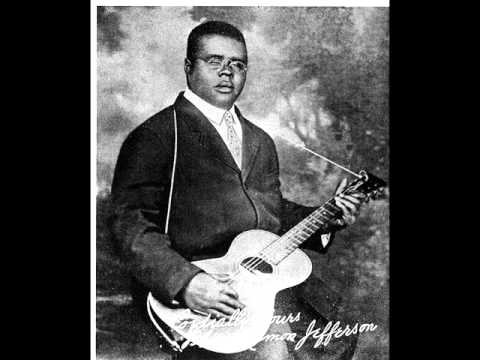
Blind Lemon Jefferson (1893–1929) was born into a sharecropping family in Texas, blind from birth. The youngest of seven children, music was his means of making a living. From his teens he chose the life of a traveling entertainer, honing a wide repertoire of prison songs, blues, spirituals, and dance tunes on the streets.
After settling in Deep Ellum, Dallas's Black neighborhood, he made his living as a street performer. Accounts survive of white people barring Jefferson from certain areas, leaving him permitted to play only in a specific corner of Deep Ellum. It may be no coincidence that several Black musicians of the era carried “Blind” in their names — Blind Willie Johnson, Blind Boy Fuller, Blind Willie McTell. Being blind may have made it easier for white society to tolerate their presence, as men who posed no threat in a harshly segregated world.
In 1925, he was discovered by a Paramount Records scout and made his recording debut in Chicago. Over three years he recorded more than ninety songs, becoming known not only in the South but in the North as well. His success took concrete form: he bought his own car and hired a personal driver.
His influence reached far beyond his own time. “Matchbox Blues” was recorded thirty years later by Carl Perkins as a rockabilly track, and covered again by the Beatles. Bob Dylan recorded “See That My Grave Is Kept Clean.” B.B. King named Jefferson as one of his greatest musical influences.
In December 1929, he was found frozen to death on a Chicago street. He was thirty-two years old.
Robert Johnson — The Deepest Voice, Left in Twenty-Nine Songs
Robert Johnson's (1911–1938) entire recording career lasted just seven months. Sixteen songs in a room at the Gunter Hotel in San Antonio, Texas, in November 1936; thirteen more in Dallas in June 1937 — twenty-nine in total. He died at twenty-seven under mysterious circumstances in 1938. His technique was so extraordinary that it gave rise to the famous “Crossroads Legend”: that he had sold his soul to the devil at a crossroads in exchange for his uncanny guitar ability.
His first single, “Terraplane Blues,” sold around ten thousand copies — a substantial hit for the Black music market of the time. But a large white audience never found him while he was alive.
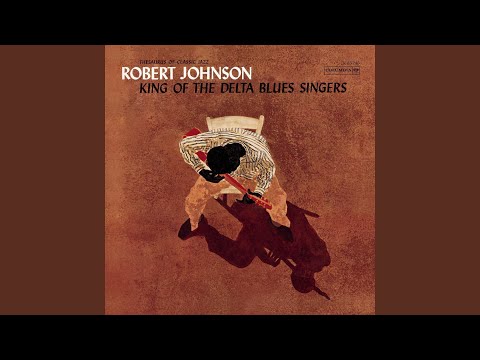
Johnson's music broke through among white musicians in 1961, when Columbia Records released King of the Delta Blues Singers. The album hit British blues and rock musicians especially hard. Keith Richards recalled that the first time he heard Johnson's records, a single guitar sounded like two. Eric Clapton described it as “the most soulful music I have ever heard,” and in 2004 recorded an entire album of Johnson's songs, Me and Mr. Johnson. Bob Dylan, Keith Richards, and Robert Plant have each spoken publicly about his influence, and the Rolling Stones covered “Love in Vain.”
Johnson's songs give voice to the loneliness and terror of living as a Black man in the Depression-era American South, in language that is unmistakably poetic. “Cross Road Blues,” “Sweet Home Chicago,” “Hellhound on My Trail.” Nearly a hundred years on, none of them has faded.
Why These Two Are the Way In
Blind Lemon Jefferson and Robert Johnson are the musicians who most purely embody what country blues is. Descended from people brought to America in chains, they established their own expression through voices that soared and guitar melodies that wound around those voices like a second voice of their own. Pushed to the margins of a white-dominated America, their music carries a life force that does not relent. That force was recorded for the first time through recording technology, passed along through the quiet musical exchanges that happened in barbershops and shoeshine parlors, and eventually crossed the Atlantic to reach a generation of British rock musicians.
What happened after that is a story everyone knows.
If you're going to trace the history of American music, these two are where to begin.
Reference
Toshiyuki Ohwada, A History of American Music: From Minstrel Shows and Blues to Hip-Hop (Kodansha Sensho Métier, 2015)