The Genealogy of Monotony That Breaks Your Mind: How Steve Reich and Berlin Techno Hack the Brain
description Why does repetition—the thing we're taught to avoid in composition—have the power to alter consciousness? Steve Reich's phasing technique and Berlin techno share the same underlying neurological mechanism: when a pattern loops with microscopic variation, the brain stops tracking it as sequence and starts inhabiting it as space. This piece traces the genealogy of that discovery, from Reich's tape-loop experiments in the 1960s through the architecture of Tresor and Berghain, and asks what it tells us about how music bypasses the thinking mind to act directly on the body.
Sitting still in a room and listening, it can sound almost boring. An ascetic, unrelenting repetition that refuses melody and dramatic chorus at every turn. But what if this sound — hovering just one step short of tedium — were actually a terrifying machine for overturning three centuries of European orchestral tradition and directly hacking the listener's cognitive system?
Steve Reich, one of the towering figures of contemporary classical music, and Ellen Allien, the queen who has kept Berlin's underground shaking for decades. Two artists from entirely different worlds and eras, yet both arrived — each by their own route — at the same destination: the transformation of perceptual flow, and the architecture of trance. Follow the thread far enough, and an invisible line connecting them comes into view.
1. A Revolution Born from Two Tape Recorders: Steve Reich's Background
Born in New York in 1936, Steve Reich was one of the pioneers of minimalism — a composer who turned sharply away from the direction postwar contemporary music was heading, toward ever more complex, quasi-mathematical avant-garde forms like atonalism and serialism. La Monte Young, Terry Riley, and Philip Glass were all working in the same current, but Reich stood out among them for his singular obsession with physical pulse.
His background was academically elite — philosophy at Cornell, composition at the Juilliard School and Mills College — yet it was always bound to the body. At fourteen, hearing Kenny Clarke play for the first time, he was seized by percussion. He went on to study with the great local drummer Roland Kohloff, who would later become principal timpanist of the New York Philharmonic. His subsequent fieldwork in Ghana studying African drumming and in Bali studying the ritual loop structures of gamelan became the very marrow of his music.
From Tape Phase-Shifting to Music for 18 Musicians
In the mid-1960s, before electronic instruments and synthesizers had entered the mainstream, Reich stumbled upon what would become the central discovery of his musical life — phasing — through an accidental equipment error.
In his early experimental works It's Gonna Rain (1965) and Come Out (1966), he ran the same recorded fragment of voice on two open-reel tape recorders simultaneously. The machines, each slightly different in manufacture, drifted by milliseconds, and the phase relationship between the two loops gradually shifted apart.
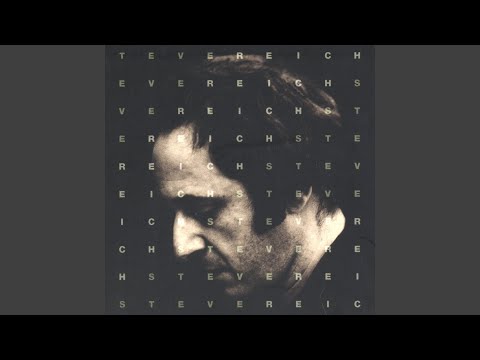
[Reich's Tape Hack]
Loop A: [■■■■■■■■]
Loop B: [ ■■■■■■■■]  ← running fractionally slow, drifting out of phase
What Reich witnessed was something close to a glitch in the brain itself. As the same sound overlapped out of sync, the gaps between sounds began to interlock — and phantom melodies and rhythms that were never recorded on the tape at all began playing unbidden inside the listener's mind. Confronted with an unpredictable pattern of drift, the brain attempts to fill the gaps, spontaneously generating sounds of its own.
This is not mere auditory illusion. A brain that has been exposed to steady repetition over-adapts, trying to predict the pattern ahead — and when an unexpected shift is introduced into that flow, perception itself is rewritten, and a soundscape that doesn't exist in physical reality suddenly materializes. This transformation of perceptual flow is the fundamental mechanism by which Reich's music draws listeners into a trance.
The radical upscaling of this discovery — using not tape machines but human bodies and acoustic instruments — became his masterwork, Music for 18 Musicians (1976).
By the way, for those looking to experience this pulse-driven brain hack first-hand, the recording by the Colin Currie Group comes highly recommended. Reich himself famously praised their performance as being even more flawless and dynamic than his own ensemble’s original recordings. It perfectly captures an exacting, stoic precision and a stunningly resonant beauty capable of jolting the mind awake.

For nearly an hour, eighteen musicians — marimba, piano, strings — pulse incessantly, producing phasing by hand. By stripping the intellect of any opening to be moved by grand melody and locking the listener into a sustained pulse, the brain is drawn inexorably into a trance state. Reich found a form of hacking: shift the same thing, and new life emerges from the spaces between.
This work would later be cited as a direct source for the ambient trance music pioneered by Orbital, Aphex Twin, and The Orb. The circuit Reich discovered — perceptual transformation through repetition — already carried within it the seeds of what would eventually flow into techno.
Orbital live:

2. Industrial Ruins: The Stagnation That Cradled Berlin Techno
The trance gene that Reich had sounded in concert halls crossed an ocean and, in the 1990s, detonated in a very strange city — in a very different form. That detonation was the birth of Berlin techno.
Music culture blooms not in times of prosperity and satisfaction, but when society is grinding to a halt — when a suffocating sense of a closed future hangs in the air, and people's bottled frustration becomes fuel. Just as punk rock and Joy Division were born from the despair of late-1970s British industrial towns, Berlin in the 1990s was saturated with its own specific atmosphere of stagnation.
In November 1989, the Berlin Wall fell. Reunification looked, on the surface, like a jubilant happy ending — but the economic reality was chaos and paralysis. State enterprises in the East collapsed in rapid succession, unemployment flooded the streets, infrastructure and industry ground to a halt. An anxiety about which way things would fall covered everything.
But this industrial shutdown created, for music, a miraculous dead zone.
On the former East Berlin side, vast ruins with no clear owners — underground vaults, abandoned power plants, cavernous concrete-and-steel shells — sat untouched. With industry collapsed and property values in freefall, rent in Berlin was absurdly cheap, or spaces could simply be occupied. Young people had time to spare.
Anarchic young people who hated the old European orchestral tradition — the idea of being a slave to scores and harmony — and who had dropped out of the grind-and-work system gathered in those ruins and flipped the switch on cheap drum machines. No jobs, no money — but as night fell, in cold concrete spaces, they danced until morning under relentless electronic four-to-the-floor kicks. That brutal, industrial techno low-end developed as a kind of raw, bodily prayer — the force required to break through the darkness of social stagnation.
And here is what matters: they arrived — almost certainly without knowing it — at exactly the same principle as Reich. The unceasing four-four pulse locks the listener's brain into a kind of predictive mode. The moment a minute variation is inserted into that locked flow, perception wavers and the door to trance opens. What Reich had discovered experimentally through tape drift, the floors of Berlin were reinventing through flesh and movement.
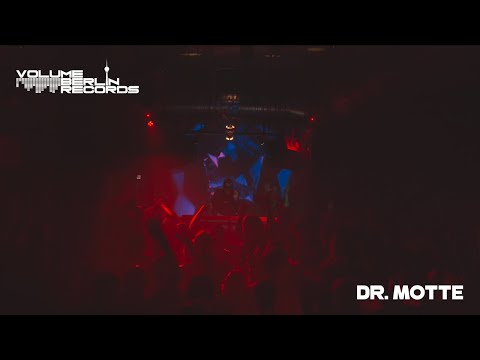
The greatest public spectacle Berlin techno ever produced was the Love Parade. Initiated in July 1989 by DJ and producer Matthias Roeingh — known as Dr. Motte — the event began as a political demonstration: 150 people taking to the streets in the name of peace and international understanding through music. Through the 1990s it grew explosively, and by 1999 it had become the largest dance music event the world had ever seen, with 1.2 to 1.5 million ravers filling Berlin's streets. The sight of an endless human mass dancing from the Brandenburg Gate to the Victory Column, under pounding four-four kicks from enormous speaker stacks, made visible to the world what techno had always been beyond club culture: a ritual of collective trance. Dr. Motte resisted the tide of commercialization to the end; when the event's trademark was sold in 2006, he distanced himself from it. The spirit lives on today in its successor, Rave the Planet.
3. Ellen Allien's New Album and the Hack of the Foreign Object
The queen who lived through the genuine chaos and freedom of that pre- and post-Wall Berlin from behind a DJ booth is Ellen Allien. Raised in West Berlin, she became a resident at Tresor and E-Werk in 1992, at the very heart of the scene's emergence.
Her musical approach — devastating, ferocious industrial beats that contradict her composed blond appearance — carries on in her 2026 album New Life with a perceptual transformation no less connected to Reich than anything she has done before. Weaving together minimal techno, darkwave, and hypnotic euphoria, the record uses repetition-as-perceptual-transformation as its primary weapon to speak to the themes of community and collective action.
What deserves attention in Allien's work is not just the swelling movement of refined synth pads, but her technique of dropping alien material into stoic, repeating rhythms:
[Techno's Sampling Hack]
Fixed rhythm:      [🥁──🥁──🥁──🥁]  (the hard four-four skeleton)
Foreign object:    [   🎙️   ✨   💥   ]  ← sampled material collides
Where Reich rewrote perceptual flow by shifting the same thing, the Berlin techno approach — Allien's approach — takes the opposite vector toward the same destination.
She locks an iron, absolutely undeviating rhythm loop into place and holds it there. The listener's brain fully adapts to that pitiless repetition, the borders of daily reality dissolve, and in that moment of trance — she drops in a sampled fragment: a worn chord, a noise shard, a processed voice.
The kick's hard refrain hasn't moved by a single beat. Yet the moment the dropped sample collides with it, the bassline and rhythm seem to physically deform into an entirely different shape. This is not auditory illusion — it is the transformation of perceptual flow produced when the brain has over-adapted to a repeating stream. By hurling a foreign object at a fixed skeleton, she rewrites perception from the inside, pulling the listener into a deeper trance. This is techno's own form of intellectual hacking.
Reich discovered transformation-through-disruption with a slipping tape. Allien weaponizes transformation-through-adaptation with a colliding sample. Their methods are mirror images of each other — but the destination, pulling the listener through a break in perceptual flow and into trance, is identical.
Ellen Allien's New Life is available on Apple Music as a partial advance release. Below: a live DJ set.

Coda: Minimalism Closing the Circle
The initial feeling — this is too monotonous to sit still for — is simply evidence that the trap has worked. It is precisely because the obvious chorus has been stripped away, subtracted, that the human ear becomes acutely sensitive to the most infinitesimal changes in the spaces between pulses. When the brain has habituated to the repetition and perceptual flow converges on a single point — it is that tiny shift or foreign object that rewrites the flow and opens the door to trance.
The circuit of perceptual transformation that Reich found spinning open-reel tape took up residence in the four-four pulse of electronic machines among Berlin's stagnant ruins, and through Ellen Allien's colliding samples, it still bares its teeth on floors somewhere tonight. This pleasure of minimalism — inherited in altered form, passed forward again — is right now, in some dark room somewhere, slowly drawing out someone's dopamine, beat by beat.