Sounds Dissolving into the Silence of Night: Rolf Lislevand and Pat Metheny
I want to start by asking something of anyone who loves Pat Metheny's One Quiet Night.
What is it, exactly, that draws you to that album? It isn't dazzling technique, and it isn't a complex ensemble. Just one baritone guitar, one microphone, and sound played not to be shown off to anyone, but simply for its own sake. Metheny himself has described the record as being built around a single mood — the idea of taking his time to sink deep into one narrow, self-contained world of sound. A guitar stripped of ornament, sinking into stillness, never once raising its voice.
If that's what pulls you in, there's an album I'd love for you to hear: Rolf Lislevand's Libro primo (ECM New Series, 2025).
When I actually sat down and listened to it, what pulled me in wasn't the courtly splendor you'd expect from 17th-century music. It was the quietly played lute's strikingly modern sound — a resonance that barely felt like “early music” at all. And it was from there, almost without meaning to, that Pat Metheny's music came to mind.
Lislevand, the Border-Crosser
Rolf Lislevand was born in Oslo in 1961. His career, in fact, didn't begin with the lute at all — it began with the classical guitar. After studying guitar at the Norwegian Academy of Music, he entered the Schola Cantorum Basiliensis in Basel, studying under Hopkinson Smith and Eugen Dombois, where he first stepped into the world of early instruments — lute, vihuela, Baroque guitar. From there he went on to perform with Jordi Savall's ensembles, and today he's a professor of lute and historical performance practice at the Trossingen University of Music in Germany.
In other words, he's a musician who carried the physical instincts of a modern guitarist with him into the “foreign country” of the chitarrone. The guitar and the lute are, in a sense, old cousins. Lislevand has spent his career lightly leaping back and forth across that border, bridging the two worlds.
About Libro primo
The title Libro primo refers to the concept behind the album: shining a light on the “first books” — the libri primi — that a number of early 17th-century Italian composers each published as their debut collections. Many of these composers were lutenists in the direct employ of aristocrats or clergy. Johann Hieronymus Kapsberger, the central figure here, was himself a theorbist in the service of a cardinal of the Barberini family in Rome — nephew to the future Pope Urban VIII — moving in the private concerts of the papal court. What's collected on this album, in other words, is music that was written and played by performers, for their own patrons, within the enclosed spaces of courts and noble households. The album is built around Kapsberger, surrounded by the music of his contemporaries.
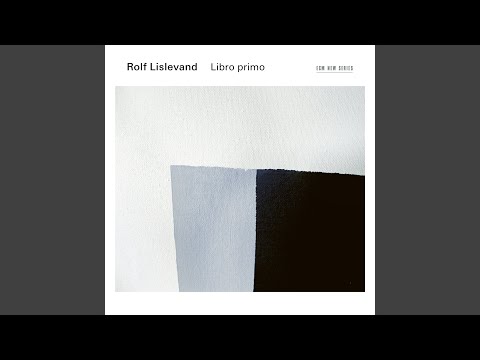
The recording location is fitting, too: a quiet barn in northern Norway that Lislevand converted into a studio himself, where the album was recorded alone between 2022 and 2023. It was mixed in Munich in 2024, together with Manfred Eicher.
The “Blank Space” in the Score That Invites Improvisation
Why does music written 400 years ago sound so free — so much like improvisation happening right now? Part of the answer lies in the nature of the notation itself.
Lute tablature was, when it came to specifying which fret on which string to press, every bit as precise as modern tab notation. What was left loose, instead, was rhythm and ornamentation. Forms like the toccata and the prelude carried a strongly improvisatory character from the start — what's written on the page is really just a skeleton. Lislevand fills in that deliberately-left blank space of interpretation with the instincts and physical sense of a guitarist. That's exactly why music four centuries old can sound as fresh as jazz being invented in front of you.
A Shared Dissolving into Silence
Listening to Libro primo, I keep coming back to One Quiet Night, mentioned at the top of this piece. What the two share goes beyond simply being “quiet music.”
- A solitary performance on a single instrument, with no overdubs
- Music born not as a “show” for an audience, but first and foremost for the performer's own sake
- Recording in a place removed from the world (Metheny in a late-night session at his home studio, Lislevand in a barn in Norway)
- A match with what Downbeat wrote of Metheny's record: “unadorned, heartfelt beauty”
Critics have compared Lislevand's playing to French Impressionism and to the jazz composer Carla Bley. That's a reasonable comparison. But to my own ear, what it evokes is closer to an American guitarist like Pat Metheny, plucking away alone late into the night. I can't back that up as a critical lineage — it's just one listener's intuition.
For Anyone Who Doesn't Know One Quiet Night
For anyone who's read this far and has no idea what One Quiet Night actually is, let me introduce it briefly before closing.
Pat Metheny is one of the defining figures of contemporary jazz guitar. But on 2003's One Quiet Night, he stepped away from his usual electric sound world entirely, sitting down one evening in his home studio with nothing but a baritone guitar custom-built for him by the Canadian luthier Linda Manzer. Almost no overdubs, almost no editing — just a single microphone and the deep, rich resonance of his own fingers. The album went on to win the 2004 Grammy for Best New Age Album.
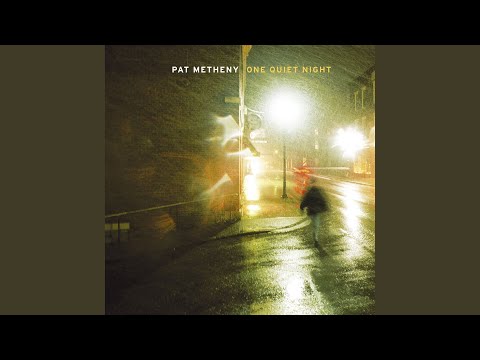
A masterpiece that lives at the opposite end of the spectrum from flashiness. A guitar that never pushes itself forward, never rushes the listener, just dissolves into stillness. If you've already found your way to that, Libro primo will almost certainly keep you company through the same hour of the night.