One Album, An Immense Legacy: Jeff Buckley's Grace
On May 29, 1997, in Memphis, Tennessee, Jeff Buckley walked down to Wolf River — a tributary of the Mississippi — with a friend. He was in town recording his second album. He waded into the water fully clothed and disappeared. His body was found six days later. He was thirty years old. The autopsy found no alcohol or drugs in his system. The fact that he was still dressed when he entered the water is among several details that have never been fully explained. That mysterious end has only deepened the legend of a man who left behind just one album.
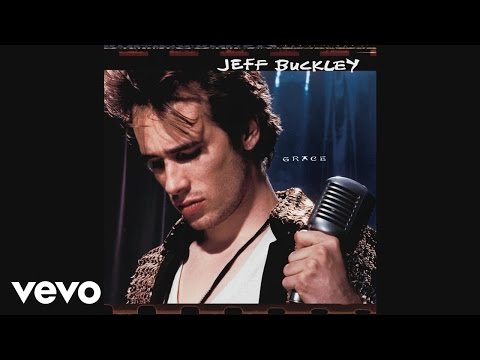
That album was Grace, released in 1994.
A Music of Unlikely Mixtures
Jeff Buckley was born in 1966 in Anaheim, California. His father was the folk singer Tim Buckley, but Jeff was raised apart from him and the two had almost no relationship. He eventually made his way to New York, where he built a following playing solo at a small East Village club called Sin-é, and signed with Columbia Records. Grace came out in August 1994.
What makes Grace such a singular record is its musical promiscuity. The hard rock intensity of Led Zeppelin, the soul and jazz of Nina Simone, the spiritual vocal ecstasy of Pakistani qawwali singer Nusrat Fateh Ali Khan — all of it was somehow channeled through one voice and one guitar. Buckley once described himself in his own press bio as “the warped lovechild of Nina Simone and all four members of Led Zeppelin.”

The album's most celebrated track is a cover of Leonard Cohen's “Hallelujah.” Cohen wrote the original in 1984, a work dense with religious and poetic weight. Buckley's direct reference point, however, was not Cohen's version but the spare 1991 recording by former Velvet Underground member John Cale — piano only, stripped of the synth-heavy original arrangement. Buckley took that as his starting point and rebuilt the song into something entirely his own: sensual, almost unbearably fragile, yet emotionally overwhelming. Today, when people say “Hallelujah,” they mean Buckley's version. The cover has eclipsed the original.
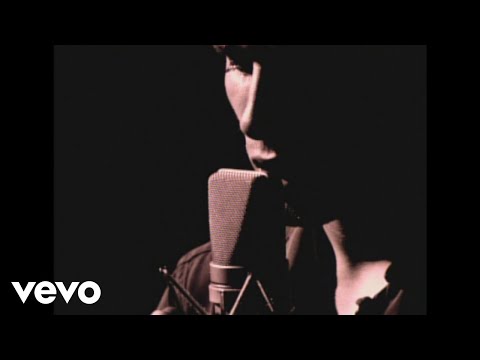
“Lover, You Should've Come Over” is perhaps the most purely lyrical moment on the record — the side of Buckley that was above all a songwriter. The vocal delicacy and the density of the words occupy the same space without crowding each other.
Why Britain Claimed Him
Grace sold poorly in the United States on release. In Britain, the reaction was different. Critics recognized something singular in it immediately, and a devoted audience followed. David Bowie cited it in Pulse as one of the albums he would take to a desert island. Bono called Buckley “a pure drop in an ocean of noise” in the U2 fanzine Propaganda and dedicated multiple shows on the PopMart tour to him.
Part of what drew British audiences to Buckley was the nature of his voice itself. A staggering four-octave range, an absolute commitment to emotional honesty, and the freedom to move between falsetto and full-throated power without it ever sounding mannered — it spoke directly to what British rock in that moment was reaching for.
Legacy Part One: Thom Yorke and “Fake Plastic Trees”
On September 1, 1994, Radiohead and their producer John Leckie attended a Jeff Buckley show at The Garage in London. They were in the middle of recording The Bends and struggling. Buckley played alone — just a Telecaster and a pint of Guinness. Bassist Colin Greenwood later recalled it in an interview with Uncut: “It was just fucking amazing, really inspirational.”
The next day, Yorke went back into the studio and recorded “Fake Plastic Trees” alone on acoustic guitar. He played three takes and then burst into tears. He didn't want to use the recordings — “too vulnerable,” he said. His bandmates convinced him otherwise. Those takes became the final version. Producer Leckie described what the Buckley concert had unlocked: “It made him realize you could sing in a falsetto without sounding dripping.”

Legacy Part Two: Chris Martin and “Shiver”
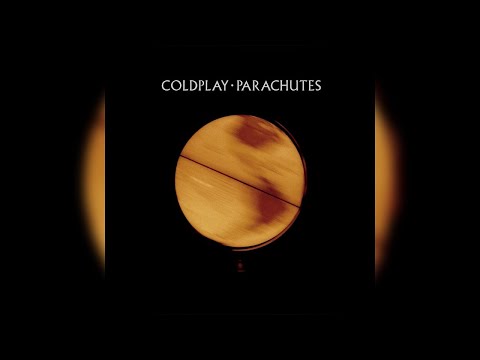
In a 2008 interview on BBC Radio 1, Coldplay's Chris Martin was asked about the band's debut single “Shiver.” His answer was unambiguous: “It's a blatant Jeff Buckley attempt. Not quite as good, that's what I think. We were 21 and he was very much a hero, and as with those things it tends to filter through.”
In a separate interview, Martin went further: “One of the key people who's responsible for us being a band is probably Jeff Buckley. His music was so powerful — that's when we were getting the band together, and I certainly found a lot of inspiration in it, to the point of trying to actually sound like him for at least the first few singles.”
Where His Voice Reached — Further Testimonies
Radiohead and Coldplay are only the most documented cases. The reach of Grace extended well beyond them, across generations and genres.
Jimmy Page (Led Zeppelin) In a 2003 interview, Page said: “Nothing has had the impact on me that Jeff Buckley did.” He and Robert Plant made a point of going to see Buckley live, and Page described the experience as “absolutely scary.” Watching Buckley play in standard tuning what seemed impossible, he said: “I thought, oh gee, he really is clever, isn't he?”
Elton John When asked by Mojo to name his all-time favourite album, John cited Grace: “Like an album made by someone from another planet.”
Bono (U2) Listening to “Hallelujah” on the radio, Bono said: “I was just envious — just raw envy.” He singled out Buckley's 22-second held note and added: “For me, as a singer, it's very humbling.”
Chrissie Hynde (The Pretenders) “He was such a great guitar player, Jeff. When someone is a good singer and songwriter you tend to overlook that, but he was a shit-hot guitar player — he really blew us away that night when we saw what he was really up to with the guitar.”
Matt Bellamy (Muse) Bellamy acquired the Fender Telecaster Buckley had used on stage and in the studio. “I didn't buy it to hang it on the wall,” he said, “but to actually use it and keep this guitar part of music. I'd like to believe that's what Jeff would have wanted.”
The Unfinished
When Buckley died, the sessions for his second album — working title My Sweetheart the Drunk — had barely begun. The demos and studio recordings that existed were released posthumously as Sketches for My Sweetheart the Drunk, but no one listening could mistake them for a finished work.
With a single album, Buckley changed the course of British rock. An American, he reached into the heart of the British scene and left his mark on some of its most defining music. What he might have made next is a question that will never have an answer. Which is perhaps why Grace keeps sounding the way it does — like something that isn't finished yet.