My Favorite Piece of “Classical” Music
Description: “Classical” is a word I use with quotation marks. The piece I want to talk about doesn't sit comfortably within any genre boundary, which is partly why I love it. This piece is a personal note about one specific work that changed how I listen—not because it was the most technically impressive thing I'd heard, but because it was the first time a piece of music felt less like a composition and more like a physical space I could step inside.
The melody comes back again and again at a furious pace, and tabla-like percussion colors every repetition. I'm not even sure “classical” is the right word for it — but if you only know Michael Nyman through his film scores, you owe it to yourself to hear this.
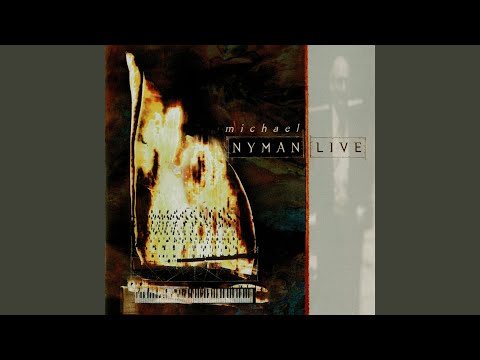
This is “The Upside Down Violin: III) Faster Still,” performed live in 1994 by the MichaeMy Favorite Piece of “Classical” Music
The melody comes back again and again at a furious pace, and tabla-like percussion colors every repetition. I'm not even sure “classical” is the right word for it — but if you only know Michael Nyman through his film scores, you owe it to yourself to hear this.
Who Is Michael Nyman?
If you've watched a Peter Greenaway film or Jane Campion's The Piano, you've already heard Nyman's music, even if you didn't know his name. He's a British composer, pianist, and — long before he was famous for soundtracks — a music critic. In fact, it was Nyman who coined the term “minimal music” back in the 1960s, years before he became one of the genre's most recognizable voices himself.
His sound is built on repetition: short melodic and rhythmic cells that loop, layer, and shift incrementally, building tension and momentum out of small variations rather than grand romantic gestures. Through the late 1970s and 1980s, this style became inseparable from his long creative partnership with Greenaway, scoring arthouse films like The Cook, the Thief, His Wife & Her Lover and Prospero's Books. But it was The Piano in 1993 that turned him into a household name, with its haunting, instantly hummable themes reaching audiences far beyond the art-film crowd.
That's the Nyman most people meet first — and often the only Nyman they ever meet.
The Other Side of Nyman
“The Upside Down Violin” comes from a different corner of his catalog entirely. Composed in 1992, it was commissioned for the Michael Nyman Band together with the Orquesta Andaluzi de Tetouan — a Moroccan orchestra rooted in Andalusian classical tradition — for Expo '92 in Seville. The piece unfolds in three movements: Slow, Faster, and Faster Still, each one ratcheting up the intensity of the previous.
It's in “Faster Still” that everything Nyman is known for collides with something else entirely. His signature obsessive repetition is still there, but it's now interlaced with the modal melodies and driving percussion of North African and Andalusian folk tradition. The effect is something closer to trance than to typical Western classical music — the melodic line spirals forward at breakneck speed while the hand percussion underneath keeps splintering the rhythm into smaller and smaller fragments.
This is exactly why I think people who only know “Nyman the film composer” need to hear it. It's the same compositional DNA — the same hypnotic insistence on repetition — but stripped of the cinematic restraint and let loose at full intensity, fused with a tradition entirely outside the Western classical canon. It's proof that the man behind those quiet, melancholic piano themes also had this kind of fire in him.
I still don't know whether to file this under “classical,” “world music,” or something that refuses to be filed at all. But it's the piece I come back to more than almost any other.l Nyman Band together with the Orquesta Andaluzi de Tetouan. And yes — it really is the same Michael Nyman most people know for The Piano.
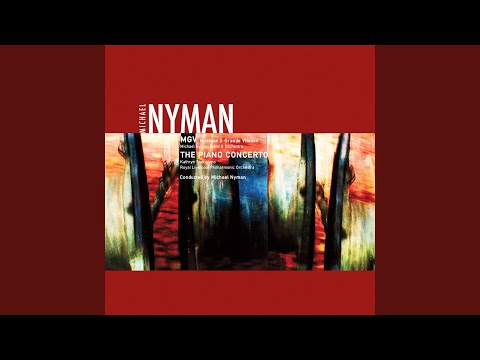
The best album
My favorite music is above but the best album is different. My best album is wrote for MGV express train. It's piano like the train make sound on a rail bridge, and strings make a dynamic scenary.