Music That Sounds Like a Single Landscape: On Nils Petter Molvær
A Trumpet Blazing Through the City's Highway
The first time I really listened to Nils Petter Molvær, what came to mind was a highway cutting through a city at midnight. The feeling of a trumpet tearing through an endless urban skyline built by programmed beats. Not jazz, not electronica — something that is both at once.
His debut Khmer (1997) was undeniably revolutionary. But the album I keep returning to is Solid Ether (2000).
Why Solid Ether Over Khmer
Khmer is full of the excitement of a first encounter between jazz and electronica. But Solid Ether takes that fusion deeper, completing it with a denser, more distinctly urban weight.
The decisive difference is the proportion of programmed beats. The opening track “Dead Indeed” was made by essentially two people: Molvær himself and his longtime collaborator, guitarist Eivind Aarset. Aarset's noise-laden guitar saturation weaves through the track, while Molvær handled the majority of the synthesizers, samplers, loops, and effects processing alone. Looking at the credits, he played trumpet, piccolo trumpet, synthesizer, bass, loops, electronics, sampler, percussion, piano, and vocoder trumpet — all by himself.
The texture built up by one person layering this much is cold and solid, like a city's highway flanked by concrete towers standing wall to wall with no gap between them. That's why the title Solid Ether is precise — ether was once the hypothetical substance thought to fill the universe and carry light, and this album solidifies air itself through electronic sound. Like a car's headlights blazing down a midnight highway, stretched into a single line of light by long exposure. A fog with density. A solidified trail of light.
Through that dense wall of beats, a single trumpet cuts its way.
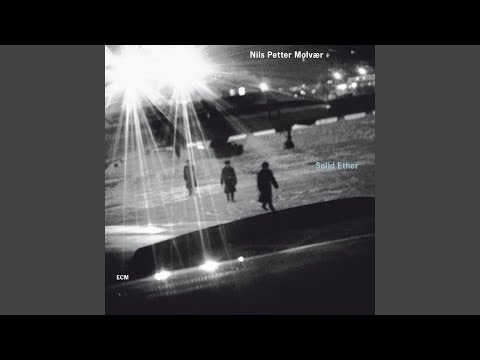
The Rush and the Solitude Molvær's Trumpet Creates
His trumpet playing has a distinctive acoustic logic behind it.
The most characteristic element is the deliberate erasure of the attack — the moment a note begins. Using a volume pedal and deep reverb, he shapes the sound so it seems to materialize after the fact, arriving already in motion. Rather than landing as a fixed point in space, each note reaches the ear already moving in a direction.
Long delay adds a trailing “tail” to the sound. Like a long-exposure photograph of a highway at night, where taillights become a single unbroken line stretching into the dark — that visual effect is reproduced acoustically.
And then there is the breathy, husky tone. With the microphone placed as close to the bell as possible, the recording captures the moment the lips vibrate, the sound of breath grazing the inside of the tube. However much electronic space Molvær constructs around it, at the core is an irreducible fact: right now, here, a single human being is exhaling.
That bare solitude is what Solid Ether carries. The presence of someone standing alone on a riverbank in the dark, playing trumpet toward the water — urban velocity and loneliness coexisting in the same sound.
ER (2001) pushes that direction further still. The concept of playing melody becomes increasingly thin; the trumpet functions as raw material for building ambient texture. Darker, more spatial than Solid Ether's rush. These two albums, listened to together, document how far Molvær's dialogue with electronica could go.
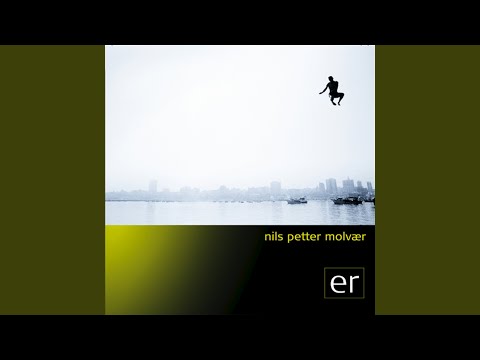
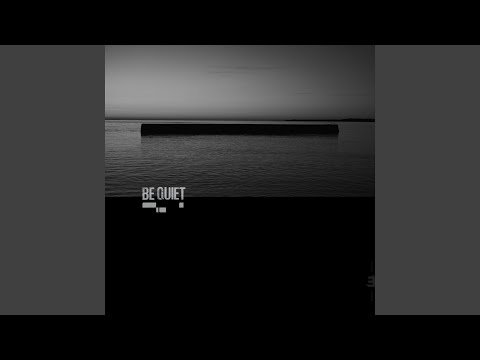
Be Quiet — From Speed to Drift
On July 10, 2026, Molvær releases a new album: Be Quiet.
The concept: nine tracks, nine cities, each a duo with a different artist. Imogen Heap (voice/electronics), John Paul Jones (piano — yes, the Led Zeppelin bassist), Marilyn Mazur (percussion), Chinese guzheng player Chang Jing, Iranian kamancheh player Soheil Shayesteh, cellist Anja Lechner. And “Berlin-orbit 4” (9:07) with Alva Noto (Carsten Nicolai).
Alva Noto is a Leipzig-born electronic musician, known for his long collaboration with Ryuichi Sakamoto and as co-founder of the raster-noton (now raster-media) label. Where the electronic sound of Solid Ether was a solid wall of urban architecture, Alva Noto's electronics are something harder and more reduced — crystalline.
Listening to “Berlin-orbit 4” makes that contrast vivid. Alva Noto fills an ambient space, and through it Molvær's trumpet and voice drift. Rhythmic electronic sounds like rain hitting a tin can appear, then dissolve into the fog. Molvær's voice recalls Arve Henriksen — something between instrument and breath, spreading through the space and fading as it goes.
If Solid Ether was an album that builds sound up, “Berlin-orbit 4” is nine minutes of sound dissolving. The title Be Quiet states that posture directly: stop talking first, and listen.
Where Solid Ether had Molvær assembling every layer alone, Be Quiet has him stepping into the sonic world of each collaborator across nine cities and responding in real time. From solitary construction to dialogue with place and person. Twenty-five years on, the turn from speed to drift.
A Single Landscape
Many jazz musicians have incorporated programmed beats since. Combining electronica and improvisation is no longer a rare approach.
What makes Molvær exceptional is his ability to present these different elements as a single landscape. Beats and trumpet, electronic sound and acoustic sound, city and solitude, speed and drift — in his music, none of these oppose each other. They coexist within one continuous field of vision.
The simultaneous rush and loneliness of driving a city's highway alone at midnight. The silence of sound dissolving into fog. Both arise from the breath of the same one human being. That is the irreplaceable talent of Nils Petter Molvær.