Most Japanese nature influenced composer: Takagi Masakatsu
How Masakatsu Takagi Invokes a Non-Western, Animistic Soundscape
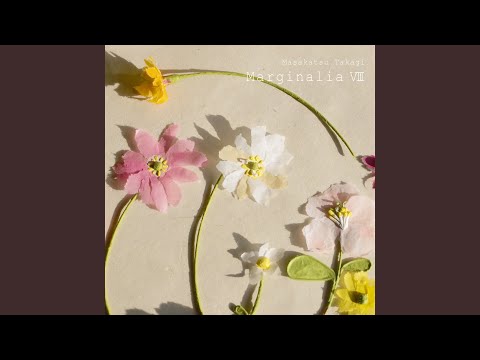
Masakatsu Takagi is widely celebrated for his deeply emotional cinematic scores, most notably “Kito Kito” from Mamoru Hosoda’s Wolf Children. Yet, when we strip away the cinematic narratives and listen to his foundational lifework—specifically his ongoing improvisational piano series culminating in his recent release, Marginalia VIII—we are confronted with a beautiful, striking bewilderment.
There are no grand climaxes here, nor any obvious hooks. Instead, we encounter a dense, shimmering cascade of notes that constantly shifts shape and slips away like water through fingers.
This refusal to guide the listener—this inherent sense of emotional detachment—is precisely what makes Takagi one of the most profoundly non-Western, traditionally Japanese creators working in contemporary ambient and experimental music today. He's music not seen influence by classic and jazz as this post is except.
Breaking Free from Structure and Repetition
The history of Western music is essentially a history of architecture—an endeavor to capture time, partition it, and confine it within structural cages. Consider post-minimalist icons like Max Richter. No matter how quiet or ambient their compositions, their work relies on a bedrock of rigid structural patterns and stubborn repetition (loops). The listener willingly surrenders to this calculated, beautiful architecture, finding a sense of emotional security within it.
Even in the realm of jazz improvisation, where freedom seems paramount, the performance is governed by shared linguistic codes: chord progressions, tempos, and physical syncopation.
Takagi’s recent improvisations discard both of these blueprints. His fingers spin a thread of sound that rejects both the bodily groove of jazz and the formal teleology of Western classical music. It is a literal fluid state—a melody that flows like a river, never resting on a single motif long enough to be commodified as a standard “song.”
The Distant Comfort of an Absent Ego
Why does his music feel so beautifully elusive, almost aloof? Because when Takagi sits at the piano, he completely surrenders the egoistic urge to “express human emotion.”
Living deep in the mountains of Hyogo Prefecture, Takagi records with his windows wide open, inviting the surrounding environment into his creative process. He jams with the calls of birds, the droning of insects, and the patterning of rain. Within this acoustic ecology, the piano ceases to be the protagonist. It is demoted—or perhaps elevated—to a mere peer within a massive, non-human ensemble.
Nature does not operate on a fixed tempo, nor does it care for dramatic, narrative arcs. Acting as a biological medium that translates the ambient friction of the world into sound, Takagi improvises as if through automatic writing.
Those who approach his music expecting a human-centric message or an easy emotional payoff will find themselves gently turned away by this absolute absence of ego. Yet, this is the very essence of a deeply Japanese, animistic relationship with sound—one that views the self not as a master of nature, but as an indistinguishable part of it.
Transforming the Living Space into a Mountain Sanctuary
Takagi’s music is not designed for analytical listening from the sweet spot of a stereo setup. It demands an audio environment that can breathe.
When played through a system capable of handling the sheer density of his notes, the micro-nuances of his touch, and the background rustle of the biosphere, the boundaries of your listening room begin to dissolve. Suddenly, the cascading piano notes coming from the speakers and the actual wind passing outside your own window melt into a singular, seamless reality.
This is neither pop music meant for consumption nor academic modern music meant for analysis. It is the luxurious, wild sound of time itself, indifferently and beautifully passing by.