Is Music Ultimately an Imitation of Natural Environmental Sounds?:Introduction of field recording master piece.
Description: Long before humans synthesized a waveform, the natural world had already mastered the mixing desk. Acoustic ecologist Bernie Krause observed that vocalizing organisms partition the frequency spectrum to avoid interfering with each other—an evolutionary form of multitrack recording. Two releases on the UK label Touch make this audible: Chris Watson's field recordings from the Holy Island of Lindisfarne, and a dense Thai rainforest soundscape that sounds indistinguishable from drone music. And then there is Fennesz, who arrives at the same sonic territory from the opposite direction—destroying a guitar with digital processing until what remains breathes like the earth itself.
For centuries, humanity has debated the origins of music. Is it a purely human invention, an abstract manifestation of mathematical beauty? Or is it, at its core, a sophisticated imitation of the natural world?
When we look at the field of acoustic ecology—specifically through the lens of Krause’s Biophony, which states that vocalizing organisms partition the acoustic spectrum into specific frequency bands to avoid competing with one another—nature reveals itself as the ultimate orchestral masterpiece.
Two profound works released by the legendary avant-garde label Touch perfectly illustrate this concept: Chris Watson’s In St Cuthbert's Time and Carl Michael von Hausswolff & Chandra Shukla’s Travelogue: Thailand. Both demonstrate that what we call “music” is already happening in the wild, perfectly harmonized through evolutionary design.
The Acoustic Niches of In St Cuthbert's Time
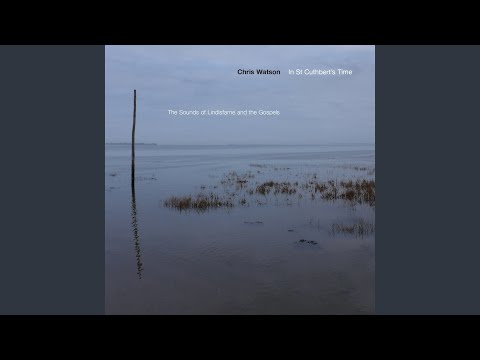
Chris Watson, a master of field recording and a founding member of Cabaret Voltaire, takes us to the Holy Island of Lindisfarne in In St Cuthbert's Time. The album is a sonic recreation of the seventh-century landscape.
What Watson captures is not a chaotic wall of noise, but a highly organized sonic architecture:
- The Low-End: The rhythmic, heavy thrum of the North Sea waves acting as the rhythm section.
- The Mid-Range: The distinct, melodic calls of wading birds and mammals, perfectly timed.
- The High-End: The sharp, piercing cries of terns and gulls cutting through the wind.
Watson doesn't need to arrange these sounds; the animals have already arranged themselves over millennia. Each creature occupies its own frequency band to ensure its message is heard, resulting in a naturally occurring, flawless harmony.
Spatial Polyphony in Travelogue: Thailand
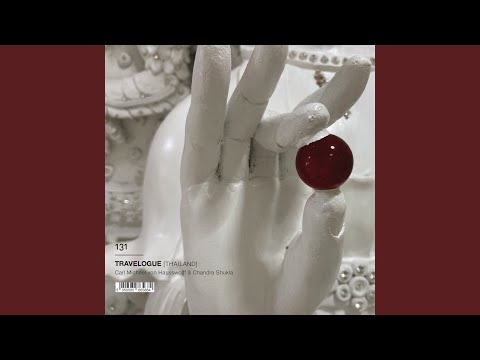
Shifting from the desolate British coast to the dense, humid tropics, Carl Michael von Hausswolff and Chandra Shukla’s Travelogue: Thailand offers a different perspective on nature's symphony.
In the tropical rainforest, the competition for acoustic space is fierce. Travelogue: Thailand captures a dense, almost electronic-sounding grid of noise:
- Insects lock into precise, high-frequency oscillations that sound like analog synthesizers.
- Amphibians hold down the lower-mid drone.
- Birds pierce through the canopy with sharp, rhythmic punctuation.
Hearing this, the line between “natural soundscape” and “drone/noise music” completely blurs. The creatures of the Thai jungle are practicing a form of spatial polyphony, frequency-hopping just like modern telecommunication devices to avoid jamming each other's signals.
The Touch Phenomenon: More Than a Record Label
You cannot discuss these works without highlighting the singular importance of Touch, the UK audio-visual label founded in 1982 by Jon Wozencroft and Mike Harding.
Touch occupies a unique, almost sacred space in contemporary music. It is not merely an ambient or experimental label; it is a curator of focused listening.
Why Touch is Unique:
- Elevating the Status of Sound: Touch treated field recordings not as “sound effects” or background textures, but as definitive musical compositions. They forced listeners to realize that a bird in a storm is just as virtuosic as a violinist in a concert hall.
- The Multi-Sensory Philosophy: Through Jon Wozencroft’s striking, high-purity photography and meticulous typography on the album covers, Touch creates a physical gateway into the audio. The art reminds us that sound is deeply tethered to geography, ecology, and time.
- Acoustic Ecology as Art: Touch bridged the gap between scientific acoustic ecology and high art, proving that nature's survival tactics—like frequency slotting—are the true blueprints for human minimalism, drone, and ambient music.
Fennesz: When Guitar Noise Becomes Environmental Sound
Fennesz—the Austrian artist Christian Fennesz—releases music on Touch that arrives at the same acoustic territory from the opposite direction. Where Watson and von Hausswolff capture the natural world directly, Fennesz destroys a guitar through layers of digital processing until what remains is indistinguishable from environmental sound: shimmering, breathing, alive. The instrument disappears. The earth remains.

Conclusion: The Ultimate Imitation
So, is music ultimately an imitation of natural environmental sounds?
Works like In St Cuthbert's Time and Travelogue: Thailand strongly suggest that the answer is yes. Long before humans synthesized a waveform or arranged a choir, the natural world had already mastered the mixing desk. The frequency bands were assigned, the tracks were panned across the horizon, and the volume was perfectly balanced for survival.
When we compose music, we aren't creating something from nothing. We are simply remembering the ancient, perfectly harmonized language of the earth—a language that Touch has spent decades beautifully documenting.
What do you think? When you listen to a synthesizer drone, do you hear a machine, or do you hear the ancient roar of a tropical insect choir?