From Animal Collective to the Sonic Boom Collaboration: The Sharpness at the Core of Panda Bear
Back then I kept a close eye on FatCat Records. Following the trail from Sigur Rós and Múm, I checked the label's site for new releases and stumbled onto Animal Collective's Feels. My first impression was simply “too loud.” What I wanted from music was architectural beauty, and this noise felt incompatible with that.
Some time later, I gave it another listen, and my impression changed. There was playfulness tucked into every corner, and a strong, exploratory will to spill past the edges of the rock format. To ears that had listened to a great deal of rock, it felt strangely fresh.
That same Panda Bear (Noah Lennox), teamed up with Spacemen 3's Pete Kember (Sonic Boom), made Reset (2022) — and I came across that one by chance too, through a radio playlist. Even music whose reputation is already long settled on the world stage sometimes only reaches you through one of these accidental channels. This album reminded me of that all over again.
What follows is Feels, Reset, and the currently unfolding A ? of WHEN — three records built around the same sharpness that has stuck with me since.
Feels (2005, Animal Collective)
Feels (2005) is a record where Animal Collective used the vocabulary of rock while trying to step past its grammar entirely.

That stance is clear from the album's opening track, “Did You See the Words.”
It began with a friend's out-of-tune piano. Avey Tare and Geologist recorded that piano and turned it into loops, then forced the guitars to tune themselves to those loops. Not a standard half-step deviation, but the kind of microtonal drift a piano develops naturally after years without a professional tuning. Guitars dutifully bent to that warped standard — that's the source of the album's distinctive “watery” guitar tone. The idea of deliberately building uncontrollable chance into the record's skeleton starts right here.
Over that skeleton, guitar and bass repeat minimal patterns. On a track like “Daffy Duck,” that repetition collapses into plain monotony — frankly, it's boring. The same phrase drags on without any drive from the drums, and my attention wanders.
But the “failure” and the “success” of this experiment sit right next to each other. The same technique of repetition produces an entirely different effect on songs like “Grass” and “The Purple Bottle.” Because the repeating guitar and bass remain an unchanging vessel, the music never falls apart even when the shouting runs wild on top of it. Avey Tare's screams aren't the kind of shout that punk rock uses to cut through noise. Instead they dissolve into the tom hits and harmonies, functioning as an acoustic texture closer to an animal cry — not aggression, but a piece of the rhythm itself. The harmony is structured to absorb the scream rather than compete with it.
Even with a dud like “Daffy Duck” in the mix, this sharpness runs consistently through the album as a whole.
Reset (2022, Panda Bear & Sonic Boom)
Reset (2022) carries the same kind of sharpness as Feels — but the materials and the technique are different.
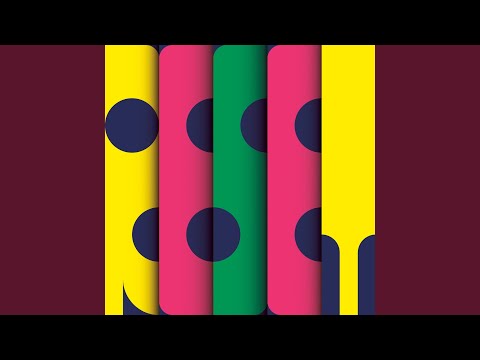
Sonic Boom pulled loop material from the “intros only” of 1950s and '60s pop songs — Eddie Cochran, The Everly Brothers, The Troggs, The Drifters, Randy & the Rainbows. That the insight itself — that possibility lives in the run-up rather than the song proper — is a form of playfulness in its own right. Source material that would otherwise be sweet and familiar gets pulled away from mere nostalgia once it's run through pattern-generating gear like the Eventide H910 and the Teenage Engineering OP-1. Emotional, nostalgic material is deliberately funneled into the repeating structure of a loop — and through that process, raw emotion and the minimalism of repetition end up strangely fused rather than opposed.
Sampled loops and electronic patterns supply the playfulness; the low end of Lennox's own bass playing supports its contour — that back-and-forth is the skeleton Reset is built on. Noah Lennox's layered vocal harmonies carry the same thickness inherited from Animal Collective, but unlike on Feels, the shouting never breaks out wildly on top. Layering the voices doesn't blur each individual voice's outline — if anything, it deepens the impression the singing itself leaves. Before the sweetness can fully take over, the bass anchors it back down to the ground.
The music outlet The Quietus called Reset “flush with Animal Collective's blitzing jauntiness” — and on this point, that's exactly right. Just as Feels used the vocabulary of rock (guitar, drums, shouting) while pushing past its grammar, Reset uses the vocabulary of '50s and '60s pop while pushing it into present-tense electronic music. When two artists from entirely different backgrounds and materials joined under an equal billing for the first time, what emerged was an unexpected meeting point of two separately cultivated forces for breaking out of their respective frames.
A ? of WHEN (2026, in progress)
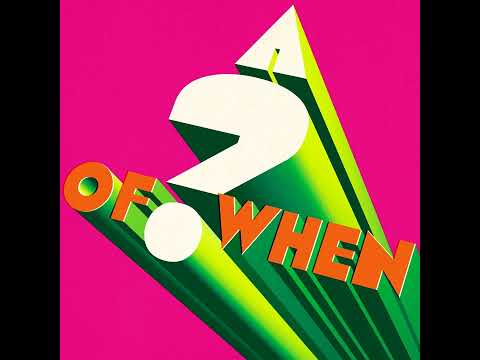
The latest record, A ? of WHEN (2026), has been deliberately kept off streaming services, so for now I've only been able to hear the title track. Even so, my impression is that it sits on a continuum with Reset.
Closing
I'll be honest: at a fundamental level, my way of listening to music doesn't quite fit with this. To me, music isn't a vessel for a composer's emotion or catharsis — it's something that carries its own structural integrity, standing on its own. My preference for the lineage running from 12th-century organum through Bach, and my sense that Romantic-era emotionalism is a kind of compromise, both come from that same place.
Feels, Reset, and A ? of WHEN — the three records traced here are all, by that standard, music that refuses to hide its emotion. The accident of forcing a guitar to tune itself to a broken piano; the roughness of shouts dissolving into harmony; '50s and '60s pop sweetness tightened by electronic edges while raw emotion, carried by bass and chorus, keeps pulsing at the core.
So I'll write this plainly, too: listening on repeat, there are moments where this insistence of feeling wears me out. The rawness that bass and chorus keep pushing toward me is genuinely moving, more than once — but staying with it constantly triggers a kind of defensive reaction in me. This isn't music I want to hear every day, and honestly, it's music that tires me out. I don't think that discomfort needs to be hidden.
And yet — years after my first “too loud” reaction to Feels, when I gave it another listen, the playfulness in the sound, the experimental drive to push past the boundaries of rock, unmistakably caught hold of me. Their rawness and chance aren't there to simply let emotion pour out — they're used to pry open the structure of the music itself. I think that's exactly why it keeps reaching me despite the sense that it can't quite conceal its own insistence: because of that sharpness.