Drowning in the Flood of Sound: The World of serph
serph is a Tokyo-based electronic musician. Since his debut in 2009, he has built a sonic world unlike anyone else's, drawing on jazz, techno, classical, and film music. At the heart of his music lies a layered melodic architecture — multiple instruments trading a single phrase, passing it hand to hand — combined with an density of editing that defies comparison. Early years spent making music out of hunger, in near-total solitude. A life-changing encounter through the N-qia project. And in 2026, the release of Destiny Land, an album made with something lighter in its step. This article traces the arc of serph as a musician.
This article revisits serph, who was featured in an earlier post: “Three Incredible Japanese Indie Musicians You Need to Hear”. That piece left too much unsaid, so this is a dedicated deep dive.
Who Is serph?
serph is a solo project by a man based in Tokyo. He debuted in 2009 with accidental tourist, an album completed just three years after he began learning piano and composition. Since then, he has released work at a steady and prolific pace. Drawing on jazz, techno, classical, film music, and progressive rock, he has built a sound that is entirely his own.
Early Masterwork ①: vent
vent, released in 2010, was the album that introduced serph's musical voice to the world.
What makes it unusual is how the instruments behave. Rather than a single instrument carrying a melody from beginning to end, multiple instruments take turns — passing the phrase between them, layering as they go. A piano states a motif, a synth picks it up, strings weave in, a woodwind adds the accent. Before you realize it, a full architectural structure of sound has risen around you.
To call it escapism would be to underestimate how precisely this escape has been designed.

Early Masterwork ②: Heartstrings
Heartstrings (2011) is the album most widely recognized as serph's defining work.
What stands out is the sheer density of sound. In three or four minutes, he packs in more than most producers would attempt in twice the time. serph himself put it plainly in an interview: “I want to cram in the feeling of being alive — that sense of 'music is incredible' — into three or four minutes.” And: “I probably won't be going in a minimal direction.”

The Same Music Sounds Different Depending on Where You Hear It
Something worth saying plainly: this music is not the same experience on every playback system. On cheap speakers or earphones, the sheer volume of sound can collapse into a wall of noise. The layered textures, the depth of the space, the placement of each instrument — these only resolve into something you can actually hear when the system is up to the task.
That serph chose to make music this dense — knowing what it would mean for commercial reach — says something about the kind of artist he is. He knew this road didn't lead to mainstream success. He took it anyway.
Why He Remains Unknown Outside Japan
Looking at the broader scene that emerged from the noble label, two peers stand out for their international reach: kashiwa daisuke and world's end girlfriend. kashiwa daisuke released his debut on the German label onpa, and in 2009 toured eight cities across Europe including a performance at Berghain in Berlin. world's end girlfriend, operating through his own Virgin Babylon Records, had Seven Idiots distributed in the US and UK via the London-based Erased Tapes Records, with licensing across Asia.
What these two have in common is a particular kind of sound — music that sits at the intersection of crushing intensity and near-ambient space. That combination translates into the post-rock and shoegaze vocabularies that English-language media know how to reach for. Pitchfork can place it. So can The Wire.
serph's music resists that framing entirely. The melodic layering, the density of the edits — it doesn't fit neatly into post-rock, ambient, or electronica as those terms are used internationally. Pitchfork has never reviewed him. Neither has Rolling Stone or AllMusic. Heartstrings has 46 ratings on Rate Your Music and around 5,700 listeners on Last.fm. Those numbers bear no relationship to the quality of what's there.
The reason serph is unknown outside Japan is not a question of quality. It is that his music refuses to sit inside any category that already exists.
Below, for comparison: an early work by kashiwa daisuke, and one of the more accessible tracks from world's end girlfriend.


Work That Costs Everything
Anyone who has made music with a DAW will understand this intuitively.
Stacking dozens of sounds onto a single track, adjusting the volume, panning, EQ, and timing of each one individually, then balancing the whole — this is work that demands enormous concentration and enormous amounts of time. A single bar can take hours to complete. That serph has reported making around 300 tracks a year gives some sense of what this commitment actually looks like.
Now add the knowledge that the work will not be commercially rewarded. Choosing to build music at a density that overwhelms most playback systems means giving up on most potential listeners from the start. Maximum effort, minimum return — and yet the work continues. In that sense, calling it a life-or-death undertaking is not an exaggeration.
Before his debut, serph said this: “I make music every day to satisfy a kind of mental hunger.” He was isolated, socially adrift, unable to find his place. Music was the only space where he was allowed to exist. That hunger was what produced the density.
The Encounter That Changed Everything: N-qia
To understand how serph's music changed, you have to understand N-qia.
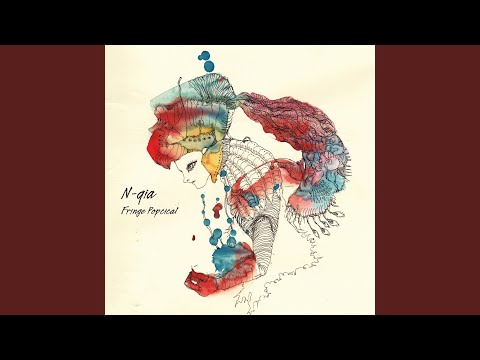
Around 2010, a vocalist named Nozomi sent a message to serph through MySpace: “Please let me sing.” He listened to her demo without high expectations, then met her, and they started making music together. That was N-qia — and later, a marriage.
In a 2016 CINRA interview, serph described what the encounter meant: “Meeting her, I rediscovered a version of myself that could be open and uncomplicated. The suspicion I'd carried for so long just gradually loosened.”
In an earlier interview, he had described making music from a place of “mental hunger.” That hunger had roots — isolation, a sense of not belonging, accumulated self-negation. Music was the “escape.” But Nozomi slowly changed that structure.
By 2018, he was saying: “I used to say I made music out of hunger. Now it's the complete opposite.”
The music he had made at such cost, having mastered it completely, was beginning to feel lighter.
2026: Destiny Land
On March 6, 2026, serph released Destiny Land — eleven tracks, his latest album.
The density is still there. So is the layered architecture that has defined his sound since Heartstrings. But something has shifted. There is a looseness to it, a sense that the music is being made from a different place than it once was — not from hunger, but from something more like fullness.

Beyond the Flood
serph's music makes demands of the listener's equipment. That is not a barrier — it is an invitation.
He chose density over accessibility, craft over commerce, and kept choosing it through years when the choice cost him enormously. That commitment is audible in every track. And now, for the first time, the music carries something the early work didn't quite have: the sound of someone who has come through the other side.
Listen to Destiny Land on the best system you have access to.