Cocteau Twins: The Door The Cranberries Opened
I discovered the Cranberries in high school, through a TV programme covering the Billboard charts. The moment Dolores O'Riordan's voice came through the speakers, it lodged itself in my ear and refused to leave. That unmistakable trembling lilt, the reverb-drenched guitars, a sound that was at once fragile and fierce. For the teenage version of me, the Cranberries were simply the best thing there was.
Years later, as an adult, a song came on the radio. Reverb-laden guitars, a voice with a rolling, melismatic quality, harmonies coiling around each other — it sounded so much like the Cranberries that I genuinely thought I was mistaken about what I was hearing. But it wasn't the Cranberries. It was a band called Cocteau Twins, who had arrived at that same sound a full decade earlier.
My favorite song of Cramberries

“The Sound of Dreams,” Born on the Industrial Fringes of Scotland
Cocteau Twins were a Scottish rock band active from 1979 to 1997. They formed in Grangemouth, an industrial town in central Scotland — a place guitarist Robin Guthrie once described to Billboard as “like Elizabeth, New Jersey: a great chemical-refining works that's not at all picturesque.” It was from that grey, unglamorous setting that a group of young people began making music as if trying to escape it.
The band was founded by Robin Guthrie (guitar, drum machine) and Will Heggie (bass), with Elizabeth Fraser joining on vocals in 1981. In 1983, multi-instrumentalist Simon Raymonde replaced Heggie, completing the lineup the band is best known for.
Fraser's arrival in the group was almost accidental. Guthrie and Heggie spotted her dancing at a local club and asked if she could sing. She was seventeen years old and had never thought of herself as a singer.
The sound at the heart of the band grew out of Guthrie's unconventional relationship with the guitar. Trained as an electrician with a natural fascination for electronics, he began running his guitar through fuzz boxes and effects pedals in search of something no one had made before. Because he had never learned to play conventionally, his experiments took him in directions that no one else would have thought to try. Layering chorus, flanger and delay units into dense, interlocking textures, he arrived at the ethereal sound that would define the band.
Guthrie described his ambition in his own words: “The aim was to make music with punk's energy but more finesse and beauty, and that shiny, Phil Spector sound. I was trying to make my guitar sound like I could play it, so I was influenced by guitarists who made beautiful noise, like The Pop Group or Rowland S. Howard.”
Then there was Fraser's voice. She prioritised the transcendent quality of sound over lyrical meaning, saying: “The words don't have any meaning at all until I sing them. I did it so I could sing something.” Her vocals were in English and yet somehow defied comprehension, bypassing the mind entirely and arriving directly at emotion. This approach — sometimes called glossolalia — became the defining characteristic that set Cocteau Twins apart from every other band.
In 1982 the band signed to the London independent label 4AD and released their debut album, Garlands. They went on to pioneer the dream pop subgenre and helped define what would later become known as shoegaze.
Between the Charts and the Underground
Cocteau Twins occupied a peculiar position in the music world — one that commercial statistics alone cannot explain.
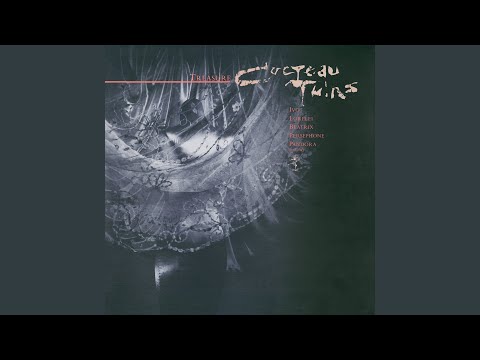
On the UK Albums Chart, their trajectory was one of steady ascent: Treasure (1984) peaked at number 29, Victorialand (1986) at number 10, Blue Bell Knoll (1988) at number 15, and Heaven or Las Vegas (1990) — their most celebrated album — reached number 7.
Yet in the United States, even Heaven or Las Vegas peaked at only number 99 on the Billboard 200. Icons of the British indie scene, yet virtually unknown in America — this double status was the curious hallmark of Cocteau Twins.
And yet their musical gravity was quietly pulling in some of the biggest names in the world. Madonna was said to “love” both the band and Fraser, and Prince sought to sign them to his own record label. Great musicians were drawn to them in silence.

A Chain of Inspiration: The Musicians Who Loved Cocteau Twins
The list of artists who have publicly cited Cocteau Twins as an influence is remarkable in its breadth: Björk, Imogen Heap, M83, Annie Lennox, Lana Del Rey, Tori Amos, Slowdive, Ride, Prince, The Weeknd, Massive Attack, The Sundays, My Bloody Valentine, Radiohead, Deftones, and Reggie Watts — all have spoken of the profound impact that Cocteau Twins, and Elizabeth Fraser's voice in particular, had on their music.
Among the most striking testimonies: The Cure's Robert Smith called Treasure “the most romantic sound I'd ever heard,” and the fingerprints of that album's guitar sound can clearly be heard on The Cure's landmark record Disintegration.
Slowdive guitarist Christian Savill recalled the first time he heard “Pearly-Dewdrops' Drops”: “The vocals and words were unlike anything I'd ever heard, and the guitars seemed huge and mysterious.” Ride bassist Steve Queralt was equally direct: “For me, Cocteau Twins recorded some of the greatest sounds ever committed to tape. It's Robin's shimmering guitars that set the blueprint for bands like us — and that's surely where it all began for shoegaze.”
In the world of post-rock, Explosions in the Sky's Chris Hrasky cited Cocteau Twins as part of the DNA of their sound. Simon Raymonde was so taken with the band that he eventually signed them to his own label, Bella Union, for their landmark 2003 album The Earth Is Not a Cold Dead Place.
The Shadow Lineage: Cocteau Twins and the Cranberries
Let me return to where this began. The instinct I had when I heard that song on the radio — that it sounded like the Cranberries — turns out to be a matter of broad critical consensus.
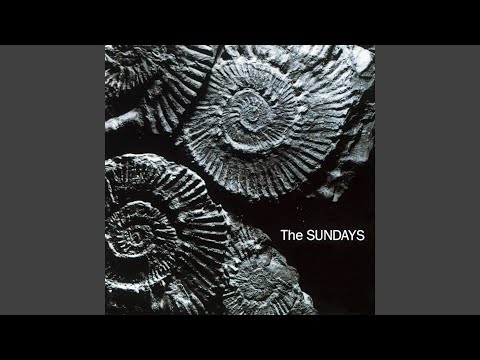
Central to that lineage is a band who sit precisely between Cocteau Twins and the Cranberries: The Sundays. Formed in 1988 when vocalist Harriet Wheeler and guitarist David Gavurin met at the University of Bristol, this English quartet caused an immediate sensation. Their debut single “Can't Be Sure” prompted Melody Maker's reviewer to declare them “the best thing I've ever heard,” sparking a label bidding war almost immediately. Their 1990 debut album Reading, Writing and Arithmetic reached number 4 on the UK Albums Chart. Their sound — blending the ethereal textures of Cocteau Twins with the jangly guitar melodicism of The Smiths, anchored by Wheeler's crystalline voice — led critics to describe them repeatedly as a band carrying the genetic imprint of both. They released three albums before falling silent after 1997, but their music endures as a cornerstone of dream pop.
In the 1990s, Rolling Stone wrote about the Cranberries: “They sound an awful lot like The Sundays, who, in turn, strongly resemble the Cocteau Twins. What they have done with that aesthetic, however, is make it their own.”
Neither Dolores O'Riordan nor guitarist Noel Hogan explicitly acknowledged the Cocteau Twins as an influence. When Noel was confronted with comparisons, he tended to deflect: “If we sound like other bands, that's coincidence.” In interview after interview, Hogan named Johnny Marr and The Cure as his primary guitar influences — never Robin Guthrie. And yet the music they made so clearly transplanted the dream pop aesthetic that Cocteau Twins had spent a decade building, rooting it in Irish soil.
Sound on Sound described the Cranberries as a band who “followed in the footsteps of The Sundays — themselves shaped by Cocteau Twins — to rise quickly to fame in the early 1990s with their evocative dream pop.” The influence runs in one direction only: Cocteau Twins → The Sundays → the Cranberries.
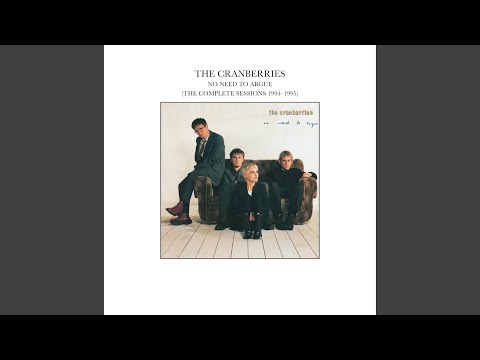
Salon's music criticism went even further: the Cranberries track “The Icicle Melts,” from their album No Need to Argue, was identified as a direct homage to Cocteau Twins — whether or not Dolores intended it consciously, that lineage ran all the way down to the title.
How Cocteau Twins Regarded Their Followers
Guthrie had complicated feelings about the many bands who followed in his wake.
In an interview with Drowned in Sound, he said: “I find it hard to have respect for artists who only look back. They're constantly trying to recreate something that happened 20 or 30 years ago. If I said we were going to reform the Cocteau Twins tomorrow, everyone would think it was great. I don't get that.”
Elsewhere he pushed back against being grouped with the shoegaze movement: “The Cocteau Twins often get compared to bands from the shoegaze movement, but we were never part of that. I was really pushing the electronic idea. I wasn't just happy to put my guitar through one effects pedal — I'd put it through loads. That was my idea, and I wanted to take it further and further.”
The band's official website puts it this way: “Others have tried to reproduce or capture their sound, with limited success. The few artists who have succeeded sound mostly unlike them, but have managed to convey an essence — inspiration without imitation. Think Beach House, Goldfrapp, Sigur Rós, or M83. Cocteau Twins were a foundational influence for whole categories of music, notably dream pop and shoegaze.”
Commercial Success vs. Musical Influence
The Cranberries achieved commercial success on a scale that Cocteau Twins could never have imagined. Their debut album sold tens of millions of copies worldwide. “Zombie,” “Linger,” and “Dreams” are songs that have outlasted generations. By comparison, Heaven or Las Vegas — Cocteau Twins' biggest record — sold 235,000 copies in the UK by 1996. The difference is not merely significant; it is categorical.
And yet when it comes to musical influence, the picture reverses entirely. The aesthetic of reverb and layered effects that Cocteau Twins built — an approach to texture, atmosphere and the voice as instrument — is written into the DNA of an enormous body of music in the twenty-first century: dream pop, shoegaze, indie folk, ambient R&B and much more. That the Cranberries could sound the way they did was only possible because Cocteau Twins had spent a decade establishing that aesthetic.
Slowdive's Neil Halstead captured this precisely: “I've heard plenty of tracks that mimic the Cocteaus' sound and vocal style, but fail to include their beautifully constructed chord progressions, key changes and melodic hooks. The voice, the guitars, the songs — they aren't just simple blocks you can co-opt or fit together to recreate the whole. Each element is huge and deep and unique in and of itself. Many of us try and borrow a hint of one or two facets, but we're really only scratching at the surface.”
The Cranberries' success is unquestionably great. But if you ask where the music came from — who built the house that the Cranberries moved into — the answer points to Cocteau Twins. And the blueprint for that house is still being followed everywhere.
A Beauty That Has Not Faded in Forty Years
The official Cocteau Twins website contains a quietly remarkable observation: “It is a testament to the timelessness of their sound and production quality that many new fans don't even know that the story actually started in 1979.”
That, to me, is the highest possible compliment. Music that people hear today and assume was made recently. Music that carries no timestamp. Cocteau Twins' albums, more than forty years on, are still that kind of music.
Robin Guthrie, in a rare reflective moment, said of his former bandmate: “I would record with Liz again in a heartbeat. But at least I worked with the world's best singer.”
In high school, the Cranberries were the door I walked through into dream pop. But it was Cocteau Twins, arriving on the radio years later, that showed me just how deep and beautiful and timeless the world on the other side of that door really was.