Arctic Air and the Emotion of Loops: The Field and the Evolution of Ambient Techno
I. Refusal and Resonance — The Four-on-the-Floor Grid as Heartbeat
Some music refuses to offer melody. Yet refuses to let you go.
The Field is a project most often discussed in the context of ambient techno or minimal techno. Yet its music never fully belongs to either category. It doesn't make you dance the way techno does, nor does it recede into the background the way ambient does — somewhere between the two, it simply holds you. Willner himself has described his music as existing “somewhere between a soundscape and a classic song.”
The Field's 2007 debut From Here We Go Sublime is built from samples of pop songs and a minimal drum machine. Fragments of vocals and performances are sliced to less than a second, bundled into loops, and laid over an endless four-on-the-floor kick — a structure as simple as that, and yet this music captures you completely.
The cold, relentless four-on-the-floor grid seems to repel anything human on the surface. And yet that stubborn repetition and robust structure paradoxically begin to synchronise with the listener's own heartbeat. The moment when a seemingly mechanical beat resonates with the most organic rhythm of all — the pulse of life itself. That is the core of what “The Field” is as a phenomenon.
Axel Willner was born in southern Sweden and spent his youth in Stockholm and Lisbon. He studied at a formal music academy while also picking up a guitar under the influence of the Misfits and Dead Kennedys, playing in punk bands. In the mid-1990s he encountered the electronic music scene and began performing drone and Warp-influenced IDM at Stockholm venues as a duo called Speedwax with his friend Ola Keijer (performing as Ola K).
From the early 2000s he worked under multiple aliases — Lars Blek, Porte, Cordouan, James Larsson — releasing guitar-based ambient music on his own label Garmonbozia. Then in 2003, under the monolithic name The Field, he began making the music that would become the culmination of all of it.
In 2004 he sent a demo tape to the prestigious German label Kompakt and secured a deal. Kompakt, based in Cologne and home to Wolfgang Voigt's Gas project among others, is a sacred site of minimal techno — and it would function as a decisive “magnetic field” in shaping The Field's musical identity.
II. Dawn — The Frozen Nordic Air and the Texture of Noise
From Here We Go Sublime (2007)
When From Here We Go Sublime was released on Kompakt in March 2007, it drew critical acclaim from almost every direction. According to Metacritic, it was among the most highly rated albums of that year — alongside Burial's UK dubstep landmark Untrue — and Resident Advisor later placed it 29th in their Top 100 Albums of the Decade.
Willner himself recalled being surprised: “I thought people wouldn't get it because it was a little different from normal techno,” and described the response as “far bigger than I could have imagined.”
If there is a single phrase to capture what lies at the heart of this debut, it would be “the aesthetics of coldness.” The carefully processed noise textures evoke the weight of falling snow, the stillness before a Nordic winter dawn. It is minimalism taken to its furthest extreme, and yet it carries within it something breathing — something alive. Voices here are never foregrounded as “song.” They are broken down to the molecular level through micro-sampling and reassembled as sonic texture. That “trace of voice” radiates a faint human warmth within the mechanical grid.
Behind this approach lies Willner's deep affection for the pop artists who captivated him before electronic music — Lionel Richie, Kate Bush, The Four Tops — alongside the shoegaze world of Slowdive and My Bloody Valentine, and the ambient electronica of Seefeel and others from the 1990s. This heterogeneous mix of influences produced The Field's distinctive musical language: cold yet emotional.
This debut remains one of the purest expressions of what The Field essentially is. The frozen Nordic air, the textures of deconstructed voices, the robust grid. Music you can sit still and simply immerse yourself in — techno that needs no dancefloor.
III. Interlude — A Resonance with the Beauty of Digital Construction
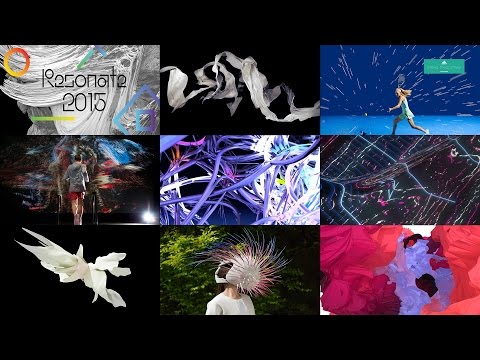
When I hear the name The Field, I always think of the London digital art studio field.io — unrelated, and yet the resonance is strangely precise.
field.io uses Houdini — a VFX software that allows 3D effects and particle simulations to be programmed through its own node-based language — as its primary tool, creating generative art. It is work governed by cold mathematical rules (code), from which impossibly organic, living graphics begin to stir. Countless particles follow their rules and in doing so begin to move like living organisms — that stoic and beautiful contradiction is the core of what field.io does.
The sound Willner's The Field makes resonates with this completely. Inside the cage of the mathematical, immovable four-on-the-floor grid, atomised sound flows as if it has taken on a life of its own. As code governs particles, rhythm governs sound — and from within that governance, unexpected emotion rises.
The frozen air of the Nordic north, and the cold constructive beauty of generative art. The Field exists quietly at the place where those two things cross.
IV. Relocation — What Berlin Gave Him
Stockholm to Berlin (2008 onwards)
Following the worldwide success of From Here We Go Sublime, Willner quit his day job and committed to music full-time. In 2008, he relocated from Stockholm to Berlin — a move motivated, as he openly admitted, less by musical ambition than by something personal: he had fallen in love.
But the impact of that move on his music cannot be overlooked. Berlin is the world capital of techno, home to legendary clubs like Berghain and Tresor. Willner has said that “coming to Berlin, meeting new people, seeing new places became an inspiration,” while also noting that he was “not deeply involved in the club scene — I actually knew more about what was going on when I was in Stockholm.” Berlin, then, gave Willner not direct influence so much as an open space — a breathing room in his creative life.
What followed deserves attention: the third album Looping State of Mind (2011), conceived with live band performance in mind, introduced acoustic instruments — piano, steel drums, vibraphone — giving organic sound to the themes of memory and repetition. Yet despite this, the album never loses The Field's cold minimalism. The acoustic samples dissolve into the loops so completely that what emerges is a coexistence of coldness and warmth unlike anything on the debut. That is why it stands alongside the first album as one of The Field's defining works.
It should be noted that the third album includes tracks with live vocals used relatively intact — an approach that had actually appeared once before, on the second album Yesterday and Today (2009), in a cover of The Korgis' “Everybody's Got to Learn Sometime.” What distinguishes these tracks from the vocal use on the 2026 EP, discussed below, is that the strong rhythmic grid of the four-on-the-floor kick remains fully intact throughout.
Rather than directly absorbing the club-centric ethos of Berlin techno, Willner seems to have rediscovered — in that city's atmosphere — something about what it means for a body to move. The vocal experiments may have been one current running from that same source.

V. Zenith — Closest to the Floor, and the Groove of the Voice
The Follower (2016) and Infinite Moment (2018)
The fifth album The Follower (2016) is a decisive turning point in The Field's career — and alongside the first and third albums, I consider it the finest work Willner has produced.
Up to that point, The Field had essentially been music for sitting down. It held the structure of techno while avoiding any direct appeal to the dancefloor, maintaining a certain introspective distance. On The Follower, that distance closes dramatically. After disbanding the live band, Willner took up modular synthesis as a new instrument, and the experience of playing live at Berlin clubs left a deep imprint on the album's direction. The result is the closest thing in his discography to full-on dancefloor techno.
Live feedback from hardcore floors like Berghain and Tresor changed the texture of what he made in the studio. On the album highlight “Monte Verità,” cut-up vocal samples and basslines interlock with force — “the molecularisation of voice” and “physical groove” achieving a perfect fusion. The music pushes at your back. You cannot stay seated. That is the overwhelming physicality of this album.
On the sixth album Infinite Moment (2018), human voices — stretched to their limits through granular synthesis, a technique that breaks sound into microsecond fragments and reconstructs them — layer upon layer of voice loops that carry overwhelming humanity and emotion within the mechanical grid. Voice here is again processed as “material” — functioning more as sonic texture than as lyrical meaning — and the tension and elation that arise from its interplay with the robust four-on-the-floor structure is unique to The Field. Willner himself described the album as carrying “something like hope,” and it inherits the physicality of the fifth album while moving toward greater emotional depth.
VI. A New Label, A Changed Sound — Studio Barnhus and the Departure from Kompakt
Now You Exist (2026, EP)
After Infinite Moment in 2018, Willner fell silent. Eight years passed. Then in spring 2026, new music finally arrived: a five-track EP, Now You Exist.
What demands attention is the change in label. Rather than Kompakt — the home that had surrounded The Field for twenty years — this release came from Stockholm-based Studio Barnhus. Willner has said that a chance reunion with Studio Barnhus co-founder Axel Boman at a Stockholm barbecue was what sparked the return to making music.
The sound has changed too. In his previous work, no matter how far voices or noise pushed forward, the four-on-the-floor kick kept pulsing as the “heartbeat.” On Now You Exist, that grid has receded — voices and synth pads rising from noise-based rhythmic patterns are more foregrounded. The sound is closer to My Bloody Valentine.
Pitchfork awarded it 76 points and received it favourably, but I am left with a different feeling. Did leaving the magnetic field of Kompakt liberate Willner — or did it release him from the very tension that was uniquely his?
VII. Inside the Cage Called the Grid
In electronic music, a label often functions as an “aesthetic gravity.” Whether the artist is aware of it or not, the air of the label seeps into the music. Kompakt's twenty years gave The Field a set of constraints — and those very constraints may have been the source of its razor-sharp tension.
The frozen Nordic stillness of From Here We Go Sublime, the tremor of memory conjured by the organic loops of Looping State of Mind, the physical directness of The Follower hitting the floor — these three albums each take a different approach, yet are threaded through by a single axis: “reduce voice to raw material, and never relinquish the tension of the grid.” That, I now think, was the essence of The Field as a project.
I watch the current incarnation — voices accepted as song, dissolving into the warmer atmosphere of Studio Barnhus — with a certain sense of loss. And yet: after eight years of silence, to have begun moving the loops again in a new label's gravitational pull, on what feels like a different planet — perhaps it is still too early to judge what that means.
A minimalism that throws the heartbeat off. That feeling, once more.