An Unpolished Guitar and the Loneliness of the City: Why Jana Horn's Murmur Speaks to Us Now
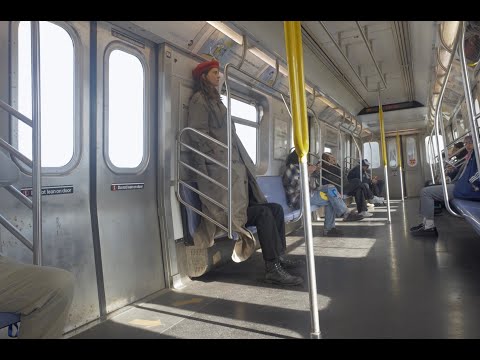
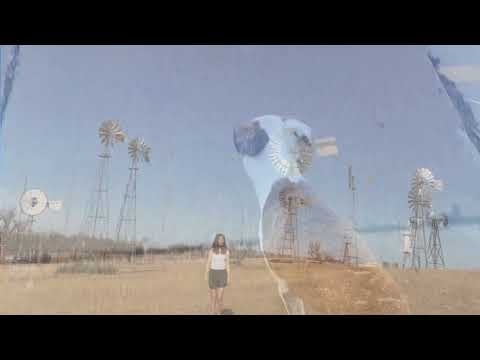
Both of these videos come from Jana Horn's third album, Jana Horn — a title that is simply her own name. As I'll lay out below, the songs on this record are consistently first-person, closer to monologue than performance. Naming the album after herself already lines up with the way she sings.
The video for “Go on, move your body” opens with her asleep, draped over a man's shoulders, and stays there as she's carried through the subway and the streets. No one around her so much as glances over. “Come On,” by contrast, finds her completely alone — first in a wind-farm-dotted prairie, then at the foot of a New York bridge — repeating the same strange dance with no one watching. What either video is actually saying isn't clear. But that strangeness seems to quietly echo the story of loneliness in New York that the songs themselves go on to tell.
Chapter 1: After the Arranged Marriage
Horn released this album in January 2026. Most of its songs were written during her first year in New York, after finishing her MFA. Of the move itself, she's said it “felt almost too right, like an arranged marriage.” But she was unhappy for a while — her life was still back in Virginia with her friends, and in Texas with her mother, who was relearning how to live after years of being shuttled between hospitals. She drifted through the city in her pajamas at midday.
What waited at the end of the “right” path was a city's indifference to a loneliness no one could see. That dissonance sits at the core of the opening track, “Go on, move your body.” The lyric reaches for “follow your bliss” — that self-help mantra — only to ask what you're supposed to follow when you can't even catch its scent. No answer arrives. She hears an apocalypse stir and asks, simply, is this all there is? What comes back isn't a resolution. It's a single instruction.
Go on, move your body.
“Come On” offers the counter-gesture. Take my hand, if you want to. Not a demand, but a murmur that still reaches for connection while checking, first, whether the other person wants it too. Moving, and reaching for a hand — these two gestures run through the whole record.
Chapter 2: A Drone Built on the Top Two Strings
Horn picked up the guitar at sixteen, playing alongside her older brother Shawn. Her writing method is still distinctive: she works almost entirely on the top two strings, composing the way a bassist would. Her bandmate Jade Guterman does the opposite, often playing melodic, lead-style lines on bass. As Horn has put it, the two of them interlock as “bass flourishes, guitar static.”
Which is to say, the flatness of her guitar isn't a limitation — it's closer to a deliberate compositional choice, sustaining a low drone rather than chasing chord changes. The chords barely move because the guitar's role has been narrowed, on purpose, to a foundation for the voice. That's precisely what frees the bass to roam, while her guitar stays fixed, holding the song up from underneath.
Chapter 3: Singing as if Talking to Herself
Against that unmoving guitar, what stands out is the way she sings. She doesn't raise her voice toward a listener; she sings the way you'd talk to yourself, half under your breath. Even a command like “move your body” doesn't read as a rallying cry — it sounds more like a small incantation aimed at herself, on a morning she can't quite get out of bed.
That inwardness is sharpened, not muted, by the flatness of the music. With no dramatic swells or chord changes to lean on, the slight tremor in her voice, her breath, the silences between words, all move to the front. Critics have noted that her lyrics sometimes carry the texture of classical Chinese or Japanese poetry — saying little, implying a great deal. What sounds like an ordinary singer-songwriter tune can suddenly land a sharp little barb you didn't see coming.
A murmured delivery, lyrics that refuse to resolve — the two line up. That's why her music never sounds like preaching or comfort. It just sounds like someone talking to herself.
Chapter 4: The Desert, and the Hands That Held Her Up
The songs were written in New York, but recorded at Sonic Ranch Studios in Tornillo, Texas. Words shaped by the city pass through a landscape nearly empty of people before becoming sound.
The record features Jade Guterman on bass, guitar, and piano; Adam Jones on drums and guitar; Adelyn Strei on clarinet and flute; and Miles Hewitt on piano. Jones has worked with Horn since her previous record, The Window Is the Dream (2023). Reviewers have described the band playing with a lightness that seems sympathetic to her writing, as if careful not to break the spell. Take “All in Bet” — it could easily have been just strummed guitar and a yearning vocal, but instead skittering percussion carries it forward, woodwinds sigh, and small bursts of piano trail glittering through the mix. At times, Horn steps out of the spotlight entirely, letting bass or drums take the lead while she whispers in from the shadows.
Behind that flat, unadorned guitar are collaborators quietly holding it up. The fact that the album was recorded in a near-empty desert, and the fact that it was shaped into something fuller by a handful of people gathered around her, aren't in tension. Solitude and being held up turn out to coexist, at the same time, in her music.
Conclusion
Horn's songs and her words are intensely personal, first-person. She isn't trying to lift anyone up or convince anyone of anything. Of her own process, she's described it as something close to meditation — sitting with a guitar, letting a few notes oscillate, and waiting for words and melody to pass through.
I read that as an enactment of the lyrics themselves. Moving your body even when you've lost the thread of what you're moving toward. Reaching for a hand despite the fear of reaching. She doesn't just sing these things — she lives them out in the act of writing a song with a guitar in her hands. In a city that doesn't interfere with anyone, the way she confirmed her own existence may simply have been to sing.
And that intensely personal monologue turns out to be something many of us, living now, carry in some form ourselves. Words murmured to no one in particular become, somehow, our own murmur. That quiet capacity for resonance might be the most honest strength in Jana Horn's music.