A Hidden Early Music Gem: How Sting Revived the Soul of John Dowland
Description: Sting's 2006 Songs from the Labyrinth is easy to dismiss as a celebrity detour into classical territory. It is the opposite. Dowland was not a classical composer in any modern sense—he was a singer-songwriter whose melodies mapped the exact contour of a sigh, writing what Sting himself called “400-year-old pop songs.” This piece explores what made Dowland's music so enduringly strange: the pre-equal-temperament tuning that required lutenists to reposition gut-string frets by ear before every piece, the way his signature melancholy offered sanctuary rather than despair, and why stripping away operatic formality actually returned these songs to their original DNA.
If you are looking for the perfect acoustic soundtrack to soothe a tired mind or provide a calm, intimate backdrop for your workday, look no further than Sting's 2006 album, *Songs from the Labyrinth*. Released under the prestigious classical label Deutsche Grammophon, this project isn't a mere rock star pop-cover gimmick. It is a deeply respectful, profound deep-dive into the melancholic world of the Renaissance composer, John Dowland (1563–1626).
At first glance, a modern rock icon and a Renaissance lute composer might seem worlds apart. However, looking closer reveals why this hidden gem feels so incredibly natural—and why it beautifully captures the true, populist essence of early music.
The Uncanny Parallels: Sting and John Dowland
Sting's adaptation works so brilliantly because the two artists share a striking amount of common ground:
- The Renaissance Singer-Songwriter: We often treat Dowland like a rigid “classical” composer, but in his day, he was the definitive singer-songwriter. He wrote catchy, deeply emotional melodies meant to be sung directly to an audience, mirroring exactly what Sting has done for decades in rock and jazz.
- The Cult of Melancholy: In late Elizabethan England, there was a massive cultural trend celebrating intellectual “melancholy”—the art of leaning into beautiful sadness. Dowland was the absolute king of this vibe. Sting, with his signature smoky, gravelly voice, perfectly channels that exact raw, human weariness.
- The Populist Impulse: Both artists share a deep instinct for writing melodies that connect directly with ordinary people—not the academy or the concert hall. Sting himself described Dowland's songs as “400-year-old pop songs,” a framing that captures exactly why this collaboration feels so natural.
The Timeless Genius of John Dowland: More Than Just Melancholy
To understand why this collaboration feels so poignant, one must understand the sheer brilliance of Dowland himself. In an era dominated by rigid sacred music, Dowland was a radical melodist. He possessed an almost supernatural gift for writing hooks—breathtakingly beautiful, cascading lines that capture the exact contour of a sigh.
While his motto was famously “Semper Dowland semper dolens” (Always Dowland, always mourning), his sadness was never oppressive. It was empathetic. Dowland's music didn't wallow; it offered a sanctuary. It was the Renaissance equivalent of a late-night ambient record—a gentle validation of human vulnerability that feels less like a performance and more like a shared confidence in the dark. That is why his melodies haven't aged a day in four centuries.
Before Equal Temperament: The Artisan's Tuning
To truly understand the haunting atmosphere of Dowland's music, we have to look at how sound was managed before the dawn of modern music theory.
Dowland lived in an era long before J.S. Bach and the standardization of Equal Temperament (the modern system where an octave is divided into 12 mathematically equal parts). Instead, the Renaissance relied on systems like Meantone Temperament, where certain chords sounded breathtakingly pure and perfectly resonant, while other keys were so severely out of tune they were completely unusable.
Because of this, tuning was entirely left to the discretion and craftsmanship of the individual lutenist.
Unlike a modern guitar with fixed metal frets, a Renaissance lute uses frets made of gut strings tied around the neck. Players literally had to slide these frets millimeter by millimeter by ear before every single piece. They adjusted the frets to match the specific key of the song, ensuring that the primary chords achieved a pure, beating-free resonance. Dowland and his contemporaries also used the natural tension of slightly “imperfect” intervals to create deliberate, bitter dissonances that beautifully mirrored human grief and emotional tension.
The Lute's Evolution: From Intimate Intonation to Solo Virtuosity
This artisan approach to tuning perfectly served how the instrument actually functioned in society, and how its purpose shifted over time.
The Original Form: The Art of Self-Accompaniment
In the 16th century, Dowland's massively successful songbooks were published with a brilliant layout design. A single page contained the main melody, the lute notation, and alternative vocal parts printed upside down and sideways around the edges. This allowed a single person to sit down and perform a “lute song” as a raw, acoustic, intimate solo act—or let a small group gather around a single table to harmonize.
The Shift to Solo Virtuosity
As these vocal songs became nationwide blockbusters, a shift occurred. Musicians and Dowland himself began thinking, “These melodies are incredible; let's arrange them so the lute can play all the vocal parts simultaneously without a singer.”
Over the decades, this transformed the lute into a highly complex, polyphonic solo instrument. By the time of the late Baroque era, it had evolved into a vehicle for mind-bending, purely instrumental solo virtuosity.
The Triumph of Sting's Approach
Because history eventually viewed the lute as a complex, classical solo instrument, modern listeners are used to hearing Dowland performed by operatic, pristine vocalists standing far away on a recital stage. By stripping away the operatic pretense and pairing a smoky, casual voice with the lute, Sting actually restored these songs to their original, authentic 400-year-old DNA.
The Master and the Apprentice
While Sting spent years practicing the grueling, highly specific technique required to play the lute's dense strings, he knew his limits. He wisely brought in Edin Karamazov, one of the world's premier master lutenists, to anchor the album's breathtaking instrumental framework.
Throughout the record, you hear Karamazov weaving a flawless tapestry of sound, while Sting steps in to sing with an approachable, conversational warmth—even joining in on secondary lute duets.
If you want an early music experience that skips the textbook lecture and goes straight for the emotional gut, put on Songs from the Labyrinth. It is the ultimate testament to the fact that beautiful, melancholic songwriting is entirely timeless.
Going Deeper: The World of Pure Solo Lute
If Sting's album serves as your gateway and you find yourself wanting to explore the pure, wordless magic of solo lute music, you must check out the early music specialists.
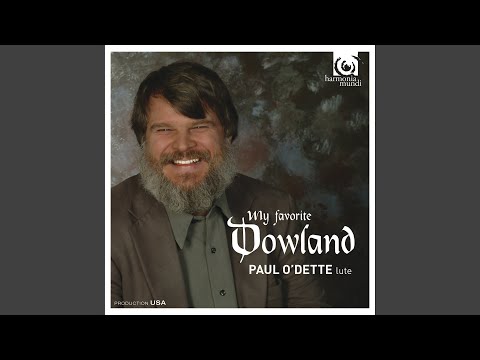
For the absolute definitive solo Dowland experience, Paul O'Dette's masterpiece album, My Favorite Dowland (Harmonia Mundi), is the ultimate gold standard. O'Dette is an absolute legend of historical performance practice who captures the breathing space, the tactile warmth of fingers on gut strings, and the profound emotional depth of Dowland's compositions. Without needing a single lyric, his fingers weave the pure, unadulterated essence of Elizabethan melancholy.
You can experience the exquisite textures and hushed beauty of his solo performances directly via the link below:
If you want an early music experience that skips the textbook lecture and goes straight for the emotional gut, put on Songs from the Labyrinth or dive into O'Dette's solo catalog. It is the ultimate testament to the fact that beautiful, melancholic songwriting is entirely timeless.